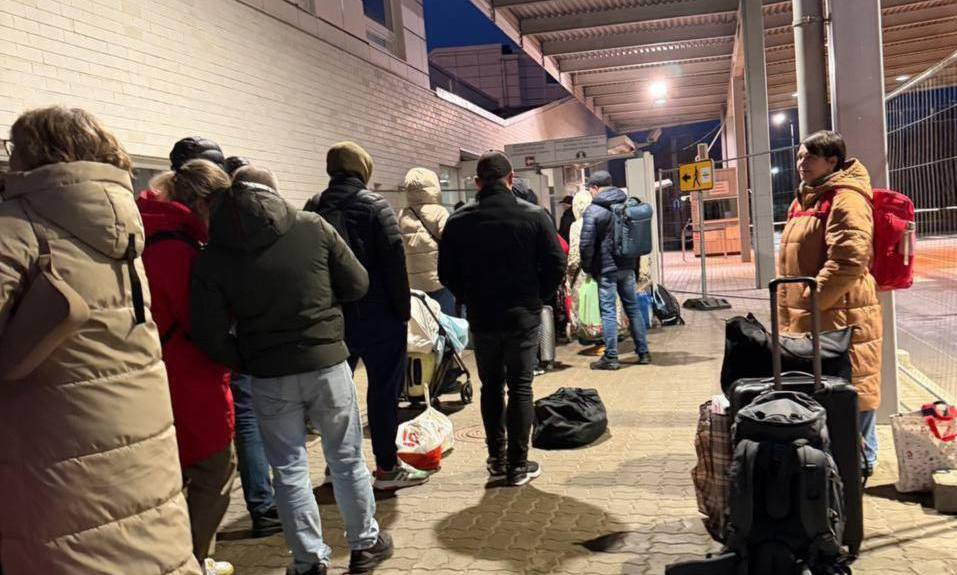
There are lengthy delays at the border between Russia and Estonia due to thorough checks and restricted opening hours at border crossing points. On the night of 22 November 2026, passengers on the St Petersburg–Riga coach were unable to cross the border and were stranded in the neutral zone until morning. The incident occurred on the eve of the closure of all road and pedestrian border crossings between the two countries.
Briefly about the main points
- Long queues are forming at the border between Russia and Estonia.
- Passengers on a scheduled bus spent the night in the neutral zone.
- From 1 December, Estonia will close all five border crossing points.
- The closure was due to sabotage by the Russian secret services.
Bus passengers were stranded in the neutral zone
According to Reflect, citing RusDelfi, the coach arrived at the «Koidula» border crossing in the evening of 21 November. At that point, border guards were still checking two other coaches.
Due to the length of the security checks and the closure of the border crossing at 7.00 pm, the passengers – some of whom were elderly – were forced to wait until the following morning.
The situation arose just a few days before Estonia’s closure of its border with Russia.
Estonia is to close all five border crossings
On 20 November, the Estonian Government officially approved a decision to suspend road and pedestrian traffic with Russia. The restrictions will come into force on 1 December at 07:00 local time.
The decision will apply to the following border crossing points:
- Narva-1;
- Narva-2;
- Koidula;
- Luhamaa;
- Saatsé.
The ban will apply in both directions, regardless of nationality and the status of travellers. In six months’ time, the government will review whether it is appropriate to extend the restrictions. Freight rail services will remain subject to strict customs controls.
Russia is facing the consequences of its own policies
As noted in Ministry of Foreign Affairs of Estonia, the closure of the border was a response to Russia’s systematic hostile activities, in particular acts of sabotage against defence industry enterprises.
Tallinn is also seeking to limit the ability of the Russian security services to recruit agents, organise acts of sabotage and circumvent international sanctions.
Consequently, the current queues may serve as a sort of rehearsal for much more severe transport restrictions, which are due to come into force as early as the beginning of December.