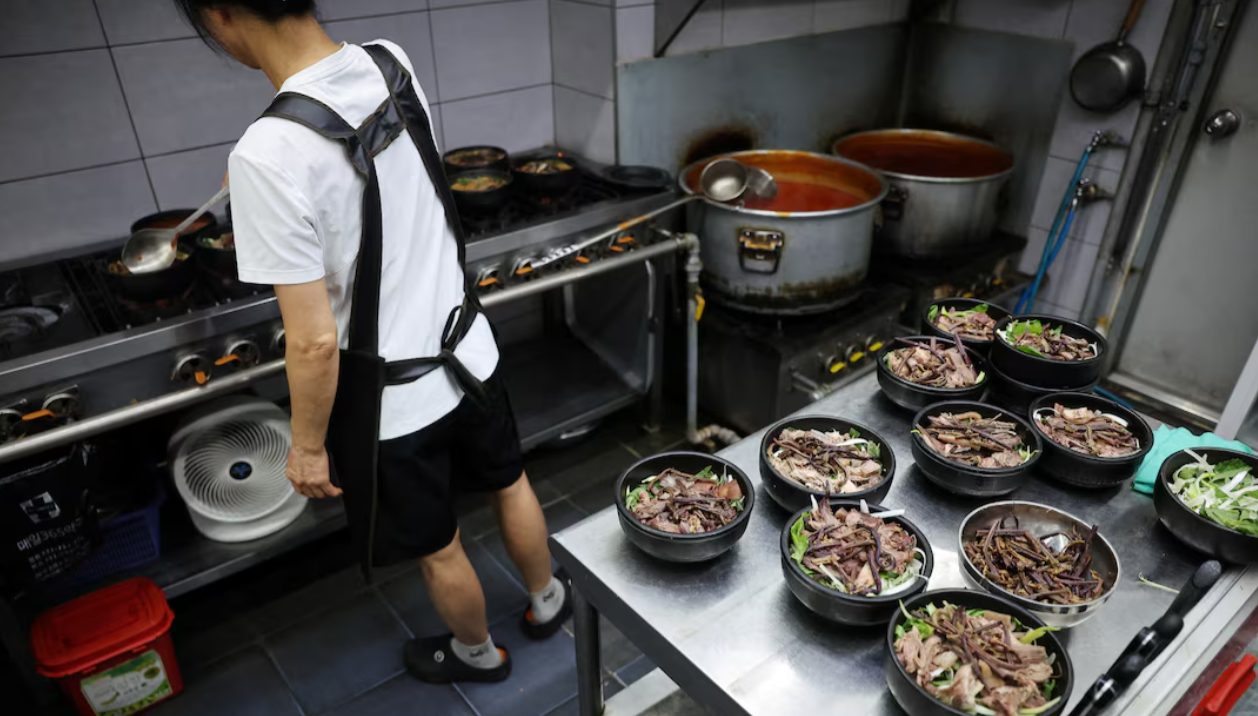
In South Korea, the final season during which dog meat can be legally produced and sold is drawing to a close. A total ban will come into force in February 2027. At Moran Market in Seongnam, which was once one of the most famous centres for this trade, more and more restaurants are replacing bosintang with stewed black goat, and the few remaining customers for the traditional dish are mainly elderly people.
Briefly about the main points
- The ban will cover the breeding, slaughter, distribution and sale of dogs for consumption.
- Parliament passed the law in January 2024, providing for a three-year transition period.
- More than 80% respondents supported a ban on the trade in dog meat.
- The law affects more than 5,600 businesses; most of the farms have already closed down.
- Restaurateurs in Moran say that the alternative menu does not make up for the loss of sales.
The Act established a transitional period for the sector
The South Korean Parliament passed a law in January 2024. It prohibits the breeding, slaughter, distribution and sale of dogs for human consumption. A three-year transition period has been provided for those in the industry; once this period ends, offenders will face imprisonment and fines.
The authorities have also promised support for farmers, distributors and restaurant owners affected by the new rules. The campaign to end the trade gained momentum under the former president Yun Sok Yola and his wife Kim Kong-hee, who had publicly supported the ban as an animal rights campaigner.
Consumption was already losing momentum even before the law was passed
The ban brings to an end a long-standing decline in the consumption of dog meat, against a backdrop of rising pet ownership and changing attitudes towards animal welfare. In a survey of 2,000 respondents conducted prior to the law being passed, over 90% stated that they did not intend to eat this product in future.
More than 80% of those surveyed supported the ban, whilst nearly 95% said they had not eaten dog meat during the previous year. According to government figures, the legislation affects more than 5,600 businesses; officials reported that the majority of dog farms had already ceased operations before the deadline.
Moran Market is looking for a replacement for a traditional dish
The third Boknal — one of the three hottest days of summer, when Koreans traditionally ordered dishes to regain their strength — was the last one this year before the ban came into force. In the alleys of Moran Market in Songnam, near Seoul, there were still visitors at lunchtime, but trade has changed significantly.
Many establishments have replaced dog meat with braised black goat and other dishes. Kim Yeon-bok, chairman of the market traders’ association, who has worked here for over 40 years, described the current atmosphere as gloomy: what was once a bustling commercial hub, he said, has turned into a place predominantly frequented by elderly people.
Restaurant owners say that the transition to the new menu is proving difficult and does not make up for the losses incurred from the sale of dog meat. Some of those who still serve bosintang are operating on minimal profit due to high supply costs and are keeping the dish on the menu primarily for regular customers.
Regular summer customers react to changes in different ways
Among the few customers who still order bosintang, the majority are aged 70 or over. Some travel from far away because they believe the dish helps them regain their strength in the heat. The restaurant’s owner, Li Kang-chun, who has been in the business for 37 years, said it pains him to see elderly customers who come and go without their usual meal.
At the same time, Li believes that phasing out the consumption of dog meat is the right thing to do, given the country’s international image and changes in society. He called on the authorities to do more to help elderly vendors find alternative employment.
Yu Jin-sam, a 69-year-old customer, expressed his disappointment but said he accepted the government’s decision. Another customer, 71-year-old Kim Jin-suk, took a more relaxed view of the changes: he said he could simply choose something else to eat.