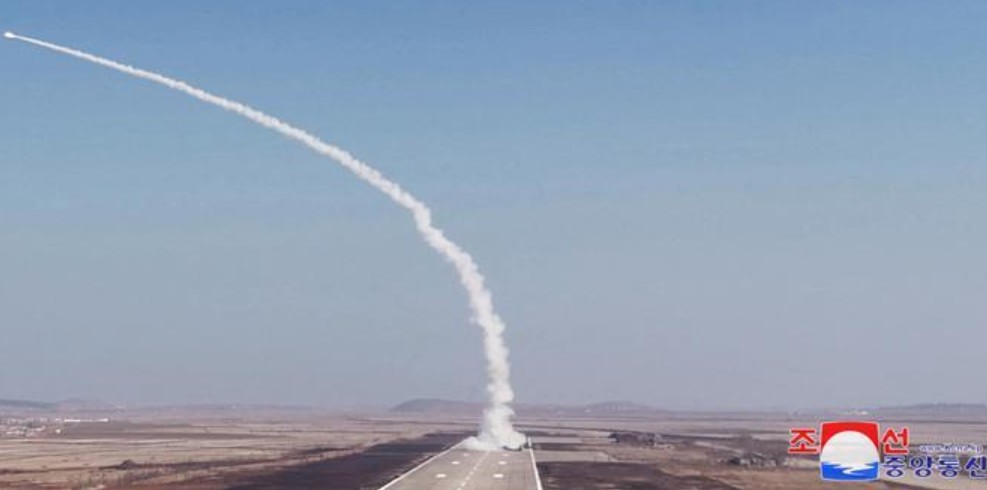
North Korea has conducted tests of a new anti-aircraft missile system and separate exercises involving long-range cruise missiles. Images published by Pyongyang have caught the attention of military experts: elements of the air defence system resemble the Russian S-400 system, and one of the cruise missiles is believed to be equipped with a cluster warhead. The tests took place against a backdrop of intensified military cooperation between the DPRK and Russia and yet another escalation on the Korean Peninsula.
- On 4 November, North Korea tested a new air defence system and long-range cruise missiles.
- An expert noted similarities between the guidance section of the North Korean missile and that of the Russian S-400.
- In the published photographs, the cruise missile appears to be equipped with a cluster warhead.
- South Korea has confirmed the launch of several missiles towards the Sea of Japan.
North Korea has tested a new anti-aircraft missile system
The tests took place on 4 November under the supervision of a representative of the Central Military Commission of the Workers’ Party of Korea Kim Jeong-sik. According to KCNA, the launches were organised by the DPRK’s Missile Command with the participation of defence industry specialists.
Pyongyang stated that the tests had confirmed the reliability of the new missile, the properties of the materials used in its construction, and the effectiveness of the combined guidance system.
The system’s ability to detect air targets, track them and process information from radar systems was tested separately.
A North Korean agency has named tests successful, but did not disclose the range, the technical specifications of the missiles or the detailed results of the interception of the targets.
The new air defence system first appeared in official North Korean reports in November 2025. The current tests indicate that its development is continuing and that specific technical capabilities are being tested.
Experts have noted similarities with the Russian S-400
Experts paid particular attention to the photographs of missiles published by North Korean state media.
Secretary-General of the Korean Defence and Security Forum Shin Jeong-woo In a comment to Reuters, he noted that the guidance section of the new anti-aircraft missile bears a resemblance to similar components of the Russian S-400 system.
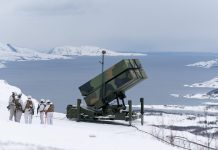
The S-400 «Triumph» is a Russian long-range air defence missile system designed to engage aircraft, cruise missiles and other aerial targets.
However, the external similarity of individual structural elements does not allow us to determine the origin of the technologies or to conclude that they were directly transferred to North Korea.
At present, there is no independent confirmation that the new North Korean system uses Russian components or possesses combat capabilities comparable to those of the S-400.
At the same time, this issue is attracting further attention due to the military rapprochement between Moscow and Pyongyang. North Korea is supplying Russia with weapons and has sent its military personnel to take part in the war against Ukraine. The further development of the DPRK’s missile technology is of interest not only to Seoul and Tokyo, but also to Western intelligence services.
Cruise missiles attacked a simulated airfield
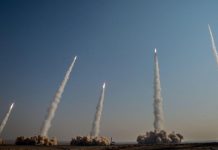
On the same day, the North Korean military conducted separate exercises involving the use of long-range strategic cruise missiles.
According to KCNA, a missile force unit in the eastern part of the country carried out a strike on a simulated airfield. Pyongyang announced that the training exercise had been successfully completed.
South Korea’s Joint Chiefs of Staff had previously detected the launch of several missiles from the Sondok area in South Hamgyong Province towards the Sea of Japan.
According to preliminary data from the South Korean military, the missiles detected travelled less than 300 kilometres. Representatives of the Ministry of Defence did not rule out the possibility that various types of weaponry, including short-range missiles, were used during the tests.
Shin Jeong-woo pointed out that, in the photographs released, one of the cruise missiles appears to be fitted with a cluster warhead.
According to the expert, the military may have been testing the missile’s ability to disperse its warheads over a specific area. This type of munition is designed to engage area targets, in particular military airfields and concentrations of military equipment.
North Korea is stepping up its testing of cluster warheads
The latest launches were a continuation of a series of tests carried out by North Korea over the past week.
On 31 October, Pyongyang tested a cluster warhead for tactical ballistic missiles. North Korean state media claimed that it is capable of striking an area of 12–13 hectares. There is no independent confirmation of these specifications.
On 2 November, the military tested another warhead — for a strategic cruise missile. According to KCNA, its warheads can cover an area of up to five or six hectares.
North Korea has also announced its intention to equip its military units with various types of cluster warheads by the end of the year, depending on their missions.
This series of tests demonstrates that Pyongyang is focusing not only on the range and accuracy of its missiles, but also on increasing the area that can be targeted.
Neighbouring states are particularly concerned about the potential use of such weapons against military infrastructure, in particular airfields, which play a vital role in South Korea’s defence.
The missile tests took place against a backdrop of tension on the Korean Peninsula
The test on 4 November marked the DPRK’s fourth missile launch in the past month, according to Reuters’ figures.
Pyongyang has recently stepped up its demonstrations of new weapons, including ballistic missiles, cluster warheads and air defence systems.
At the same time, tensions remain high in relations with South Korea and the United States. The North Korean leadership justifies the development of its missile programmes on the grounds of the need to defend the country and deter external threats.
Seoul and Washington, for their part, are monitoring North Korea’s missile activity and continuing their joint defence exercises.
The exact capabilities of North Korea’s new air defence system remain unknown. At present, military experts have access mainly to official statements and photographs released by Pyongyang, which do not allow for an independent assessment of its effectiveness in real combat conditions.