On 22 October 2026, the organisers of the Tour de France officially unveiled the routes for the 2027 men’s and women’s stage races in Paris. The men’s Tour de France will start for the first time in Edinburgh, the capital of Scotland, after which the cyclists will ride through England and Wales, with the decisive mountain stages taking place in the Pyrenees. Competitors can expect 21 stages, a total distance of 3,479 kilometres and two individual time trials with a combined length of 71 kilometres. The women’s Tour de France Femmes promises to be no less spectacular: it will start in Leeds, UK, feature the first-ever team time trial and conclude with a gruelling climb up the extinct volcano Puy-de-Dôme in France.
Briefly about the main points
- The 2027 Men’s Tour de France will start in Edinburgh on 2 July.
- The first three stages of the men’s race will take place in Scotland, England and Wales.
- The route comprises two individual stages with a total length of 71 km.
- The Women’s Tour will conclude with the 170-kilometre stage from Clermont-Ferrand to Puy de Dôme.
The 2027 Tour de France will start in Edinburgh for the first time
114th Men’s «Tour de France» It will begin on 2 July 2027 in the Scottish capital. Edinburgh will become the northernmost city ever to host the start of the famous cycle race, overtaking Copenhagen, where the race began in 2022.
The first three stages will take place in the UK:
| Date | Route | Distance |
|---|---|---|
| 2 July | Edinburgh – Carlisle | 184 km |
| 3 July | Keswick – Liverpool | 223 km |
| 4 July | Welshpool — Cardiff | 223 km |
The organisers paid particular attention to the third stage in Wales. Race director Christian Prudhomme compared it to a famous one-day classic «Liège–Bastogne–Liège», known for its numerous short, steep climbs.
According to the organisers’ plan, the first ten days are intended to create the conditions for frequent changes at the top of the general classification. This will allow not only the main favourites but also riders who specialise in short, explosive attacks to compete for the yellow jersey.
After the first rest day, the participants will head to France, where the fourth stage will run along the Normandy coast.
Two time trials could have an impact on the battle for victory
One of the key features of the 2027 Tour de France route will be the increased distance of the individual time trials.
In total, the cyclists will cover 71 kilometres across two stages — the longest combined distance in this format since 2012.
The first time trial will take place on 9 July during the seventh stage. The riders will cover 38 kilometres between Blois and Chambord. The route is almost entirely flat, so aerodynamics, power and the ability to maintain high speeds will be key.
The second stage is scheduled for 20 July. It will be 33 kilometres long and will take place around Toulouse.
This format could work in favour of the Belgian Remco Evenepoel, who has won numerous time trial titles. At the same time, the Slovenian Tadej Pogačar remains one of the main contenders for the overall victory.
In 2027, Pogacar will be aiming for a record-breaking sixth Tour de France title.
The Pyrenees will be the main mountainous challenge
Despite the considerable focus on the time trials, the organisers have not abandoned the traditionally challenging mountain stages.
The total elevation gain over the course of the race will be 53,450 metres. The route includes 28 categorised climbs, six mountain stages and three summit finishes.
The first major mountain finish is scheduled for the ninth stage — on 11 July, the cyclists will climb the Grand Colombier in the Jura Mountains. After that, the peloton will head for the Alps, but the toughest challenges will be reserved for the final week.
Stage 18, scheduled for 22 July, will be one of the key stages. The route will run from Pau via the legendary Tourmalet Pass to the finish at Col du Porte, at an altitude of 2,215 metres.
In a single day, the riders will have to tackle a total elevation gain of around 5,400 metres. The following day, the cyclists will face another gruelling stage in the Pyrenees: 160 kilometres with an elevation gain of approximately 4,300 metres.
The organisers decided not to include some of the most famous climbs in the route, notably Alpe d’Huez, Mont Ventoux and Galibier.
The finish in Paris will once again pass through Montmartre
Men’s Tour de France will end on 25 July 2027 in Paris.
For the third year running, the final stage will include a climb up to Montmartre — one of the most famous districts of the French capital.
A route like this has the potential to make the final day more exciting than a traditional flat finish. Short climbs, narrow streets and the battle for position could create opportunities for unexpected attacks.
The organisers have designed the penultimate, 20th stage to be predominantly flat, which will give the sprinters another chance. However, the decisive battle for the general classification is likely to take place earlier — during the challenging Pyrenean stages.
The 2027 Women’s Tour de France will finish at a volcano
The organisers have put together an equally unusual route for the Tour de France Femmes women’s cycling race.
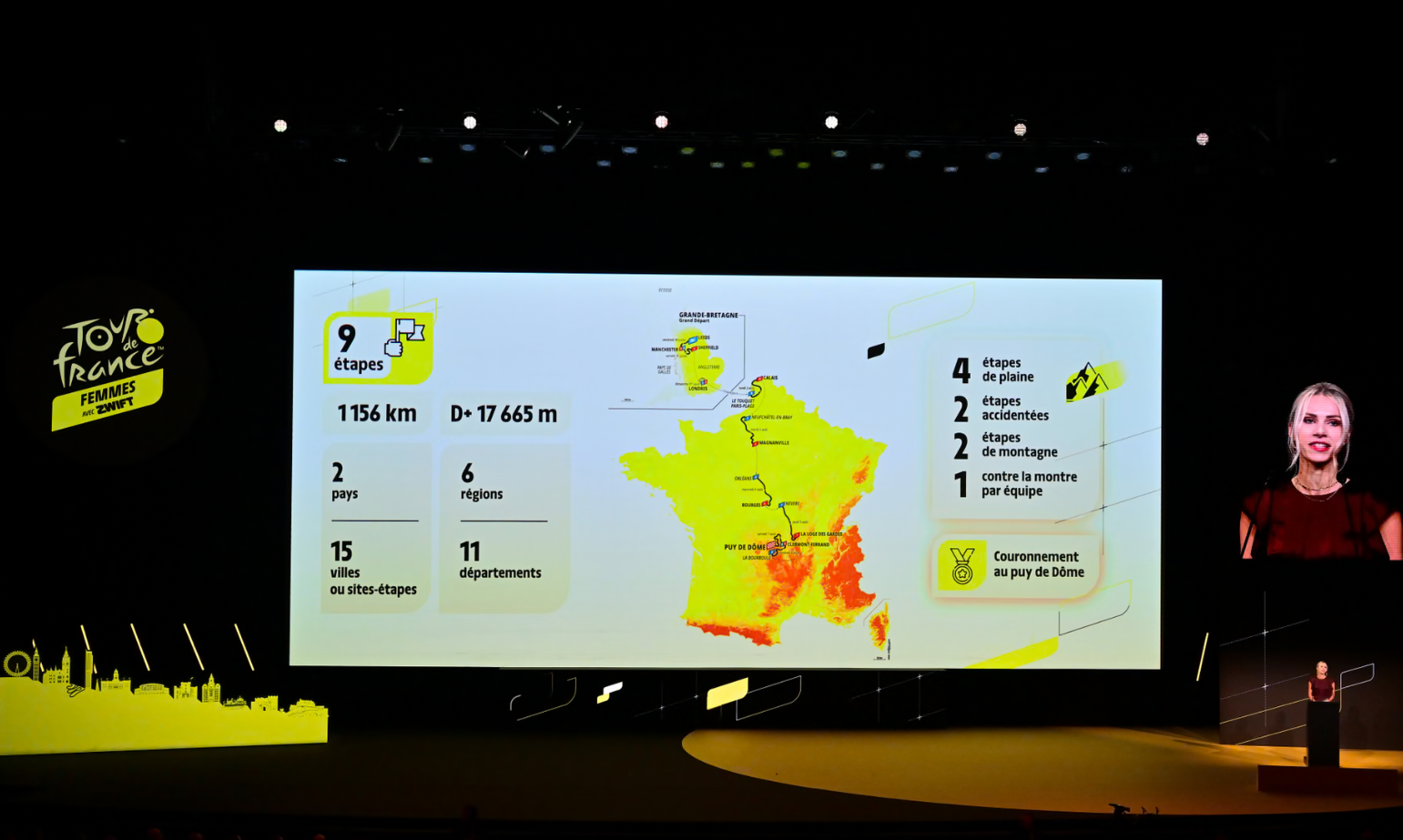
The competition will run from 30 July to 7 August 2027. Over the course of nine stages, the participants will cover 1,156 kilometres.
The event will kick off in Leeds, England, after which the athletes will head to Manchester and Sheffield.
The third stage, scheduled for 1 August, will be a historic one for the Women’s Tour de France. London will host the race’s first-ever 18-kilometre team time trial.
The route will take in some of Britain’s famous landmarks, including Big Ben and Buckingham Palace.
But the real test awaits the contestants in France.
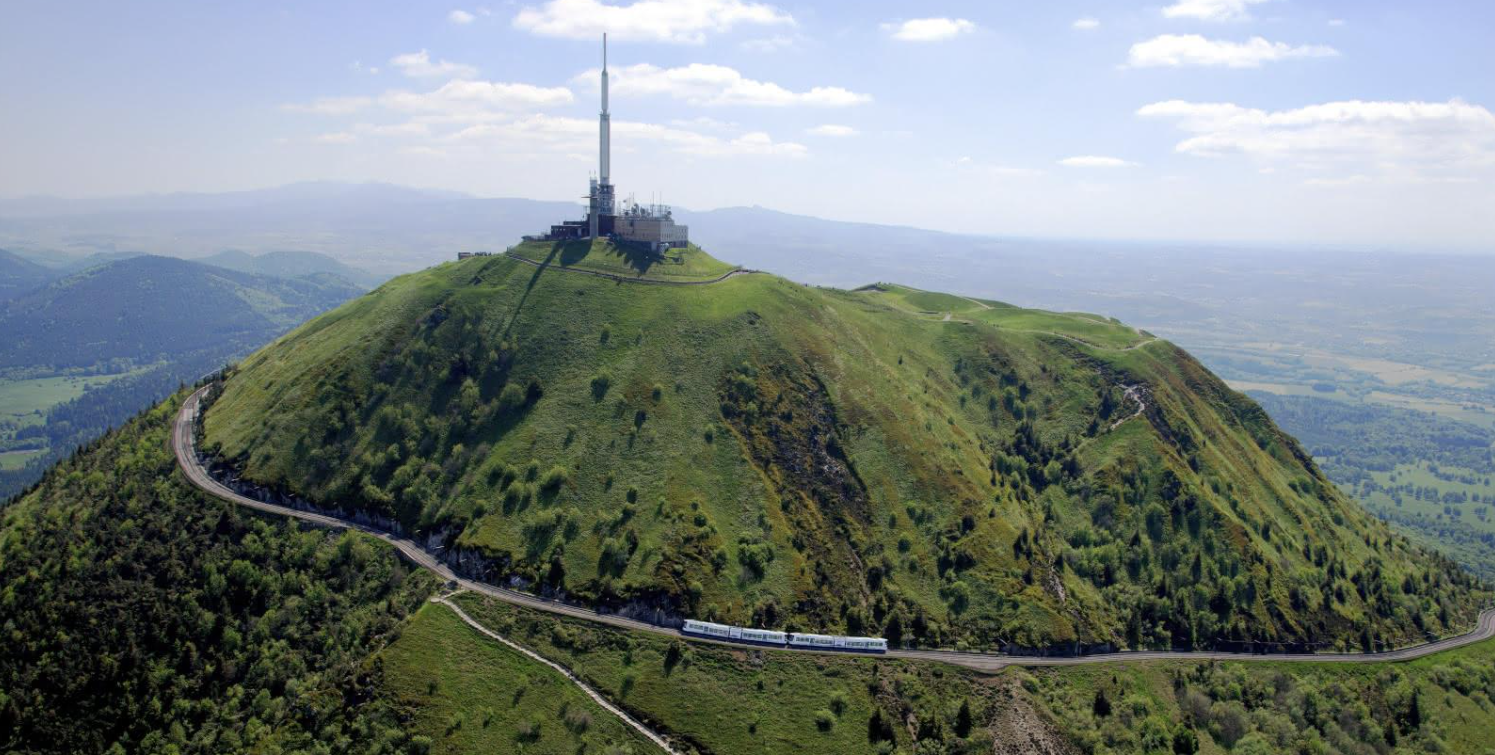
The final, ninth stage will finish at the summit of the extinct volcano Puy-de-Dôme, located near Clermont-Ferrand. It will cover a distance of 170 kilometres — making it the longest stage of the 2027 women’s race. The total elevation gain will be approximately 3,800 metres.
Director of the Women’s Tour de France Marion Rouss described this route as the ‘royal stage’ of the competition.
The climb to Puy-de-Dôme holds a special place in the history of cycling. The men’s Tour de France has already passed through here, notably in 2023, but this will be the first time the women’s race has finished here.
Why the 2027 Tour de France promises to be a thrilling contest
This route differs from many previous editions in that it combines long individual time trials, short, challenging climbs and a gruelling final week in the mountains.
The organisers are keen to make the battle for the yellow jersey less predictable, whilst leaving opportunities open for different types of cyclists.
The early stages in Britain may set the stage for attacks, the mountain passes will test the riders’ speed and endurance, and the Pyrenees will demand peak physical fitness.
The Tour de France Femmes, for its part, will feature a historic team time trial and a challenging final climb, during which the overall winner may be decided.
Consequently, in 2027, France’s two most prestigious multi-day cycling races will feature unusual routes — from a historic start in the British Isles to battles on mountain passes and a finish on a volcano.