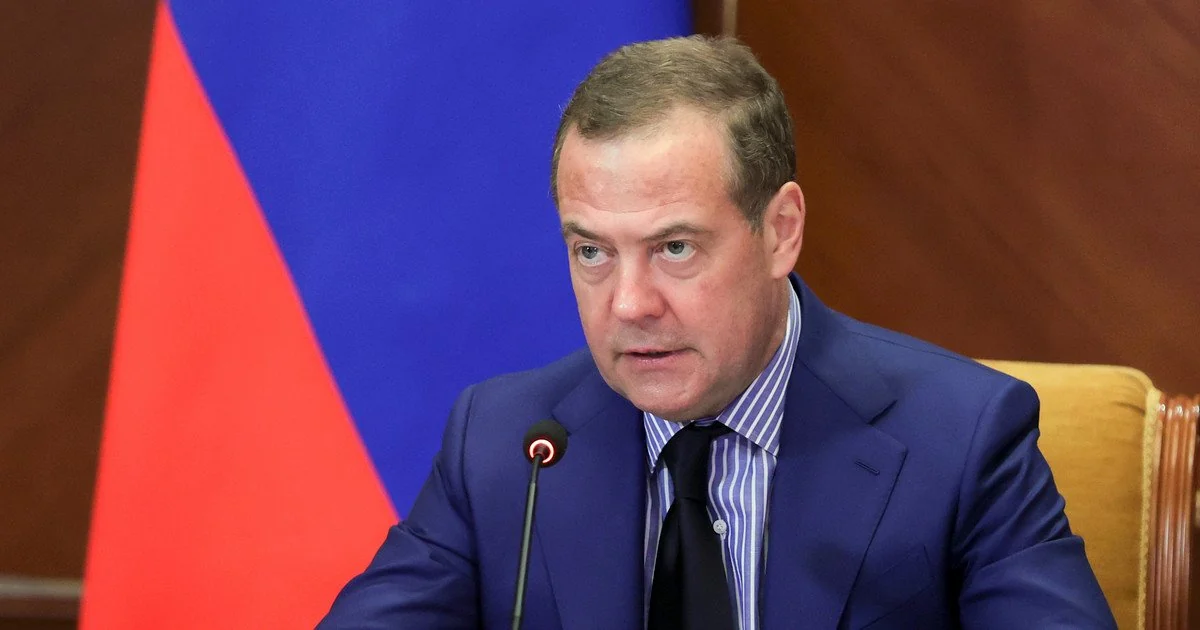
Dmitry Medvedev, Deputy Chairman of the Russian Security Council, has once again raised the possibility of using nuclear weapons against Ukraine and its Western partners. The Russian official claims that Kyiv and NATO countries have already created situations in which Moscow might have considered a nuclear strike, but so far there has allegedly been no need to carry one out. Medvedev had previously also threatened to use nuclear weapons should Western states secretly transfer such weapons to Ukraine.
- Medvedev claimed that Ukraine and NATO were allegedly creating the conditions for a nuclear strike.
- A Russian official had previously threatened a nuclear response to the possibility of Ukraine acquiring nuclear weapons.
- There is no confirmed evidence that the West is preparing to secretly transfer nuclear weapons to Ukraine.
- Moscow continues to use nuclear rhetoric against the backdrop of the war against Ukraine.
What Medvedev said about the possibility of a nuclear strike
On 23 November, the Russian media published new statements Dmitry Medvedev, as set out in his article for the *Moscow Journal of International Law*. In the article, he examines the conditions for the use of nuclear weapons and argues that the actions of Ukraine and its Western allies have already given Moscow grounds to consider such a scenario.
According to the Deputy Chairman of the Russian Federation’s Security Council, the final decision on the use of the nuclear arsenal depends on an assessment of the scale of the threat, the damage caused and the possible consequences of a response.
However, Medvedev did not provide any convincing evidence that Ukraine or NATO had taken any action that would have warranted a nuclear response from Russia.
Russia is threatening to use nuclear weapons over possible arms supplies to Ukraine
Separately, a Russian official had previously stated that Moscow might even use non-strategic nuclear weapons if Western states were to supply Ukraine with nuclear warheads.
On 24 February 2026, Medvedev issued the following threat following statements by the Russian Foreign Intelligence Service alleging that the United Kingdom and France were preparing to secretly transfer nuclear weapons to Ukraine.
These allegations were not backed up by independently verified evidence. At the same time, Medvedev suggested that strikes could be carried out not only against Ukrainian targets, but also against countries that might facilitate such transfers.
Why does Moscow keep resorting to nuclear threats?
Nuclear rhetoric remains one of the tools Russia uses to exert pressure on Ukraine and its international partners. Since the start of the full-scale invasion, Kremlin officials have repeatedly linked the possibility of using nuclear weapons to military aid to Kyiv and the involvement of Western states in supporting Ukraine’s defence.
In November 2024, Russia revised its nuclear doctrine, expanding the list of conditions under which the use of such weapons is permitted. In particular, the document provides for the possibility of a nuclear response to certain types of attacks carried out using conventional weapons with the support of a nuclear-armed state.
Despite regular statements by Russian officials, threats alone do not indicate that a decision has been taken to launch a nuclear strike. At the same time, they are fuelling international concerns about the risks of the war escalating.