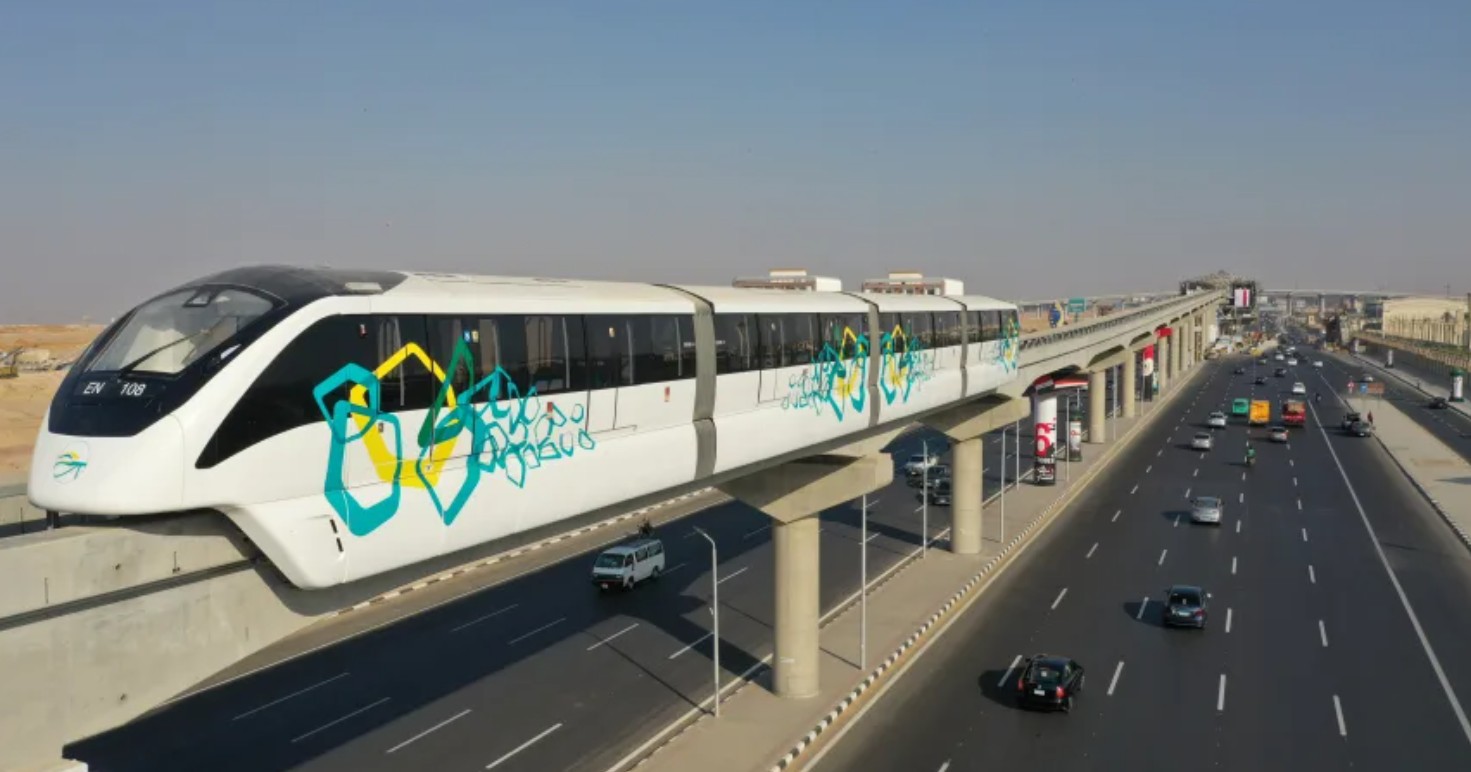
Cairo, a metropolis suffocated by traffic jams, has taken a historic step into the future of public transport. In May, the first line of the Cairo Monorail (Cairo Monorail). This is not just a technological breakthrough, but Africa's first fully automated railway network without drivers, which, when completed, will be the longest in the world.
Route through the metropolis: from Cairo to the New Capital
The Cairo Monorail project consists of two key lines:
-
East Nile line: The first stage of the 56.5 km line has already been launched. It runs from the International Stadium in Nasr City to the New Administrative Capital.
-
The West Nile line: It is currently under construction. It will be 43.8 km long and will connect the 6 October satellite city with Giza.
A global record: The total length of the Egyptian network will reach 100.3 km. This will allow Egypt to overtake the current record holder - the Chinese monorail system in Chongqing (98.5 km) - and become the leader in the world rankings.
According to preliminary estimates, the new eco-friendly transport will carry about 500,000 passengers.
Price and integration into the infrastructure
For Cairo, where the three existing metro lines can barely handle the passenger traffic of 500 million people a year, the monorail has become a breath of fresh air.
For the first three days after the opening (from 6 May), the journey was free, after which the authorities introduced a zonal payment system:
-
One-time ticket for the entire length of the East Nile line costs 80 Egyptian pounds (about $1.51).
-
Quarterly travel card (designed for 180 trips) varies from EGP 1800 ($34) for one zone to EGP 7200 ($136) for all four zones.
French technology and British factories
A large-scale contract worth £2.3 billion (about $3 billion) for the construction and operation of the network in 2019 was awarded to French engineering giant Alstom. The company led a consortium that included local leaders Orascom Construction and Arab Contractors.
Technical characteristics of trains:
-
Production: 272 cars (68 trains) were manufactured at Alstom's plant in Derby, England, with financial support from the UK Export Finance. The last batch arrived in Egypt in early 2024.
-
Speed and bandwidth: Trains run on elevated tracks over the busy streets of Cairo at 80 km/h, carrying up to 45,000 passengers per hour in each direction.
-
Environmental friendliness: The system runs on the platform Innovia, It has low noise and emissions and is capable of recovering up to 99% of energy during braking.
«The architecture of the system allows for a gradual increase in capacity by increasing the frequency of flights and expanding the train fleet without radical infrastructure changes. This fundamentally distinguishes it from outdated transport systems,» Alstom representatives said in a commentary to CNN.
Economic challenges and criticism of the project
Despite the technological triumph, the project is also facing criticism at home. The East Nile line was planned to be launched in 2023, but the release was postponed several times.
Some sceptics and analysts have expressed concern about Egypt's huge spending on large-scale infrastructure projects amid the general economic downturn. According to the US Department of International Trade, in the period 2023-2025 alone, the country invested about 1.7 trillion Egyptian pounds ($106.3 billion) in infrastructure, while the country's external debt exceeded $163 billion.
Some locals also believe that the monorail will not yet solve the problem of daily commuting for most Cairo residents. Although the New Administrative Capital is designed to accommodate 6.5 million residents and create 2 million jobs, a huge part of its 700 sq km territory is still a continuous construction site (16 out of 22 planned stations are currently operating on the East Nile line).
A look into the future: Egypt as a case study for Africa
Despite the criticism, Alstom and the Egyptian government are optimistic. The consortium has committed to maintain and operate the network for the next 30 years. Significantly, 98% of the personnel involved in testing and commissioning are local Egyptian engineers and specialists.
«The East Nile Monorail is an important milestone in the implementation of Egypt's Vision 2030 strategy to create smart, sustainable and future-ready urban mobility,» said Rami Salah Eldin, Managing Director of Alstom Egypt.
The company is confident that Cairo's experience will become a textbook example of environmentally friendly and high-capacity transport for other rapidly urbanising African megacities. Alstom is already developing similar infrastructure projects in Morocco, Algeria, Côte d'Ivoire and South Africa.