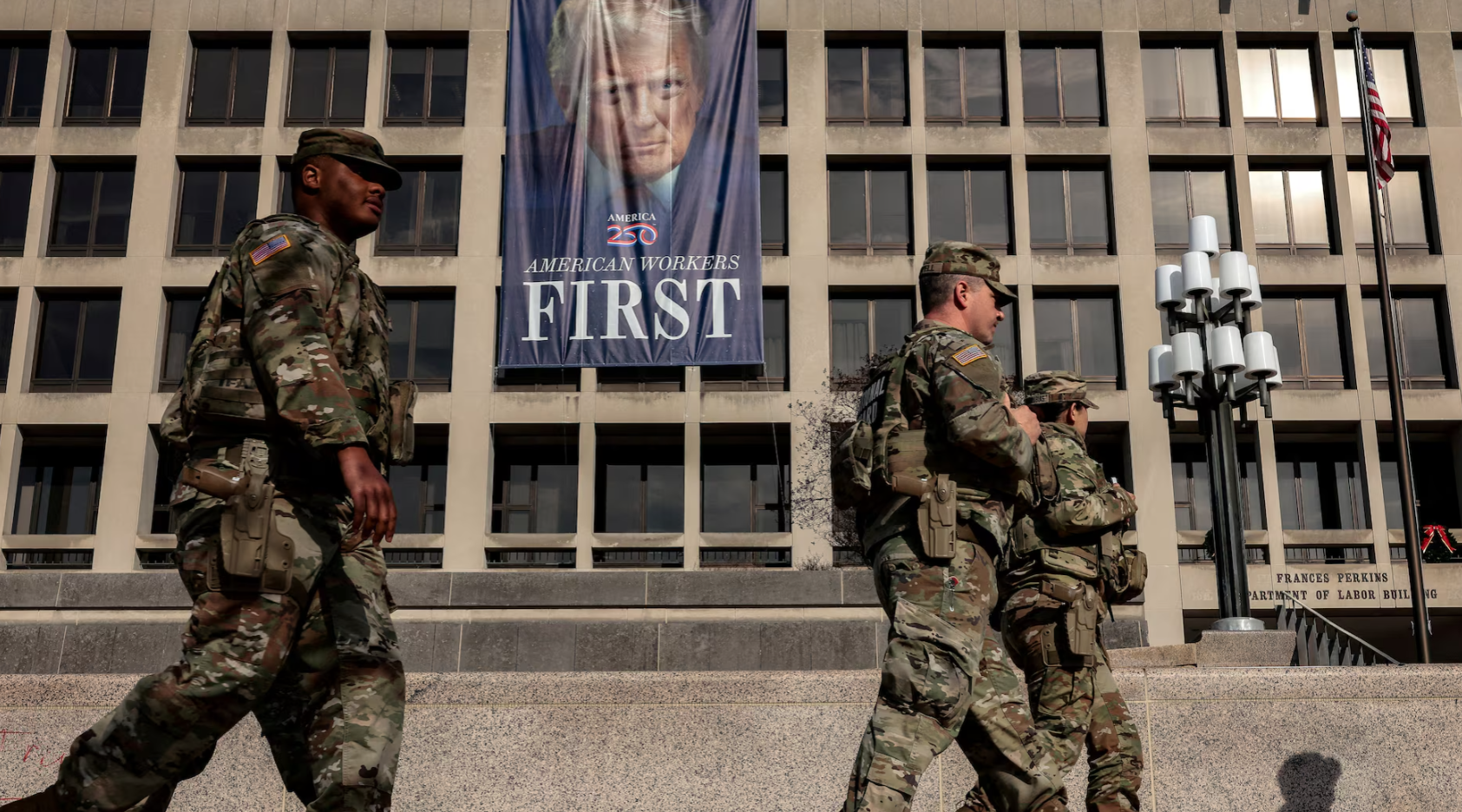
The US National Guard, deployed in Washington following a decision by President Donald Trump, was mentioned in approximately 1.3% of the city’s criminal cases over the course of a year, Reuters has found. An analysis of court documents shows that the troops were mainly deployed in wealthier, predominantly white and less dangerous neighbourhoods. The administration plans to fund the mission until the end of Trump’s presidential term in 2029, at a cost of $1.4 billion.
Briefly about the main points
- Reuters has uncovered the National Guard’s involvement in 217 criminal cases in the capital.
- There are around 4,500 more military personnel than there are police officers in Washington.
- Some of the arrests were in connection with theft, travelling without a ticket and other minor offences.
- Court records do not document their law enforcement activities in the areas where most of the murders took place.
- The data do not allow us to measure the impact of the military on crime rates in isolation.
The scope of the mission and information from court documents
Donald Trump sent thousands of National Guard troops to the capital last year as part of a declared crackdown on crime, primarily in cities run by Democrats. There are currently around 4,500 military personnel in Washington — more than the 3,200 members of the city’s police force.
Reuters reviewed all available indictment documents from the District of Columbia Superior Court, which hears almost all of the city’s criminal cases. They found 217 cases in which the National Guard was mentioned. Last year, the administration informed Congress that the deployment cost approximately $1.65 million a day even before the contingent’s numbers were doubled this summer; the police’s most recent budget stood at around $1.5 million a day.
Limited powers and mainly minor incidents
In 62 cases, military personnel independently stopped individuals suspected of offences, whilst in 43 cases they assisted the police with arrests. In a further 35 incidents, they witnessed crimes. A significant proportion of the cases involved minor offences: in particular, in October, military personnel pursued a man who had taken two slices of pizza and offered $2 as partial payment, whilst in April they detained a suspect accused of stealing two meat snacks worth approximately $7 from a chemist’s.
The military personnel have been appointed as deputy US marshals, but their law enforcement powers are limited: they may detain a suspect, after which they must call the police to carry out a formal arrest. The US Department of Defence has described this activity as «presence patrols», designed to deter crime through a visible presence.
At the same time, members of the military were often the victims themselves. In 62 cases, people were charged with shoving, striking or threatening National Guard personnel, whilst nine were accused of spitting at them.
Patrols were more frequently spotted in wealthier neighbourhoods
A comparison of court records with demographic and criminal data revealed that references to military personnel were more common in areas with higher incomes, a higher proportion of white residents and people with higher education. Most of the arrests involving them took place near the city centre or at underground stations.
The documents contained no mention of law enforcement activities carried out by National Guard personnel in the areas where, over the past five years, around 82% of the city’s 859 murders took place. The methodology does not cover locations where military personnel were stationed without contact with the police, but it does illustrate the geographical distribution of recorded interactions with law enforcement officers.
Coordinator of the Anacostia Coordinating Council, a non-governmental organisation Salim AdofA woman who works in a deprived part of the city told Reuters that she had not seen any soldiers all year.
Crime is falling not only in the capital
The number of murders in Washington has been falling for the third year running, but a similar trend is also evident in cities where the government has not deployed the military or additional federal agents. At the same time, the number of recorded violent crimes — serious assaults, robberies and sexual offences, including homicides — from January to mid-August was approximately 4% higher than during the same period last year.
It is difficult to assess the specific impact of the National Guard, as the administration also deployed hundreds of additional federal agents to the city, most of whom carried out the duties of the local police. A study by the non-partisan Niskanen Centre, published in May, linked the deployment to a reduction in car thefts, but found no impact on violent crime.
The White House did not respond to a question from Reuters regarding the military’s operations. A spokeswoman Lauren Bis stated that Trump’s actions had reduced crime, improved the city and enhanced the quality of life. Charles Stimson, a senior research fellow at the Heritage Foundation, believes that the visible presence of the military acts as a deterrent, whilst retired General Randy Manner said that soldiers are not sufficiently trained for police work and are more expensive than hiring additional police officers.