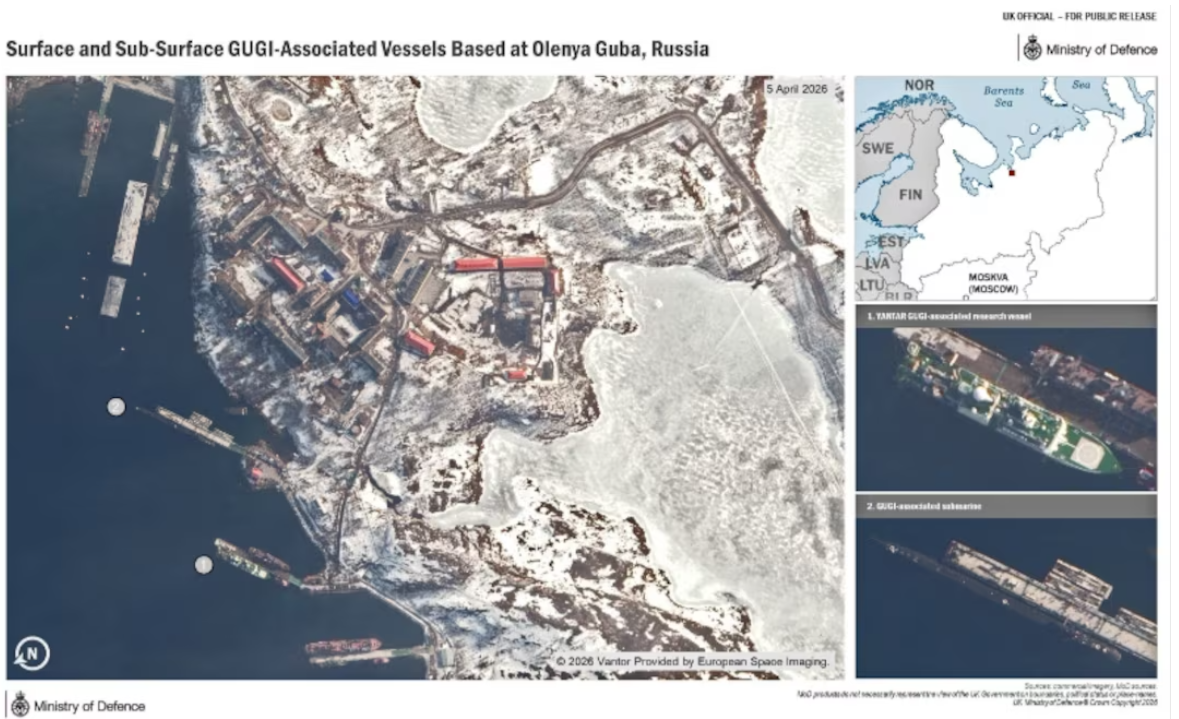
In the spring, the UK, Norway and the US tracked and disrupted Russian exercises near Svalbard that simulated the use of technology to covertly disable undersea cables, two Western officials told Reuters. The Russian vessels did not complete the exercise and left the area; there was no damage to the cables. According to the officials, the operation was carried out by the underwater division of the Main Directorate for Military-Technical Cooperation.
Briefly about the main points
- The State Agency for Civil Defence has deployed deep-sea vehicles to simulate the deployment of the new technology.
- London and Oslo have informed Moscow that they are aware of this technology.
- Cables to Svalbard carry satellite data from the SvalSat station.
- The UK and the US had previously imposed sanctions against the Russian Directorate of the State Border Guard Service.
- NATO is stepping up surveillance of maritime infrastructure due to the risk of sabotage.
The State Agency for Geology and Mineral Resources simulated the use of the technology underwater
According to two Western officials, Russia’s Main Directorate for Deep-Sea Research, known by the acronym GUGD, used deep-sea vehicles. These were intended to simulate the deployment of technology designed to damage cables without leaving any obvious traces of involvement.
Officials have not disclosed how it works. In April, the UK and Norway had already reported that they had uncovered covert activities by the GUGD in waters near their countries, but at the time they did not provide any details regarding the technology, the location of the operation or US involvement.
The Russian Ministry of Defence did not respond to a request from Reuters. The Kremlin has consistently rejected allegations of sabotage in NATO countries and of preparing for a confrontation with the alliance.
The Svalbard cable network transmits SvalSat data
Svalbard It is connected to mainland Norway by two submarine fibre-optic cables, each 1,400 kilometres long. In some sections, they lie at a depth of up to 2,700 metres.
The cables transmit large volumes of satellite data from the SvalSat station, which Reuters describes as the world’s largest and part of NASA’s Near Space Network. Underwater cables generally provide global internet connectivity and support financial transactions.
Norway plans to lay a new fibre-optic cable by 2028, which will connect Svalbard and Jan Mayen to the mainland.
Moscow has received a warning from the UK and Norway
In parallel with their actions at sea, British and Norwegian officials informed Moscow that they were aware of the new technology. According to sources speaking to Reuters, the allies hoped that this would deter its potential use.
Norwegian Minister of Defence Tore Sandvik stated that any attempts to attack critical infrastructure would be detected and would have consequences. He added that an escalation of tensions in the Far North was not in the interests of either side.
The British Ministry of Defence cited statements made in April regarding the activities of the Main Directorate for Cyber and Information Security. London and Washington have imposed sanctions against this directorate. US officials have also expressed concern that Russia may attempt to test NATO’s collective defence mechanism; Western officials regard attacks on cables as a possible element of such a scenario. In August, the UK deployed forces to Jan Mayen for exercises alongside its Norwegian and American allies.
Allies are stepping up their monitoring of maritime infrastructure
Following the sabotage of three of the four Nord Stream gas pipelines in 2022, NATO member states are paying greater attention to the protection of seabed infrastructure. Since 2023, there has been an increase in the number of slow-moving vessels passing near pipelines, power lines and telecommunications cables to map their locations. Such activity in international waters is not illegal, but experts view its scale as a possible prelude to sabotage.
According to Windward, in 2024 the number of such vessels in the North Sea increased by 52% to 13,079. In the Baltic Sea, 526 vessels were recorded in 2025, which is 5% fewer than the previous year; between October 2023 and the end of last year, at least 11 submarine cables were damaged or cut there.
To step up patrols, the allies have launched the NATO Baltic Sentry system and the Nordic Warden initiative, led by the UK.