Catastrophic floods in Nepal and Tibet have claimed at least 750 lives, with a further 3,044 people still missing. Rescue operations are being hampered by fresh downpours, rising river levels and the threat of further flooding. In Nepal, hundreds of people may remain trapped in hydroelectric power station tunnels.
Briefly about the main points
- At least 750 deaths have been confirmed in two regions.
- 3,044 people are missing, mainly in Nepal.
- There may be hundreds of people in the tunnels of Nepal’s hydroelectric power stations.
- In Girong, 261 foreign nationals from 23 countries have gone missing.
- A new landslide has blocked the river and formed a lake.
Nepal suffered the heaviest losses
According to the local emergency services, in Nepal 734 people have died, whilst 2,498 are still missing. Rescue workers have saved 7,514 people.
Hydroelectric power stations became a separate focus of the search efforts. After torrents of ice, rocks, mud and debris had swept through the valleys of the Himalayan rivers, hundreds of workers and local residents may have found themselves trapped in the tunnels.
At present, Nepal does not require large-scale international assistance for general search and rescue operations, but it does need specialists and equipment for tunnel operations, DNA identification, the storage of bodies and the identification of the deceased. Experts from India and China are already working at the scene.
Foreigners from 23 countries are being sought in Girong, Tibet
In Gyirong County, in the Tibet Autonomous Region, 16 deaths and 546 people missing had been confirmed by Saturday evening. Among those missing are 261 foreign nationals from 23 countries.
The largest groups among them are nationals of Nepal — 104, India — 49, Latvia — 33, the USA — 18 and the UK — 15. The Chinese and Nepalese authorities are working together to locate their citizens and other foreign nationals.
Further heavy rain and landslides are forcing rescue workers to evacuate
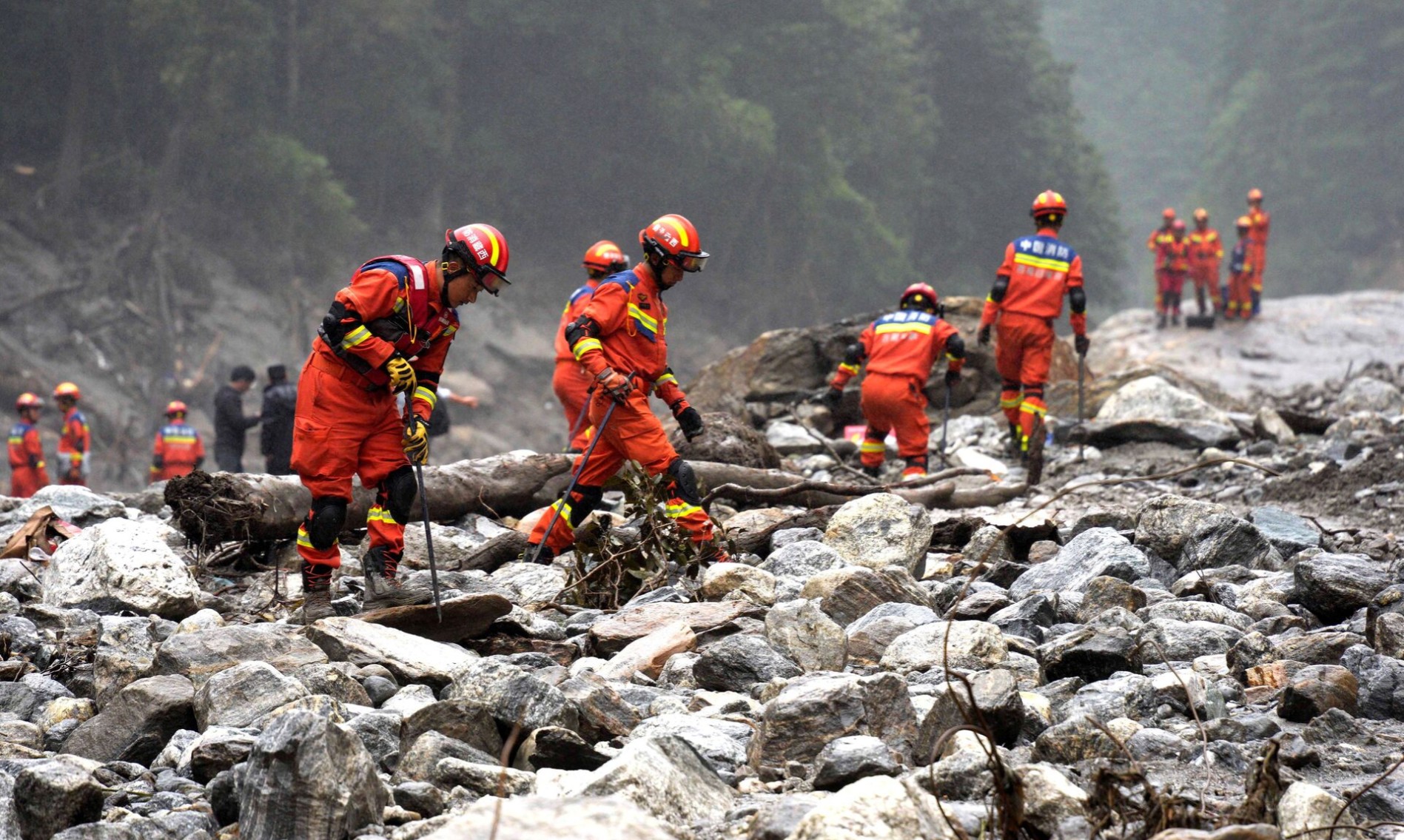
The search operations, which began on Friday, were suspended several times due to deteriorating weather conditions. Following further rain on Sunday, the water level in the Trishuli River rose, prompting local residents and rescue teams to move to higher ground.
An additional hazard was posed by a lake that formed near the border between Nepal and China following a glacial outburst and a massive landslide. By Saturday evening, most of the water had already drained away, but drones detected a new landslide approximately 2.8 kilometres downstream. It blocked the river and formed yet another body of water.
Due to the risk of a breach, the Chinese authorities have evacuated some of the rescue workers who were operating near the Girong border crossing.
China has sent rescue teams, equipment and data to assist with the search
Minister of Foreign Affairs of China Wang Yi In a conversation with a Nepalese colleague, he described the natural disaster as the most serious cross-border disaster between the two countries in recent years. According to him, the complexity and scale of the operation are unprecedented.
China has deployed over 2,100 rescue workers and allocated at least 220 million yuan, or around 32.7 million dollars, to deal with the aftermath. Beijing is providing Nepal with emergency equipment, humanitarian aid, satellite and hydrological data, and has sent specialists in tunnel rescue operations.
Equipment is delivered to hard-to-reach areas by heavy-lift drones and helicopters. Search teams use drones and specialist equipment to locate people trapped under the rubble.
Scientists attribute the flow to the glacier’s instability
Chinese scientists believe that the catastrophic flood was caused by the instability of the glacier against a backdrop of long-term global warming. According to their estimates, after the glacier collapsed, the mass of ice, water, soil and rocks reached the border area in six to seven minutes.
Chinese state media described the incident as a manifestation of dangerous processes in the cryosphere of the Tibetan Plateau, which are intensifying due to climate change. The Red Cross estimates that the disaster may have directly or indirectly affected more than 90,000 people.
The death toll may rise: thousands of people are still missing.