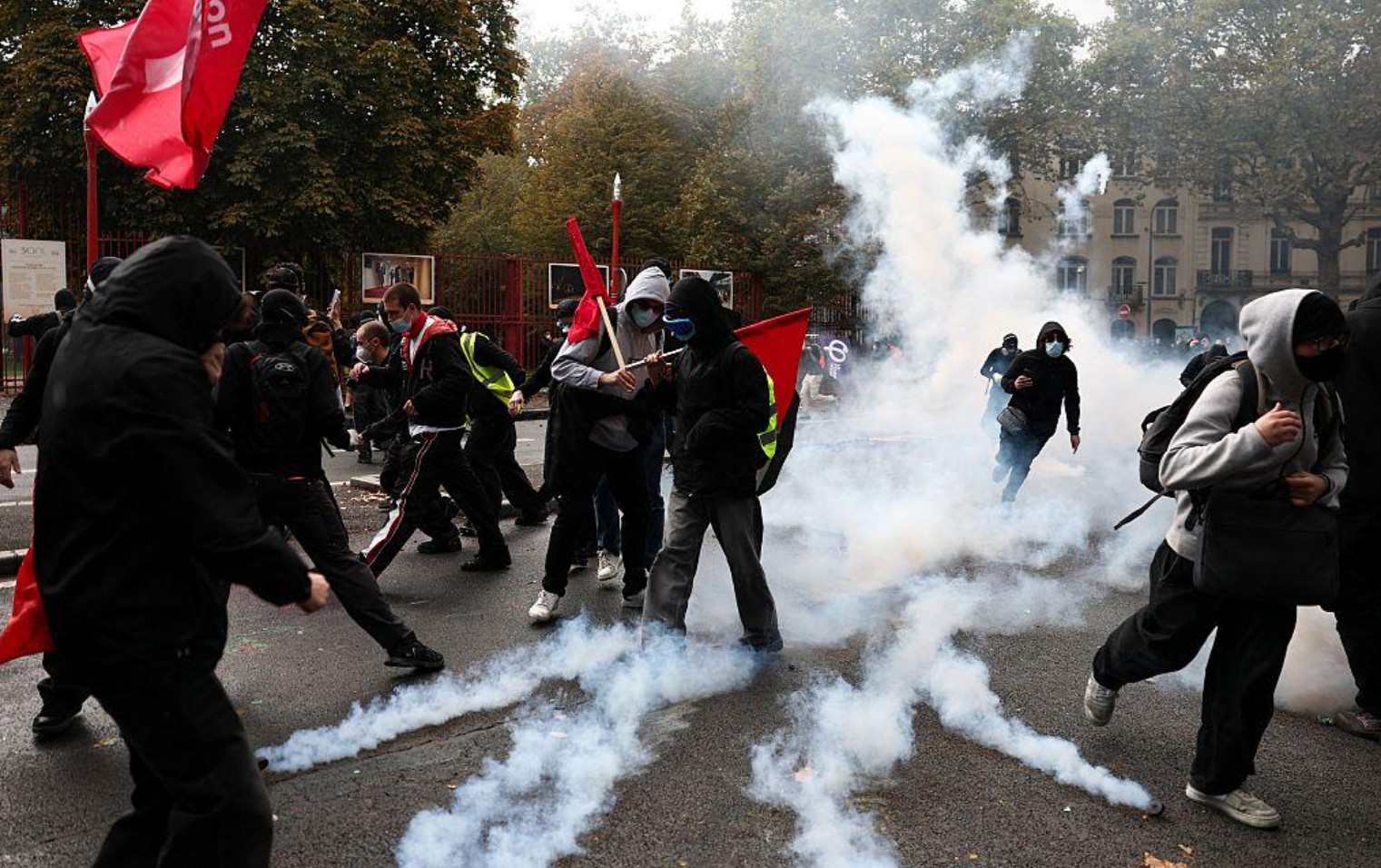
On 7 November, large-scale demonstrations took place in France against the rising cost of living, low wages and social inequality. According to the Ministry of the Interior, 146,000 people took to the streets, whilst trade unions put the figure at 250,000. Most of the protests were peaceful, although clashes with the police occurred in Paris, Lyon and other cities. In total, the police arrested 360 people. The protests are now in their fourth consecutive week, and the trade unions have already announced further strikes.
- France has seen its fourth consecutive Saturday of nationwide protests against the high cost of living.
- The Ministry of the Interior put the number at 146,000, whilst the trade unions claimed there were 250,000.
- According to police estimates, at least 46,000 people took part in the protest in Paris.
- 360 people were arrested during the demonstrations, and clashes broke out in several towns.
- Trade unions are preparing new strikes, and the government will hold talks on 9 November.
How many people took to the streets in France?
According to the French Ministry of the Interior, on 7 November 146,000 people took part in demonstrations across the country. Representatives of youth and trade union organisations estimated the number of protesters at 250,000. The organisers’ estimates are therefore almost double the official figures.
In Paris, the police recorded 46,000 participants, whilst the trade unions reported 75,000. Mass demonstrations also took place in Lille, Marseille, Toulouse and other French cities. According to official estimates, around 10,000 people gathered in Lille and 5,200 in Marseille.
This is now the fourth Saturday in a row when The French are taking to the streets in protest against rising prices for goods and services. At the same time, the number of participants is gradually falling. During the previous wave of protests on 31 October, the organisers reported half a million demonstrators.
The current protests have brought together trade unions, student organisations and representatives of the «Yellow Vests» movement. The protesters are demanding higher wages, more affordable prices for fuel and food, and increased funding for public services.
Clashes with the police and 360 people detained
Although the demonstrations were largely peaceful, clashes broke out between protesters and the police in several cities. The situation was at its most tense at the end of the march in Paris, when some of the participants began throwing objects at the police.
In Lyon, police used tear gas against several hundred people who had gathered in a public space in the city centre, where demonstrations were banned. According to the local prefecture, 13 people were arrested there.
A separate protest by the «Yellow Vests» movement took place in Place de la Concorde in Paris. The police broke up the unauthorised gathering and fined some of the participants 135 euros. Two representatives of the movement — Benjamin Ball and Azélma Sigo — were detained near the National Assembly building.
Across France as a whole, the police reported that 360 people had been arrested. More than 70,000 police officers and gendarmes were deployed to maintain order during the protests.
The protest movement has spread to staff and students
The current wave of demonstrations began in late September with protests by secondary school pupils demanding better learning conditions, additional funding for schools and a resolution to staffing issues.
Subsequently, employees from the public and private sectors, trade unions and civil society organisations joined the protests. The main causes of discontent were rising prices, wages failing to keep pace with the cost of living, and problems with the funding of education and social services.
Particularly large-scale demonstrations took place on 5 November. According to the French Ministry of the Interior, hundreds of thousands of people took to the streets that day. Trade unions estimated the number of participants to be significantly higher — at nearly 1.6 million.
The protests are putting further pressure on the Prime Minister’s government Sébastien Lecornu, which is simultaneously trying to reach an agreement on social spending and reducing the budget deficit.
New strikes are being planned in France for 10 November
On Monday, 9 November, Prime Minister Sébastien Lecornu is due to meet with representatives of trade unions and employers at the Palais de Matignon. The parties will discuss wages, the public’s purchasing power and the protesters’ social demands.
Separate consultations are planned with representatives of secondary school pupils and student organisations who are actively involved in the protest movement.
Meanwhile, trade unions and student organisations have already called for a new nationwide strike on 10 November. It is expected that workers in the education sector, who are demanding increased funding for educational institutions and better working conditions, will join the protests.