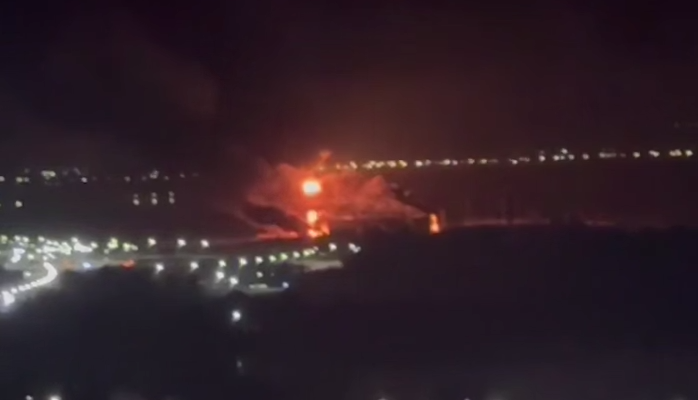
On the night of 10 October 2026, Ukrainian drones attacked Rostov-on-Don, resulting in a major fire at the oil terminal. The facility targeted was linked to the logistics operations of the Novoshakhtinsk Oil Products Plant, which handles the transhipment of fuel, including for export. Following a series of explosions, thick smoke rose above the city’s industrial zone, and the flames were visible from a distance. Yuriy Slyusar, Governor of the Rostov Region, confirmed the consequences of the massive attack and damage to a railway bridge, which led to the suspension of train services in both directions. There are also reports of one person injured and damage to residential buildings.
Briefly about the main points
- Ukrainian drones attacked Rostov-on-Don.
- A major fire broke out at the oil terminal.
- A railway bridge has been damaged in the Rostov Region.
An oil terminal is on fire in Rostov following a night-time attack
The first reports of explosions in Rostov-on-Don emerged during the night of 10 October. Local residents posted videos showing a massive fire at an industrial site. Following the explosions, a bright glow appeared over the city, and thick smoke subsequently rose into the sky.
According to OSINT analysts who have examined eyewitness footage, the fire broke out on the premises of the «Yug Rus» oil loading terminal in the Zheleznodorozhny district of Rostov-on-Don. Reports of the attack also link the facility to the Rostov logistics infrastructure of the Novoshakhtinsky Oil Products Plant.
Unlike the oil refinery itself, the terminal is designed for the collection, storage and dispatch of finished petroleum products. Fuel is fed through such facilities into the transport network for onward delivery.
The extent of the damage to the tanks, pipelines and other equipment is currently being assessed.
The oil terminal handles the export and supply of fuel to the Russian Armed Forces
The targeted facility is of great importance to Russian oil logistics. The terminal «The South of Rus» It was built to handle the transhipment of products from the Novoshakhtinsk Oil Products Plant. Its design capacity is approximately 2.5 million tonnes of oil products per year.
The terminal is situated in the Rostov port area. Its infrastructure enables fuel to be loaded onto «river-sea» class vessels, which are used for transport along inland waterways and maritime routes.
The facility handles the export of petroleum products and, according to OSINT analysts, is also involved in supplying fuel to the Russian army. Damage to such infrastructure could hamper fuel shipments and affect the facility’s logistical capabilities. The actual impact on the terminal’s operations will depend on the extent of the damage.
A railway bridge has been damaged in the Rostov Region
During the same night-time attack, transport infrastructure in the Rostov Region was damaged. The governor Yuriy Slyusar reported that a railway bridge had been damaged and that train services had been suspended in both directions.
According to the Russian authorities, more than 50 drones have been shot down over the region since the evening of 9 October. In Rostov-on-Don, several blocks of flats have been damaged, and residents have been evacuated from them. There are also reports of a drone striking an unoccupied high-rise building in Bataysk.
One man was injured and has been taken to hospital. The emergency services continued to tackle the fires and deal with the aftermath of the attack.
Russian oil infrastructure is under attack once again
A night-time attack on Rostov This took place against the backdrop of a series of Ukrainian strikes on Russian oil refineries and fuel facilities. The defence forces are systematically attacking facilities that support Russian military logistics and generate revenue from the export of petroleum products.
In particular, on 25 September, the General Staff of the Armed Forces of Ukraine reported that the Novoshakhtinsk oil refinery itself had been hit. A fire broke out on the refinery’s premises following the strike. According to the Ukrainian command, the plant has a refining capacity of around 7.5 million tonnes of crude oil per year and is involved in supplying fuel to Russian troops.
The attack on 10 October targeted another piece of oil infrastructure — the terminal for the transhipment of refined petroleum products in Rostov-on-Don. The exact extent of the damage and the timeframe for restoring operations there are not yet known.