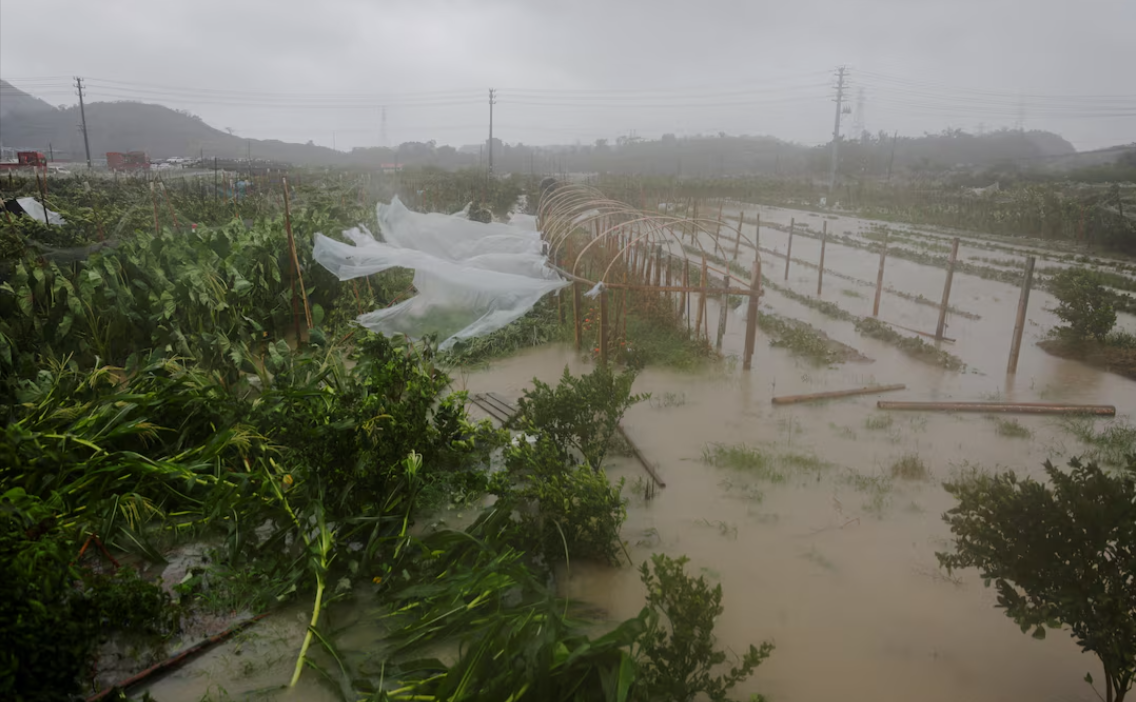
Typhoon “Bavi” swept through eastern China and Taiwan, injuring at least 134 people, according to local authorities. The storm was accompanied by strong winds and heavy rain, resulting in damage to buildings and disruption to transport services.
Briefly about the main points
- Typhoon “Bavi” struck eastern China and Taiwan.
- At least 134 people were injured.
- The storm was accompanied by strong winds and heavy rain.
- Buildings and transport infrastructure have been damaged.
- The authorities are dealing with the aftermath.
The natural disaster struck the region
Typhoon “Bavi” hit eastern China and Taiwan on the night of 12 July. According to local authorities, the storm was accompanied by gusts of wind and heavy rainfall, which caused damage to buildings and disruption to transport services. In some areas, streets were reported to be flooded.
The number of casualties and the authorities’ response
According to official sources, at least 134 people have been injured as a result of the typhoon. The authorities have mobilised emergency services to deal with the aftermath of the disaster. Local meteorological services are warning of the possibility of further rainfall and are urging residents to observe safety measures.
- At least 134 people have been injured in China and Taiwan.
- Emergency services are on the ground.
- Meteorologists are warning of further rainfall.
Damage to infrastructure and disruption to transport services
The natural disaster has caused damage to residential and commercial buildings. In a number of areas, there have been reports of disruption to public transport services and temporary road closures. The authorities are working to restore the infrastructure to normal operation.
- Buildings serving various purposes have been damaged.
- Some roads are temporarily closed.
- Restoration work is ongoing.
Importance and consequences
Typhoon “Bavi” has caused a significant number of injuries and a great deal of damage in densely populated areas. This incident highlights the vulnerability of infrastructure to extreme weather events and the need for a swift response from local authorities. Further details regarding the consequences are still being clarified.