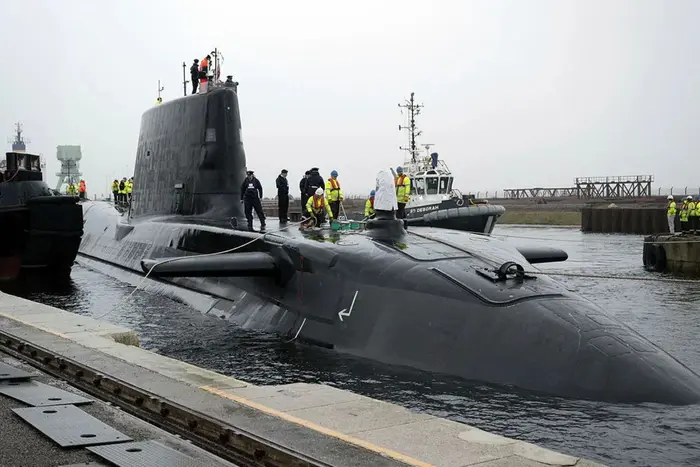
The UK has simultaneously deployed three of its four Vanguard-class nuclear submarines at sea — according to *Il Messaggero*, such a deployment has not been recorded for over five years. At least one of the submarines is carrying Trident ballistic missiles with nuclear warheads. The Royal Navy has not commented on the nature of the missions, and there is no direct evidence linking them to specific actions by Russia.
Briefly about the main points
- Three out of four British Vanguard vessels are currently at sea.
- At least one of the submarines is armed with Trident ballistic missiles.
- The Navy is not disclosing the missions of the deployed submarines.
- Monitoring of Russian activity in British waters has increased by 25%.
- London is expanding its nuclear cooperation with Paris and procuring F-35A aircraft.
The nature of the submarines’ missions is not disclosed
According to available information, two other Vanguard-class vessels may be taking part in trials or preparing for future operations. The Navy is not disclosing any details for security reasons.
A source within the navy, speaking to *The Times*, described the simultaneous presence of three such vessels at sea as unusual. However, the nature of their missions and their routes remain classified.
The Royal Navy has stepped up its surveillance of Russian vessels
This unusual deployment is taking place against a backdrop of increased monitoring of Russian military and merchant vessels off the British coast. According to the UK Ministry of Defence, in the first seven months of 2026, the number of such operations rose by 25% compared with the same period a year earlier.
In August, British ships tracked four Russian vessels in the North Sea and the English Channel for 72 hours. Among them was the destroyer «Admiral Levchenko»and merchant vessels subject to sanctions«General Skobelev» and «Sparta»; the operation was supported by a Merlin helicopter.
In June, the British authorities intercepted an oil tanker in the English Channel the Smyrtos tanker, who is subject to sanctions.
Vanguard ensures continuous nuclear standby
Submarines of this class form the backbone of Britain’s nuclear deterrent: at least one of them, armed with Trident missiles, must be on combat duty at all times. This system is designed to ensure the ability to launch a retaliatory strike even in the event of a nuclear attack on the United Kingdom.
Once deployed, Vanguard vessels are capable of remaining at sea for months. A former senior naval officer noted that the presence of several vessels could be explained by operational planning: this makes it possible to reduce the duration of patrols and the workload on the crews.
London and Paris are stepping up their nuclear cooperation
Last week, British and French fighter jets carried out their first joint exercise simulating a nuclear strike using French air-based nuclear delivery systems. In July 2025, the two countries agreed to strengthen the coordination of their nuclear arsenals.
The British Government It has also decided to purchase 12 F-35A fighter jets capable of carrying American B61 nuclear bombs. They are expected to be delivered by the end of the decade.
France plans to expand security cooperation in Europe
The Telegraph previously reported on more than 500 instances of suspicious activity by Russian fishing vessels near the undersea cables linking Britain to Europe and the US over a four-year period. NATO has stated that it is monitoring such vessels.
Paris plans to expand its cooperation with ten European countries, particularly regarding the possible deployment of Rafale fighter jets, the development of early-warning systems and the exchange of intelligence. Former Royal Navy commander Tom Sharp cautioned that the deployment of the Vanguard should not be interpreted unequivocally as a direct signal to Moscow, as it may simply be the result of routine planning.