US President Donald Trump has stated that, through a partnership with the private sector, Washington has gained majority control over more than 65 billion barrels of Venezuela’s proven oil reserves. The country’s interim leader, Delcy Rodríguez, welcomed the agreement; however, its legal and financial framework remains unclear, and the start of production may require many years of infrastructure modernisation.
Briefly about the main points
- Trump stated that the US controls over 65 billion barrels of proven reserves.
- American companies are preparing to secure new exploration and production licences.
- Rodríguez anticipates the development of 17 fields and significant tax revenues.
- Rubio forecasts nearly $100 billion in private investment.
- Legal risks and poor infrastructure could hinder implementation.
Access to the fields is being arranged following several weeks of negotiations
The announcement was preceded by several weeks of talks between the US and Venezuela. Agreement is intended to provide US companies with long-term access to a group of oil fields, and the plan is to supply the extracted crude oil to the United States.
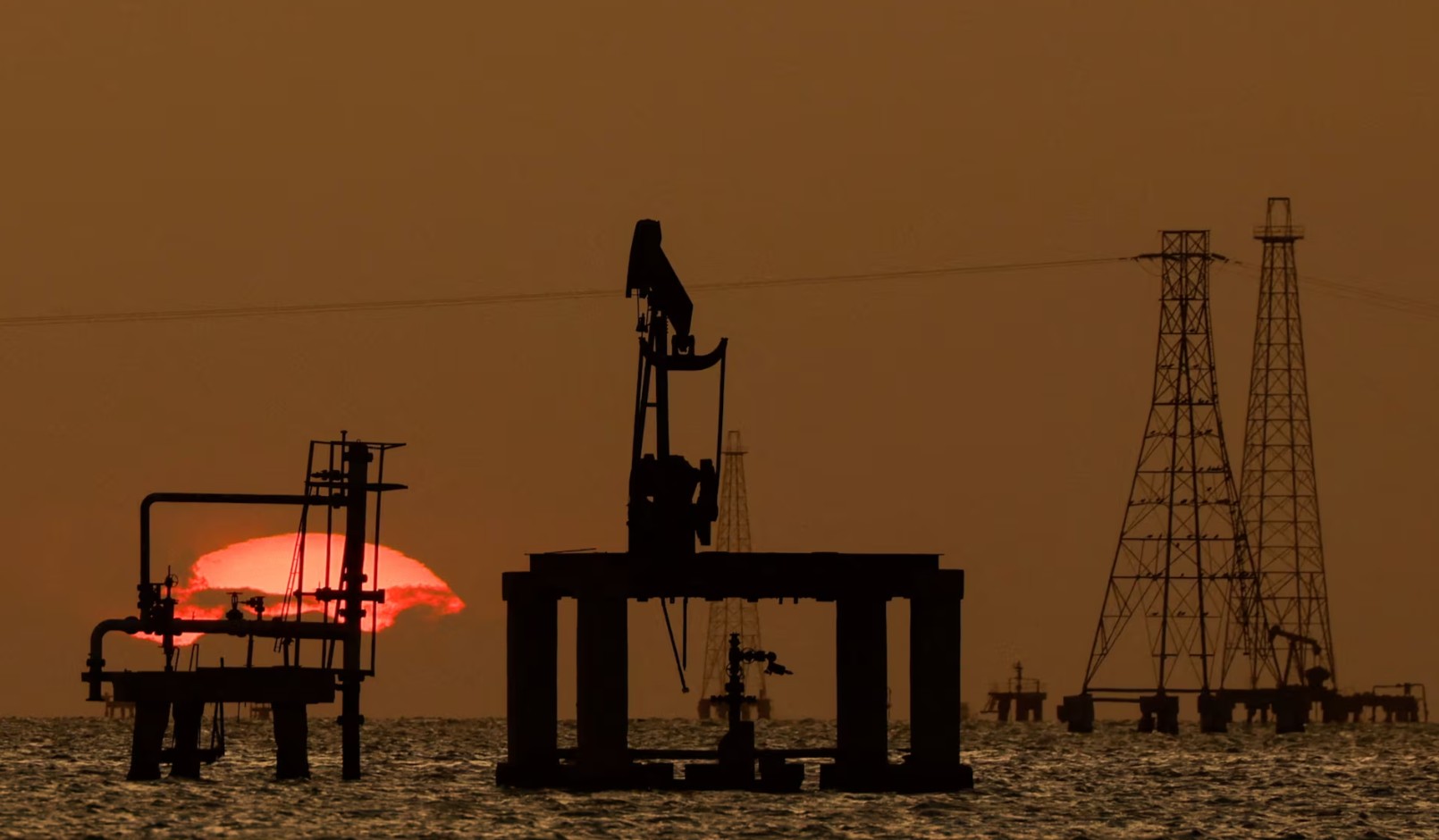
Venezuelan officials are preparing to sign agreements next week granting new exploration and production rights, primarily to US companies. A list seen by Reuters identifies fields in the Orinoco Belt and the Lake Maracaibo area.
Trump did not specify the structure of the agreement, any particular fields or the companies involved, nor did he explain how the US would exercise the stated majority control. Previously, the parties had been considering a lease model under which the fields could be put up for auction to American producers.
Washington and Caracas have outlined the expected benefits of the agreement
US Secretary of State Marco Rubio described the agreement as beneficial to both countries. According to him, it should ensure a stable supply of low-cost oil to the United States and potentially help to bring down petrol prices.
Rubio forecasts nearly $100 billion in private investment for Venezuela, thousands of high-paying jobs and support for economic recovery. Rodríguez stated that the development of 17 strategic oil fields would enable a significant increase in production, whilst tax revenues could reach $209 billion.
These estimates represent the officials’ stated expectations. Actual levels of investment, production and tax payments will depend on the terms of the contracts and the ability to implement the projects.
Why has Venezuelan oil become a subject of interest for Washington?
Venezuela has the world’s largest proven oil reserves, but currently produces around 1.25 million barrels per day. Production has fallen sharply following years of underinvestment, mismanagement and sanctions.
After elimination Nicolas Maduro Washington is seeking to ensure a steady supply of Venezuelan oil to US refineries and to encourage US business investment in the sector. The Trump administration is also under pressure in the run-up to the November mid-term elections due to consumer concerns over rising petrol prices.
The US is also looking for ways to replenish the Strategic Petroleum Reserve, and is in particular considering possible exchanges of raw materials with American producers. Venezuela’s oil industry was nationalised in the 1970s, and under Hugo Chávez, the state tightened its control through state-run joint ventures and the expropriation of foreign companies’ assets.
Legal restrictions and infrastructure may delay the outcome
Analysts point out that the legal and financial parameters of the deal are needed to assess its ability to attract substantial investment. The state retains control over key operations in the oil sector, so the lease model may face constitutional and legal challenges.
President of Goldwyn Global Strategies David Goldwin said that he could not think of a precedent where the US government had entered into a lease agreement for the exploitation of oil fields in Venezuela. He also questioned whether the new scheme would address the factors that have deterred investors for years: political uncertainty, a weak electricity grid, limited export capacity and the authorities’ broad discretion in managing the sector.
A rapid fall in petrol prices in the US is not guaranteed. It could take years to build the capacity needed to extract, transport and refine heavy Venezuelan crude.