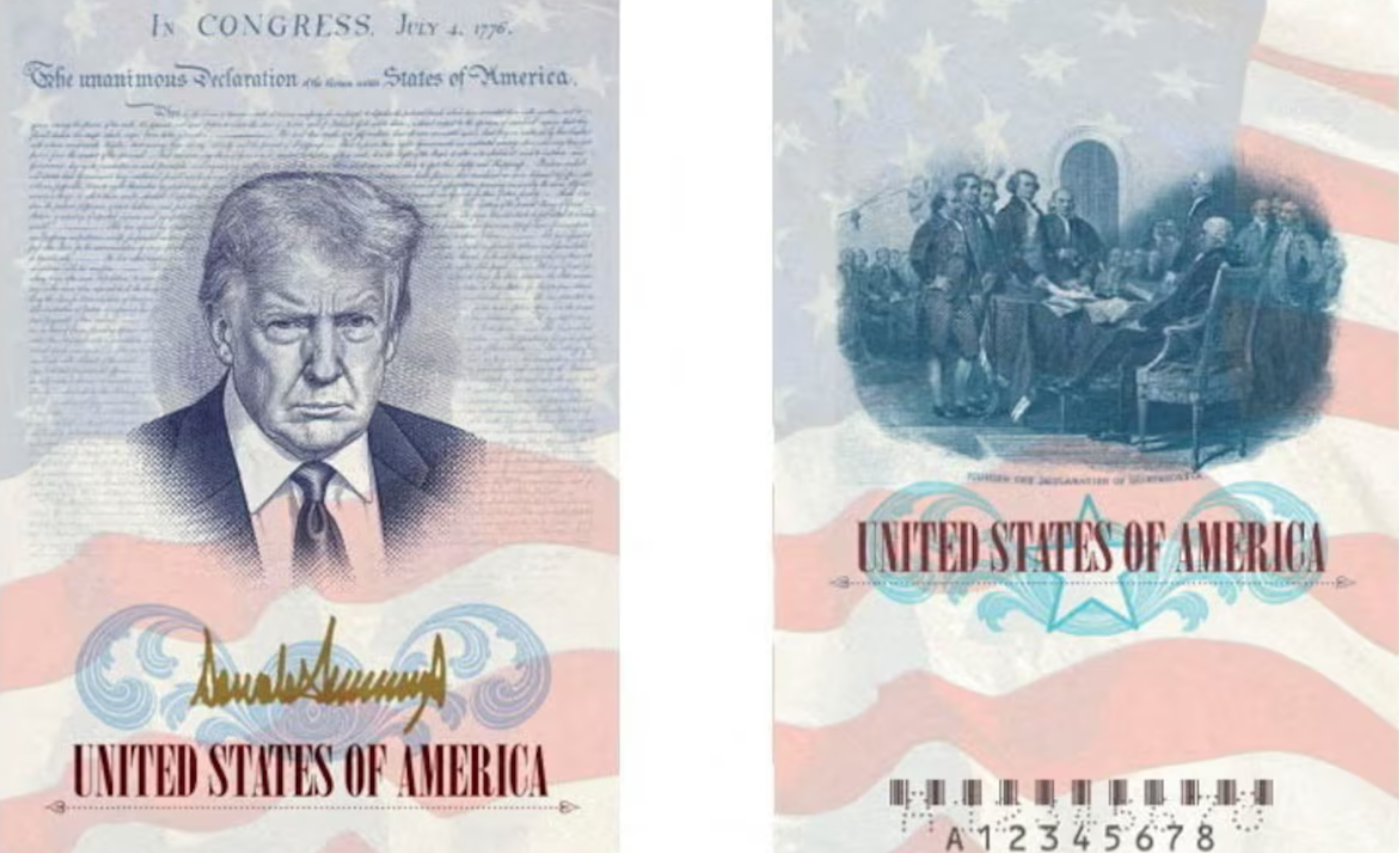
The US Department of State has drawn up draft regulations under which parents or legal guardians must provide evidence of their own citizenship or immigration status when applying for a passport for a child. The documents are intended to verify whether President Donald Trump’s executive order restricting birthright citizenship in certain cases applies to the child. The initiative has not yet been implemented, and the executive order itself is being challenged in the courts.
Briefly about the main points
- The project concerns applications for children’s passports.
- Parents may be required to provide proof of their citizenship or immigration status.
- The check relates to Executive Order 14418.
- The current procedure does not require such supporting documents.
- Federal courts are hearing cases seeking to block the decree.
What documents may be required when submitting an application
The draft guidelines state that the agency will require information about the parents and evidence of their citizenship or immigration status in order to determine whether the applicant falls within the scope of EO 14418. This requirement would apply to all parents or legal guardians applying for a passport on behalf of a child.
A valid US passport or birth certificate may be accepted as proof of US citizenship. To confirm immigration status, applicants are advised to submit, amongst other things, Form I-94 or a permanent resident card – a green card. The White House referred Reuters’ enquiry to the State Department, and department spokesperson Tommy Pigott stated that the administration is seeking to ensure that passport processing aligns with its approach to US citizenship.
How does the proposed audit differ from the current procedure?
At present, parents of children born in the US must confirm their relationship with the child and provide a document bearing a photograph in order to obtain a passport. In their application, they must also state whether they are US citizens, but are not required to provide separate evidence of their citizenship or immigration status.
The new presidential decree is narrower in scope than the administration’s previous attempt to amend the rules on citizenship by birth and is specifically aimed at a practice which the White House refers to as «birth tourism». It provides for the non-recognition of citizenship in certain cases relating to a father or mother working for a foreign government in the US, fraud or a commercial scheme to obtain citizenship, as well as «alien enemy» status.".
Courts are hearing claims against the new decree
Previous decree Trump provided for automatic citizenship at birth only for children who have at least one parent who is a US citizen or a green card holder. The Supreme Court, in a 6–3 ruling, declared the decree unlawful, concluding that it violated the citizenship provisions of the 14th Amendment to the US Constitution.
Lawyers in two class-action lawsuits, brought on behalf of children who may lose their citizenship under the new decree, are asking federal judges to suspend its implementation. A US District Court judge in Maryland Deborah Bordman At the hearing in Greenbelt, she expressed scepticism regarding what she described as an unprecedented decree and allowed the claimants to amend their claim so that the request for an injunction could be considered.
Lawyers from the US Department of Justice are objecting to the injunction. They consider the appeal to be premature, as federal agencies had not yet issued any public guidance on implementing the presidential order at the time of the hearing.