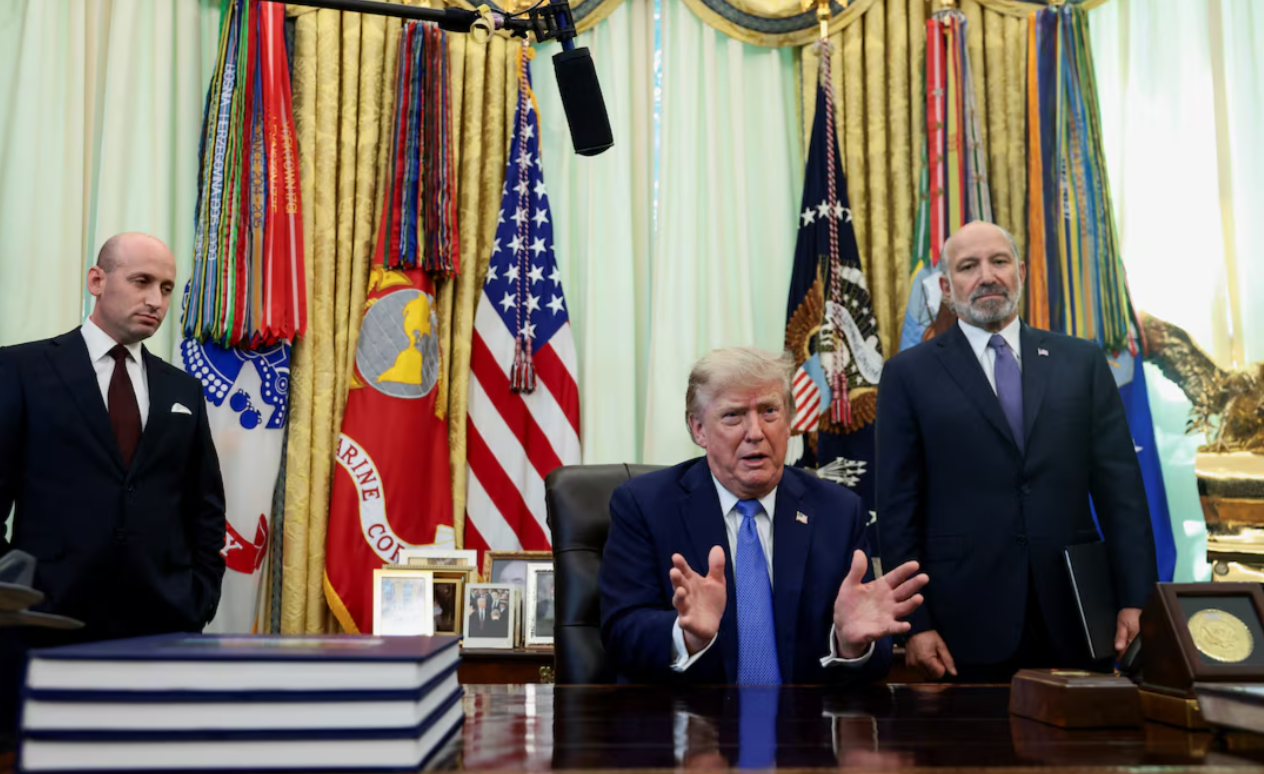
On 6 August, US President Donald Trump signed two executive orders in a renewed attempt to restrict birthright citizenship. The initiative is primarily aimed at combating a practice the administration refers to as «birth tourism», and comes after the Supreme Court ruled that a previous, much broader executive order was unconstitutional. Human rights campaigners are predicting new legal challenges.
Briefly about the main points
- Trump’s executive orders target «birth tourism» and certain exceptions to the right to citizenship.
- The new initiative was signed following the Supreme Court’s rejection of the previous decree.
- The administration considers that the new provisions do not cover the court ruling.
- The 14th Amendment traditionally guarantees citizenship to those born in the United States.
- Lawyers have doubts about the practical effect of the decrees and expect legal challenges.
Who might be affected by the new restrictions?
White House aide Stephen Miller stated during the signing ceremony in the Oval Office that the practice of «birth tourism» — trips by pregnant foreign women to the US to give birth — is now banned.
The executive orders also restrict the rights of children born in the US to employees of foreign governments, as well as to people classified as enemy aliens. They may also affect people born in US territories, but only if Congress passes a separate proposed bill to end automatic citizenship in those territories.
The previous decree had a much wider scope
Previous decree Donald Trump issued on the first day of his presidential term in 2025 as part of a crackdown on immigration policy. He ordered federal agencies not to recognise the citizenship of children born in the US if neither parent was a US citizen or a permanent resident holding a green card.
The document applied to the children of people who were in USA illegally or temporarily. On 30 June, the Supreme Court, in a 6–3 ruling, declared this approach unconstitutional. Trump described the verdict as «very unfortunate» and stated that «businesses are being built» around birth tourism.
The controversy surrounding the 14th Amendment
The Trump administration maintains that the new executive orders are not covered by the Supreme Court’s ruling, as they are intended to reinterpret narrow historical exceptions to the right to citizenship and broaden the scope of people who cannot acquire it by birth.
The citizenship provision of the 14th Amendment has traditionally been interpreted as a guarantee for all those born in the United States, with the exception, in particular, of the children of foreign diplomats or members of an enemy occupying force. Chief Justice John Roberts wrote in the judgement that the framers of the amendment extended this promise to every person born free in the country.
The ACLU has described the new documents as doomed to fail in court. Deborah Fleishaker, a spokesperson for UnidosUS, stated that the executive orders are an attempt to circumvent the court’s ruling and a constitutional guarantee that has been in force for over 150 years.
An Assessment of Maternity Tourism and the Legal Perspective
There is no official record of foreign nationals who come to the US specifically to give birth to a child and secure citizenship for that child. Nor is there any official data on the cost to taxpayers associated with this practice.
The Centre for Immigration Studies, which advocates for a reduction in immigration levels, estimated the number of such mothers at between 20,000 and 25,000 for the 2016–2017 period. By way of comparison, 3.6 million children were born in the US in 2025.
Legal experts believe it is unclear what practical effect the decrees will have in light of the Supreme Court’s ruling. A spokesperson for the Women’s Refugee Commission Zane Lahani She stated that these measures could infringe the rights of pregnant women seeking to enter the country legally, and called on the government to draw up regulations in line with the court’s ruling.