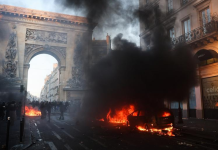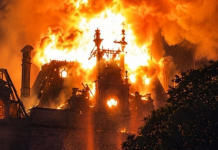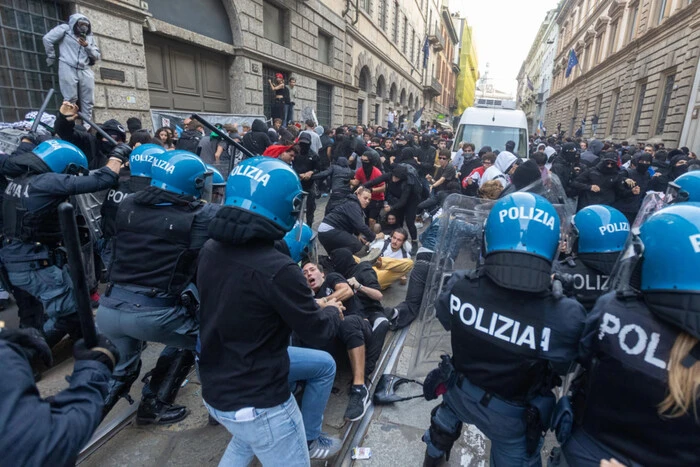
On 17 October 2026, in the centre of Milan, Italy, a mass demonstration against the rising cost of living escalated into large-scale riots. Hundreds of protesters clashed with the police near the famous Duomo cathedral, pelting officers with stones, bottles and powerful fireworks. Fires broke out on the main streets, and shops, historic buildings and police vehicles were damaged. According to Italian media reports, the police arrested around 50 people, a significant number of whom were minors. Dozens of people were injured in the clashes.
Briefly about the main points
- On 17 October, mass disturbances broke out in the centre of Milan.
- A protest against high prices escalated into clashes with the police.
- Near the Duomo, barricades were set alight and property was vandalised.
- Around 50 people were detained, including many minors.
- There have been casualties among law enforcement officers and demonstrators.
How a protest against high prices escalated into street clashes
A mass demonstration entitled Italy in the Square brought together more than five thousand participants in the centre of Milan. People were protesting against rising fuel prices, low wages, high taxes and problems with the funding of public services.
Initially, the demonstration was largely peaceful. However, near Via Broletto and Via San Tommaso, small groups began throwing stones and firecrackers at the police. The unrest subsequently spread to Piazza del Duomo, where Milan’s main cathedral is situated. Hundreds of young people dressed in dark clothing and with their faces covered attacked the police cordons.
According to reports in the Italian media, the police were forced to temporarily withdraw and call for reinforcements. Later, additional police units arrived at the central square in armoured vehicles.
Fires broke out near the Duomo cathedral and shops were looted
The most serious disturbances took place in Piazza del Duomo and along the shopping street Vittorio Emanuele II. Those involved in the riots erected barricades using metal fences, rubbish bins and furniture from nearby establishments. Some of the structures were set alight.
During the clashes, a Carabinieri vehicle and police vans were damaged. The attackers also smashed shop windows and damaged public infrastructure.
According to the ANSA news agency, shops belonging to well-known brands were vandalised:
-
Foot Locker — the shop window was smashed and goods were stolen.
-
Nike — the shop premises have been damaged.
-
Rinascente — damage to property has been recorded.
In the nearby Vittorio Emanuele II Gallery, shops had lowered their security shutters, whilst staff and visitors remained inside, trying to avoid any clashes.
At the same time, the confirmed fires mainly involved barricades and street furniture. There is currently no reliable evidence of cars being set alight on a large scale in the immediate vicinity of the Duomo.
The police used water cannons and tear gas
In order to regain control of the main streets, the police used water cannons and tear gas and carried out several operations to disperse aggressive groups.
Around 50 people involved in the riots were taken to police stations. Almost half of those detained are minors.
Paramedics treated the injured near Piazza del Duomo and Piazza Cordusio. Those injured included both protesters and law enforcement officers. Some police officers sustained head injuries after being struck by pieces of paving stone. The exact number of people injured is still being confirmed.
The unrest has spread to other cities in Italy
On 17 October, clashes with the police took place not only in Milan. Disturbances were also reported in Turin, Bologna and Bergamo. Participants in some of the demonstrations threw stones, bottles and fireworks at the police.
The situation became particularly tense in Bologna, where dozens of law enforcement officers were injured following clashes.
The protests in Italy coincided with large-scale protests in France. In both countries, the rising cost of living and low incomes are cited as among the main causes of public discontent.
How the Italian authorities reacted to the riots
Prime Minister of Italy George Maloney condemned the violence during the protests. She emphasised that the right to peaceful demonstration cannot justify attacks on law enforcement officers or the destruction of urban infrastructure.
Mayor of Milan Giuseppe Sala acknowledged that the social causes of the protest were justified, but described the violence against the police and the damage to public property as unacceptable.
Local authorities and law enforcement agencies are investigating the circumstances of the attacks, identifying those involved and assessing the damage. According to preliminary reports, retail premises and public spaces in central Milan have suffered the most damage.