On the morning of 8 June, a powerful 7.8 magnitude earthquake struck near the city of General Santos on the southern island of Mindanao. The tremors caused the destruction of buildings, the death of three people and a tsunami warning with waves of up to three metres along the Philippine coast. Authorities are urging residents to evacuate to safer heights.
- A 7.8-magnitude earthquake struck near General Santos in the Philippines.
- A tsunami with waves of up to 3 metres has been announced along the coast of the Philippines.
- At least three people were killed and four were injured.
- Schools in the affected regions are temporarily closed.
Details of the earthquake and its consequences
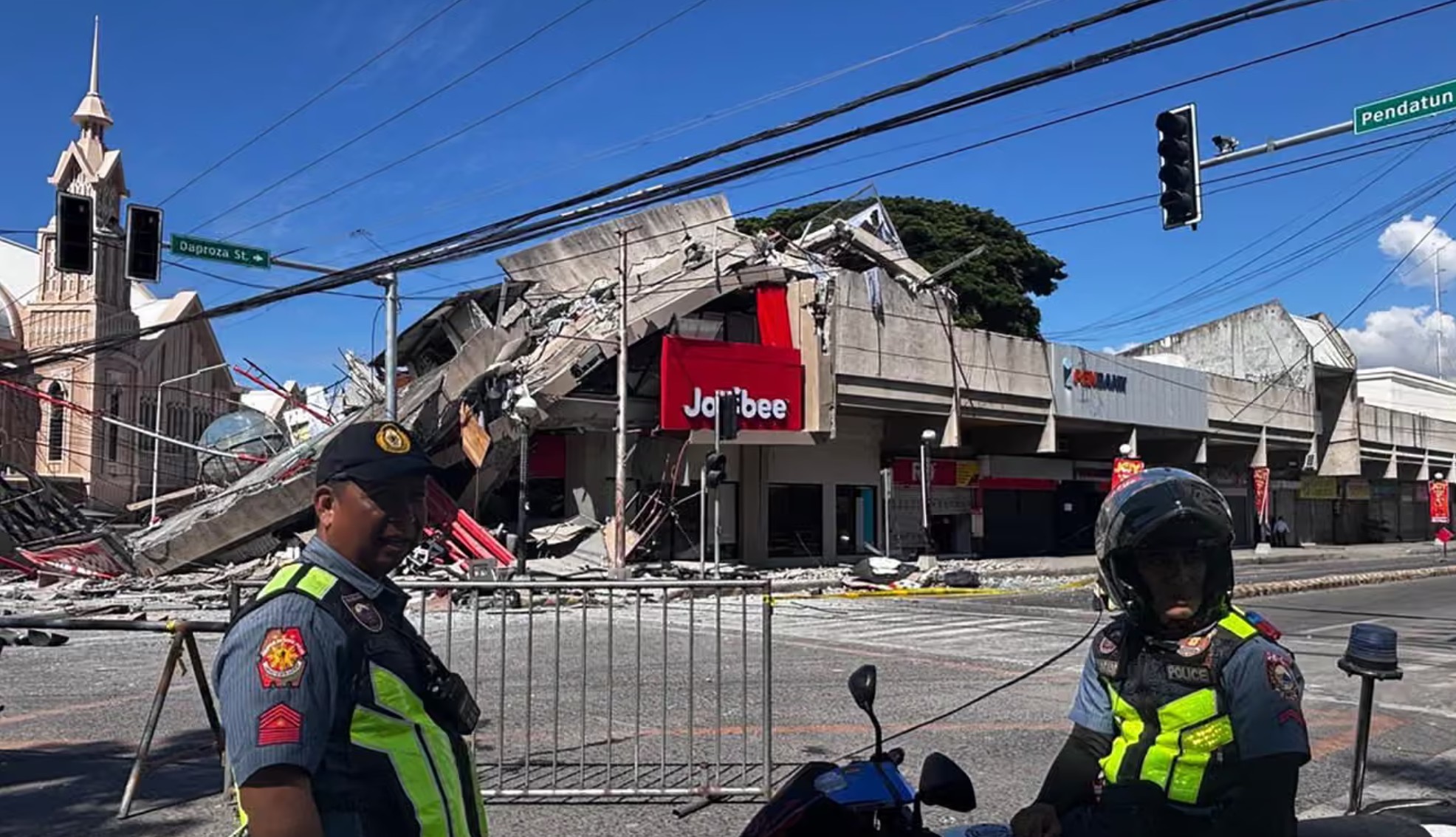
The magnitude 7.8 earthquake occurred at 7:37 am local time, 13 km southwest of General Santos on the island of Mindanao. The depth of the tremor was 10 km, according to the Philippine Institute of Volcanology and Seismology. The USGS recorded a depth of 55.2 km. The aftershocks caused the destruction of buildings, including the collapse of the top floor of the Jollibee restaurant and the walls of the shopping mall. About. reports The Guardian.
Human casualties and victims
According to local police, at least three people were killed and four were injured. The collapse of a part of a school in Davao del Sur province occurred during a morning assembly of students. The Philippine Red Cross provided assistance at three schools where many children were stressed by the incident. Philippine President Ferdinand Marcos Jr. ordered the suspension of classes in the affected areas.
Tsunami threat and government response
After the earthquake, tsunami warnings were issued for waves of up to three metres on some coasts of the Philippines. A similar threat existed for Indonesia and Malaysia, where waves of up to one metre were expected. In Indonesia, evacuations were cancelled due to minor waves. The Philippine authorities urged residents to evacuate to higher ground or move away from the coast. The President stressed that people's lives are a priority over property.
Regional context and natural risks
The Philippines is located in the Pacific Ring of Fire, which makes the country vulnerable to earthquakes and volcanic eruptions. Every year, the archipelago suffers from about 20 typhoons and tropical storms. The earthquake occurred on the first day of the new school year, which underscores the importance of the authorities' prompt response for the safety of the population.
Infrastructure damage and further actions
The aftershocks caused power outages, destroyed shops and brought traffic to a standstill on some streets. Rescue services continue to clear roads and assess the extent of the damage. Police Chief Sergeant Robert Dagon said that rescue operations are ongoing and the exact number of damaged buildings is difficult to say at this time due to the intensity of the operations.