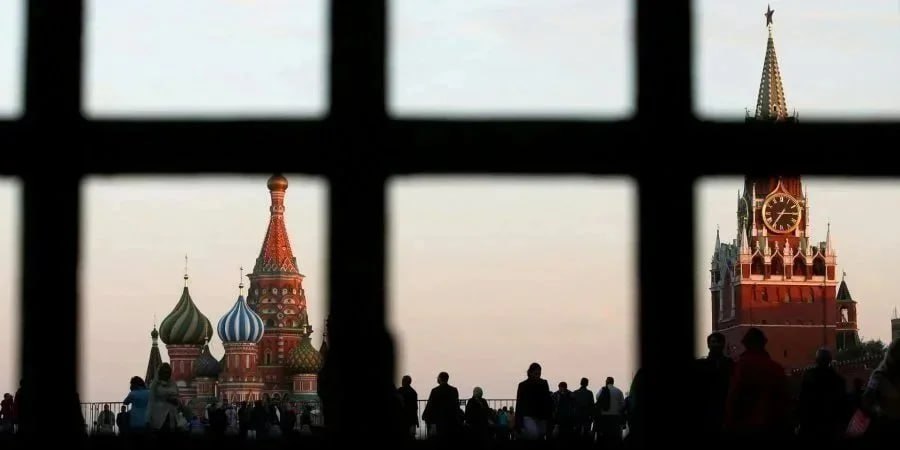
Whilst Russian state propaganda continues to report on «successes», a serious rift is brewing behind the scenes of the Kremlin regime. According to a British publication The Telegraph, … Dissatisfaction is growing rapidly among Russian senior officials, MPs and even former staunch Kremlin loyalists. Against the backdrop of a protracted war, economic pressure and regular strikes on Russian territory, Vladimir Putin is being openly warned that the country is on the brink of internal collapse.
«The time for illusions is over»: who is opposing Putin and why
The most telling moment came during a public speech by a State Duma deputy from the Communist Party (CPRF) Vyacheslavova Markhaeva. He explicitly demanded that Putin to provide a clear public plan for ending the so-called «special military operation», criticising the Kremlin’s «ineffective leadership».
The politician openly raised issues that were previously considered taboo in Russia:
-
Major corruption scandals at the Ministry of Defence.
-
The dominance of the oligarchy.
-
The catastrophic loss of «the most active and productive section of the population» on the front line.
-
Constant attacks by Ukrainian drones on Russian cities.
From a speech by Vyacheslav Markhaev:
«The country is on the brink of social unrest, and the current government will bear full responsibility for this. If the situation persists, social unrest and chaos will be inevitable.».
Markhaev is not the only one. Previously, another State Duma deputy Renat Suleimanov stated that ending the war is «absolutely essential», as Russian economy simply cannot withstand a prolonged standoff. What is more, even radical pro-Kremlin bloggers and former members of the Russian Federation’s Public Chamber, such as Ilya Remeslo, ... began publicly referring to Putin as a «war criminal» and calling for him to be put on trial.
The economy on the brink and Nabiullina’s «disappearance»
The economic foundations underpinning the regime have begun to crumble significantly. The military sector is consuming record-breaking budgets, leaving the Russian Ministry of Finance in a state of constant alarm.
Strikes by Ukrainian drones at Russian oil refineries and oil terminals have yielded tangible results — crude oil processing volumes in Russia have fallen to a 16-year low, which has dealt a severe blow to budget revenues. Economic growth has slowed to critical levels, whilst inflation remains out of control.
Against this backdrop, the high-profile scandal involving Elvira Nabiullina, Governor of the Central Bank of the Russian Federation, who suddenly vanished from the public eye, proved particularly telling. Although the Kremlin claims she is on «sick leave», insiders assert: Nabiullina has issued Putin with a tough ultimatum — she will serve out her term only on condition that the Kremlin does not impose martial law or close the borders in order to make a complete shift towards totalitarianism.
A record drop in confidence and a shortage of «cannon fodder»
A combination of domestic problems (widespread internet disruptions and outages, shortages of goods) and a lack of significant victories on the battlefield has caused Putin’s approval ratings to plummet. According to sources Ukrmedia, the level of genuine trust Russians have in the dictator fell to a historic low — 29.5%. This forced the state-run VTsIOM (All-Russian Centre for the Study of Public Opinion) to urgently suspend the publication of public opinion polls so as not to reveal the leader’s catastrophic drop in popularity.
Russia is also rapidly losing its main advantage — its seemingly endless supply of manpower. Despite the huge signing bonuses (which in some regions run into millions of roubles) and promises to write off all debts, the influx of volunteers has fallen dramatically.
| The main factors behind the internal crisis in the Russian Federation |
| Economic deadlock: Crude oil processing has fallen to 2010 levels due to attacks on refineries. |
| Military stalemate: The Russian army has lost the initiative; its advance has slowed to its slowest pace since the start of the war. |
| The mobilisation crisis: Cash bonuses no longer attract enough new recruits. |
| Attacks on the rear: Drone sightings in Moscow and St Petersburg have shattered the myth of «safety». |
What's next?
Despite pressure from financial elites and certain politicians, Putin is currently refuses change course. Instead of seeking compromises, he signed yet another decree increasing the army’s authorised strength.
However, experts agree on one thing: discontent within the Russian elite is no longer hidden. When technocrats and establishment politicians start speaking openly of a «social explosion», it means that the Kremlin regime’s resilience is nearing a critical point.