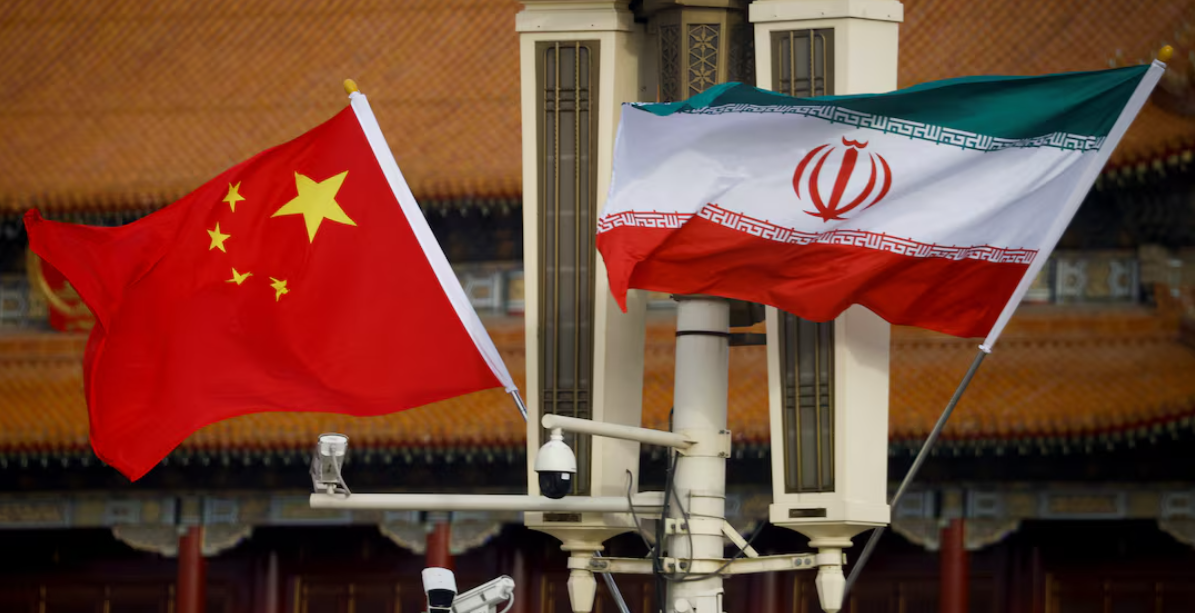
Iran is expecting its first batch of Chinese man-portable air defence systems within a few weeks, three sources familiar with the deal told Reuters. The contract, worth between 60 and 70 million dollars, covers between 300 and 400 QW-12 and FN-16 systems. Beijing has denied the reports, whilst the Pakistani military has denied any involvement in the arms transfer.
Briefly about the main points
- The contract provides for the procurement of 300–400 QW-12 and FN-16 portable systems.
- Iran may receive the first consignment within a few weeks.
- Sources have estimated the value of the deal at between 60 and 70 million dollars.
- The intermediary was Zhongqing Baoshang, a company registered in Hong Kong.
- China and Pakistan have denied reports of the deliveries.
The agreement was concluded through a Hong Kong-based intermediary
According to sources, the agreement was signed with Zhongqing Baoshang International Investment, a company registered in Hong Kong. It acted as an intermediary between the Iranian side and the Chinese supplier.
The sources spoke on condition of anonymity due to the sensitivity of the matter. The Iranian Ministry of Foreign Affairs did not provide Reuters with an immediate comment. Zhong Qing Bao Shang Group, the Beijing-based parent company, also did not respond to the agency’s enquiry.
Beijing and Islamabad have denied reports of the handover
The Chinese Ministry of Foreign Affairs described the reports in question as «completely groundless» and stated that China has consistently worked to promote peace and bring the conflict to an end.
According to the plan described by sources, the initial shipments were to be transported by air from Urumqi in western China, and then on through Pakistan to Iran. They did not specify whether transit through Pakistan would be by air or overland.
Pakistan’s military press service, the ISPR, has described claims that the country is involved in the supply of air defence systems from China to Iran as fabricated and untrue. A spokesperson for the Pakistani Foreign Ministry did not respond to enquiries.
Mobile air defence after months of war
Tehran’s need to rearm arose following months of fighting, during which the US and Israel carried out strikes against targets linked to Iran’s missile, drone and air defence programmes. Iran responded by launching ballistic missiles and drones.
On Saturday, Washington abruptly suspended the two-week bombing campaign. President Donald Trump stated that the strikes would resume if negotiations failed to bring an end to the five-month conflict, which has been formally under a ceasefire since April.
The QW-12 and FN-16 are portable, infrared-guided anti-aircraft missile systems designed to engage low-flying aircraft, helicopters and drones. They can be rapidly deployed and moved by small teams, making them less vulnerable than fixed air defence batteries.
Delivery routes and terms are subject to change
Sources cautioned that the signed contract does not guarantee that the timetable, the number of systems or other implementation details will remain unchanged. Two Western intelligence sources and an Iranian official also reported that Tehran had been exploring overland routes for the more discreet transport of Chinese military goods and dual-use components.
A European security source stated that the authorities in his country were aware of several contracts under discussion regarding the possible sale of QW-series systems to Iran, specifically the QW-12, QW-18 and QW-19. Another source in the Middle East reported that Iran had been seeking the QW-12 and QW-18, but was unaware that a deal had already been concluded.
The supply of hundreds of MANPADS could significantly expand Iran’s arsenal of short-range air defence systems. It also points to a deepening of Tehran’s military ties with China, although Beijing denies that such an agreement has even taken place.