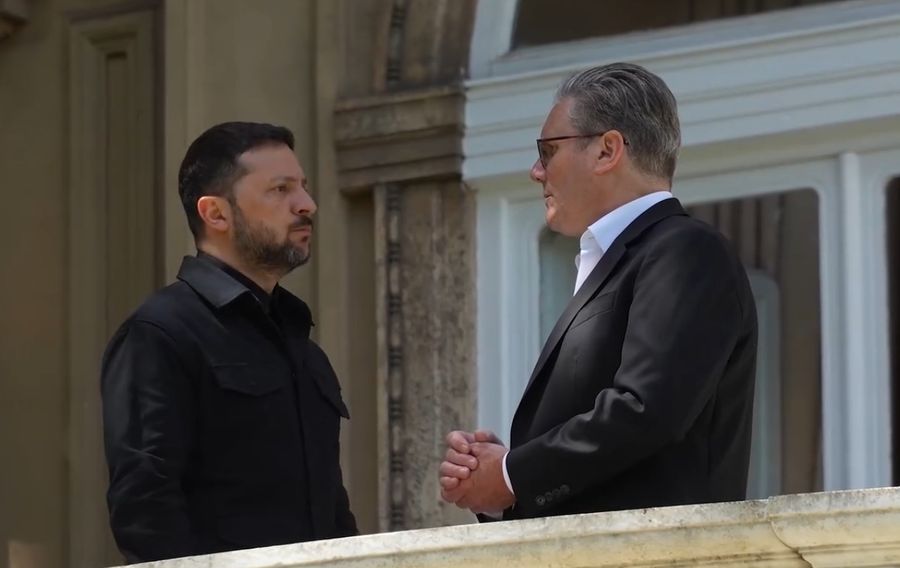
Ukrainian President Volodymyr Zelenskyy has thanked the UK for intercepting a Russian oil tanker in the English Channel, describing it as an important step in the fight against the financing of the war. He called on Europe to strengthen the legal framework for the confiscation of oil from Russian vessels. The UK and France are leading an initiative to establish security guarantees for Ukraine in future peace agreements.
- Zelenskyy thanked the UK for detaining a Russian tanker in the English Channel.
- He called on Europe to pass legislation allowing for the confiscation of oil from Russian vessels.
- The UK and France are taking the lead in providing security guarantees for Kyiv.
- Russia is rejecting proposals for talks and maintaining its hardline stance.
The importance of the detention of the Russian tanker for Ukraine
Pros. information The Guardian, President Volodymyr Zelenskyy described the UK’s operation to intercept a Russian oil tanker in the English Channel as an «important step». He emphasised that a decline in Russia's revenues dependence on oil and gas directly undermines the ability to wage war. In his post, he thanked the British Prime Minister To Keir Starmer and to all Britons for their support.
A call to Europe for legislative action
Zelenskyy has called on Europe to urgently pass legislation that would not only allow for the detention of tankers and restrictions on oil supplies, but also the confiscation of the cargo they are carrying. In his view, this would bring us significantly closer to peace in Ukraine. This approach aims to increase economic pressure on Russia and reduce its financial resources.
The role of the United Kingdom and France in security guarantees
The United Kingdom, together with France, is leading the so-called «coalition of the willing» initiative, which aims to establish security guarantees for Kyiv as part of any future peace agreements with Moscow. Despite this, the Russian president Vladimir Putin rejects proposals for negotiations and maintains a hardline stance.
The stability of the front and the foreign policy context
Since the start of Russia’s full-scale invasion front line stretching over 1,000 kilometres, remains largely stable. The active use of unmanned aerial vehicles is hampering the parties’ progress. At the same time, the conflict between the US, Israel and Iran has diverted critical resources and diplomatic attention away from Ukraine in recent months.