Volkswagen is considering its biggest restructuring in 90 years. 100,000 jobs are at risk, along with the closure of four factories in Germany, due to competition from China and high costs.
- Volkswagen may cut up to 100,000 jobs in Germany.
- Four large factories are at risk of closure.
- Reasons: high production costs, competition from China, US tariffs.
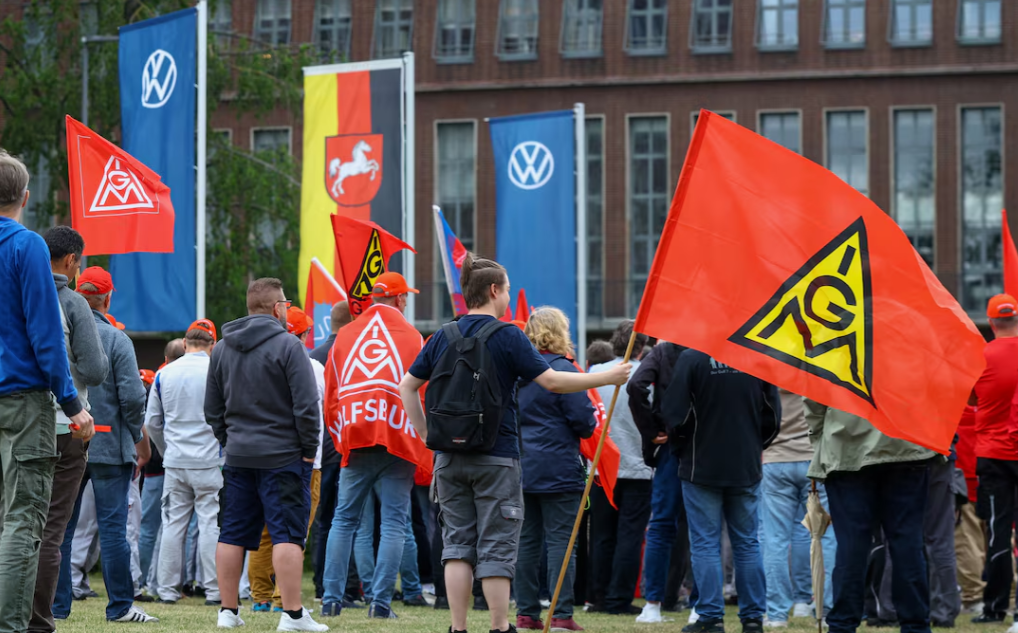
- Staff staged protests ahead of the supervisory board meeting.
- Volkswagen shares have fallen to their lowest level in 16 years.
Volkswagen on the brink of change
German car manufacturer Volkswagen is preparing for the largest restructuring in its history. At a meeting of the supervisory board in Wolfsburg, the management plans to present a plan that could lead to the loss of up to 100,000 jobs and the closure of four factories in Germany.
The company’s Chief Executive Officer Oliver Blume is trying to persuade the trade unions to support these changes. Management believes that these measures are necessary to maintain the company’s competitiveness.
Why Volkswagen is being forced to take action
The company is facing serious challenges. Production costs in Germany are rising, energy prices are high, and competition from Chinese electric vehicle manufacturers is intensifying. US import tariffs and excess production capacity in Europe are creating further pressure.
Volkswagen acknowledges that the group’s current structure is not in line with market conditions. It plans to cut investment, streamline its corporate structure and eliminate excess capacity in order to improve business efficiency.
Four factories are at risk
According to sources, Volkswagen may close its plants in Hanover, Emden and Zwickau, as well as the Audi plant in Neckarsulm. Production at the plants in Zwickau and Emden is expected to cease within five years. The plant in Hanover may remain in operation until 2032, whilst the Audi plant in Neckarsulm may continue until 2034.
Analysts predict that, even following the cutbacks, capacity utilisation at German plants will fall to 73% by the end of the decade.
Workers’ protests
On the eve of the supervisory board meeting, hundreds of Volkswagen workers took to the streets in Wolfsburg to protest. They waved IG Metall union flags, chanted slogans and demanded that production and jobs be safeguarded.
«Workers are not to blame for the crisis in the automotive industry, yet they may be the first to lose their jobs,» said Daniela Cavallo, chair of the group’s works council.
Representatives of IG Metall have warned of a possible large-scale industrial dispute if the company does not change its plans.
Why it matters
Volkswagen’s decision could mark one of the largest job cuts in the modern history of the European automotive industry. If the plan is approved, it will affect not only tens of thousands of workers, but also the German economy as a whole. The situation highlights the serious pressure facing European car manufacturers due to competition from Chinese companies, rising costs and the transformation of the global car market.