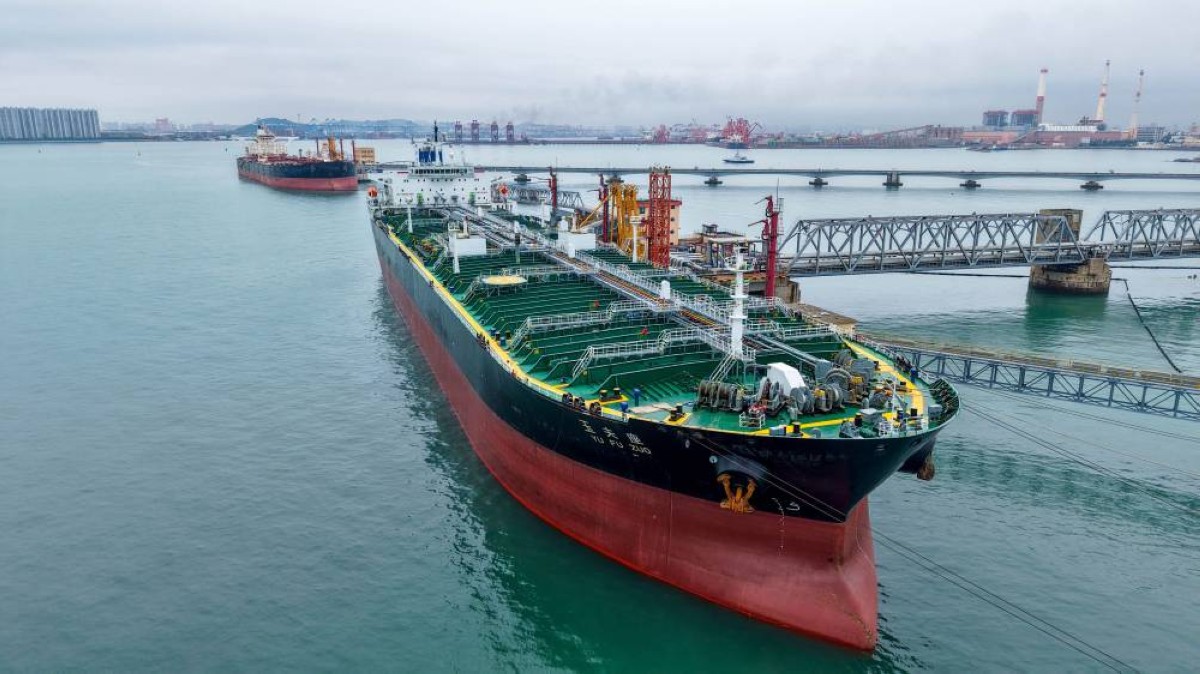
Six oil refining companies from Japan, South Korea, China and Taiwan are currently planning to load Saudi oil via the Red Sea. This follows a statement by the Houthis announcing their intention to restrict shipping to Saudi Arabian ports. Some buyers are simultaneously seeking alternative supplies.
Briefly about the main points
- Six Asian refineries are currently sticking to their loading schedules at Yanbu.
- Three companies are continuing to send ships to the Saudi port.
- The Houthis imposed a maritime embargo on Saudi Arabia on 20 July.
- A tanker carrying Saudi fuel has halted off the coast of Bab el-Mandeb.
- Buyers in Asia are interested in American, Omani and Murban crude oil.
Loading operations at Yanbu are still ongoing
According to Bloomberg sources, three of the six Asian companies are continuing to send vessels to Yanbu on the west coast of Saudi Arabia. Saudi Aramco, according to the sources, is in talks with buyers and has given some of them verbal assurances that operations can continue as normal. The company declined to comment.
Yanbu has become a key shipping point following the de facto the closure of the Strait of Hormuz at the end of February. Saudi Arabia redirected a significant proportion of its exports from Ras Tanura via pipelines to the Red Sea in order to maintain sales.
The threat to shipping is already changing the behaviour of carriers
On 20 July, the Houthis announced an immediate «maritime embargo» against Saudi Arabia. Their spokesperson, Yahya Sari, linked this move to the alleged blockade of Yemen and the attack on Sana’a airport. The group stated that the restrictions apply not only to Saudi vessels, but to all ships travelling to or from the kingdom’s ports.
According to two Bloomberg sources in the shipping industry, a tanker carrying Saudi fuel halted its southbound journey in the Red Sea before passing through the Bab el-Mandeb Strait due to security concerns. The Saudi Foreign Ministry has rejected claims of a blockade and stated that it will defend its vessels in accordance with international law.
Refineries are evaluating alternative grades
The threat to the shipping route has prompted Asian refiners to once again seek alternative sources of crude. According to traders, one South Korean refinery had already purchased US crude on Monday. There has also been growing interest in Murban crude from Abu Dhabi and Omani crude, which are loaded outside the Strait of Hormuz and the Red Sea.
American oil, however, does not appear to be an ideal substitute: a storm off the US Gulf Coast is threatening production and pushing prices up. Consequently, for buyers, the issue is not only the availability of barrels, but also the cost and reliability of an alternative route.
The bypass route around the Strait of Hormuz is facing renewed pressure
Prior to the current threat, Yanbu had been operating at near-capacity. According to Signal Ocean, on 13 July, crude oil shipments from the port reached 4.7 million barrels per day, whilst the average since June had exceeded 4 million barrels per day.
At the same time, Kpler recorded a decline in weekly crude oil flows from Saudi terminals on the Red Sea to Asia: from 5.30 million barrels per day at the peak on 29 June to 3.32 million in the week beginning 13 July. These are tracked flows, not evidence of a complete halt to supplies. If passage through the Bab el-Mandeb Strait is indeed disrupted, it is precisely the route that Saudi Arabia has been using to circumvent problems in the Strait of Hormuz that will be at risk.