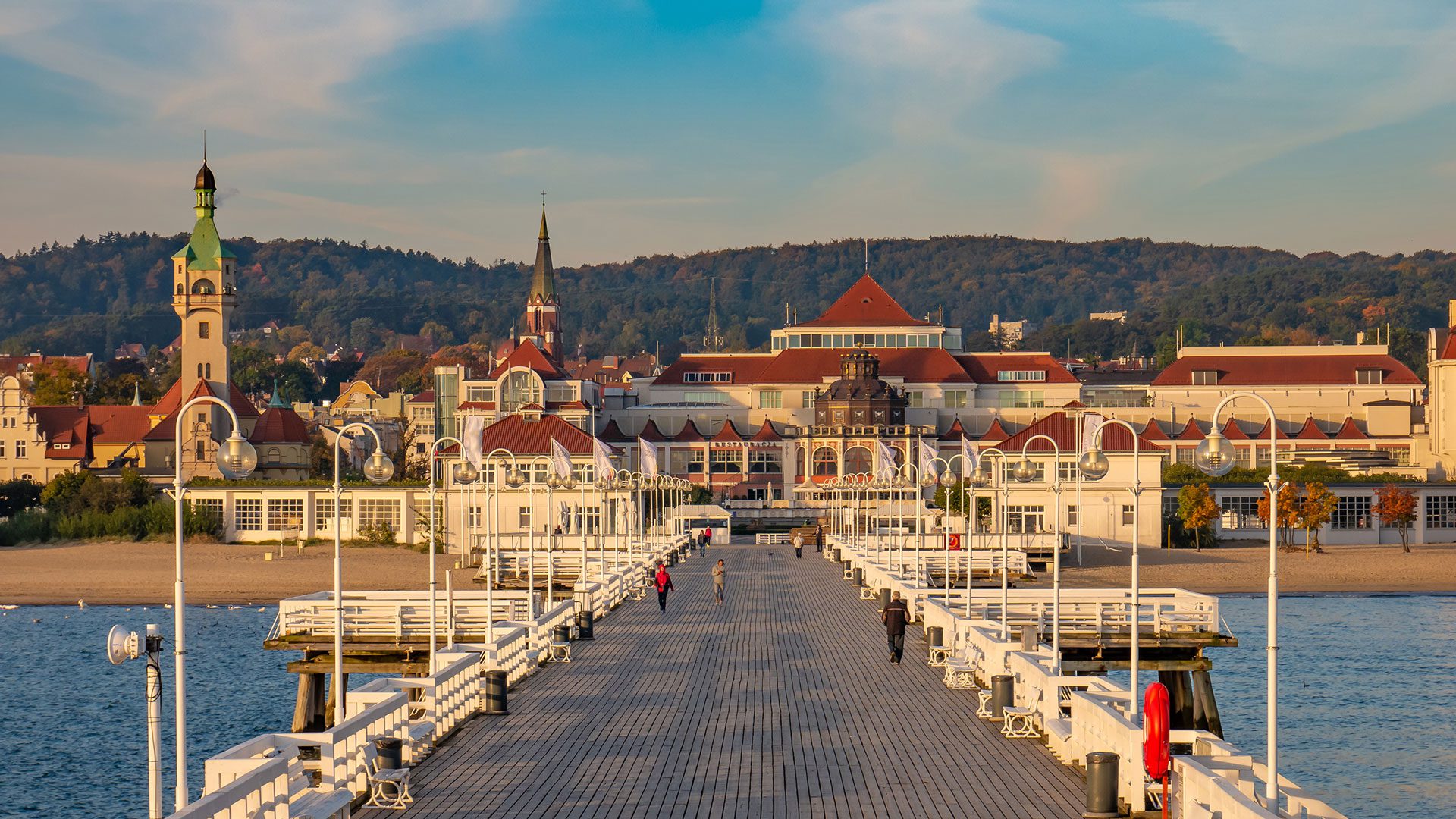
Sopot City Council was the first in Poland to adopt an official resolution strongly protesting against the rise in anti-Ukrainian sentiment, xenophobia and hate speech. The document states that some politicians are undermining Polish-Ukrainian relations for electoral gain, which, in the City Council’s view, is detrimental to Poland’s national interests.
Briefly about the main points
- Sopot was the first town in Poland to adopt such an official resolution.
- The document condemns anti-Ukrainian sentiment, xenophobia and hate speech.
- The City Council warned against the politicisation of Polish-Ukrainian relations.
- Support for accepting refugees in Poland has fallen to 48%.
- Sopot is funding language integration classes for Ukrainian children.
What the city council said
In the resolution, the city council expressed concern that some politicians, as stated in the document, are choosing to undermine Polish-Ukrainian relations for the sake of «instant applause and electoral gains».
«These are short-sighted actions that harm Poland’s national interests,» the resolution states. The document also quotes Jerzy Giedroyc: «There can be no free Poland without a free Ukraine.».
The resolution is directly aimed at the rise in anti-Ukrainian sentiment, xenophobia and hate speech. There is no information in open sources regarding the results of the vote, the date of the meeting or the initiators of the document.
Public sentiment and the debate over aid
Sopot’s decision came at a time of a marked shift in attitudes towards accepting Ukrainian refugees. According to a CBOS poll published in January 2026, 48% of respondents supported their admission, whilst 46% were against it. At the start of Russia’s full-scale invasion, this level of support stood at 94%.
At the same time, these figures do not provide grounds for equating a critical attitude towards the rules on social assistance with xenophobia. In a CBOS survey conducted in the autumn of 2025, 58% of Poles supported the provision of child benefits and free healthcare to Ukrainians who work and pay taxes; a further 25% linked this to refugee status.
The debate is also taking place against the backdrop of changes to the rules on state support. With effect from 5 March 2026, Poland has revised some of the special arrangements for Ukrainian citizens. Individuals with a PESEL UKR number may remain in the country legally until 4 March 2027.
Integration as a local policy
The resolution can be viewed in the context of Sopot’s existing practices regarding Ukrainian residents. The city funds integration language classes for children from Ukraine aged between 6 and 10 who live in the city; the project is being implemented in collaboration with civil society organisations.
Sopot also maintains a twinning partnership with Bilhorod-Dnistrovskyi. In 2024, the city hosted a delegation from its partner city to exchange expertise on rehabilitation infrastructure and attracting external funding.
The existence of such programmes and contacts indicates that the resolution is consistent with previous local initiatives relating to Ukraine.
The high number of Ukrainians and the risk of hostile narratives
As at 31 May 2026, 967,505 people who had fled Ukraine due to the war were granted temporary protection in Poland. This accounted for 22.1% of all recipients of this status in the European Union.
At the same time, the issue of hate speech extends beyond the Polish-Ukrainian context. In a May survey commissioned by the Polish National Broadcasting Council, 78% respondents reported that they had personally encountered it in the media, whilst 93% described online hate speech as a significant social problem.
According to a report by the Humanitarian Observatory, nearly 327,000 anti-Ukrainian posts were identified in the Polish-language online space by 2024. This figure reflects the scale of online content, rather than the number of crimes or attacks. In this context, Sopot’s statement may be a local political signal against the generalisation of social and migration disputes to apply to an entire community.