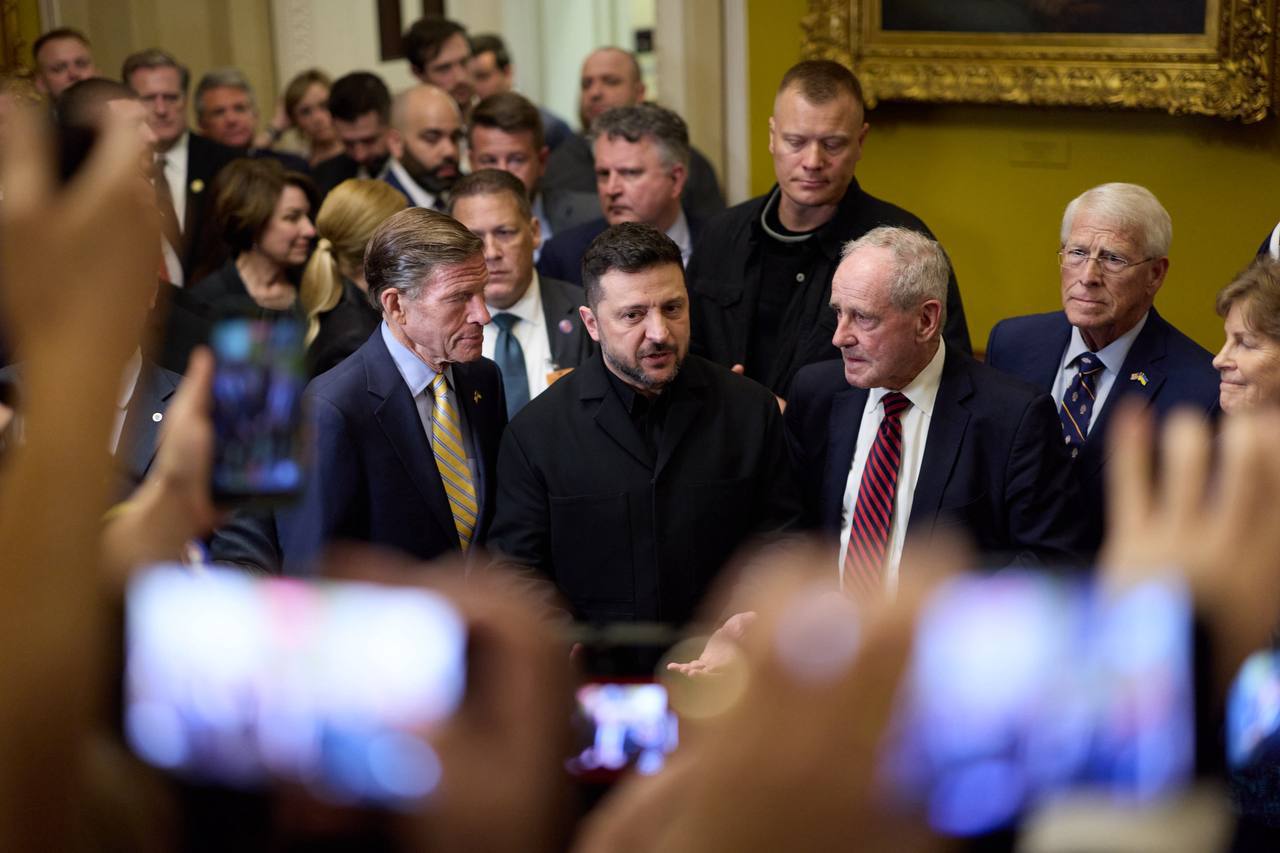
The US Senate, by a procedural vote of 86–12, has begun consideration of a bill imposing sanctions on Russia. President Volodymyr Zelenskyy said he was present whilst the votes were being counted at the Capitol. The bill has not yet been finally adopted, but it paves the way for debate, possible amendments and a final vote.
Briefly about the main points
- The US Senate voted 86 in favour of commencing consideration of the bill.
- Zelenskyy was present during the vote count at the Capitol.
- Before the vote, the President met with more than 60 senators.
- The document sets out primary and secondary sanctions mechanisms.
- Further decisions by Congress and the President are required before it can be finally adopted.
Zelenskyy met with senators from both parties
According to Zelensky, on that day in Washington he held a major meeting with representatives of both parties in the Senate. More than 60 senators took part in the meeting.
The President described it as symbolic that the procedural vote took place on the day of the Senator’s funeral Lindsay Graham. According to him, Graham had worked hard on this bill. Zelenskyy thanked the US and both parties for their support and emphasised that the sanctions mechanism must be effective.
What does the 86–12 vote mean?
The vote marked the start of proceedings on the Lindsey O. Graham Sanctioning Russia Act of 2026, but does not mean the bill has been definitively passed. Ahead lie debates in the Senate, consideration of amendments and a final vote. After that, the bill must pass through the House of Representatives and be signed by the US President.
The widespread support for launching the process indicates a cross-party consensus on the need to strengthen pressure on Moscow. However, the final text may be subject to change: some lawmakers have already raised objections to granting the president extensive new powers regarding tariffs.
What restrictions are set out in the draft bill?
The basic version of the document sets out primary and secondary sanctions against Russian officials, oligarchs, state bodies, banks and the energy sector. It also targets foreign individuals who support the Russian war machine and contains specific provisions concerning the Russian Federation’s «shadow fleet».
Potential targets include the Central Bank of the Russian Federation, Sberbank, VTB and Gazprombank, as well as foreign financial institutions that conduct significant transactions with these banks. Possible measures include the freezing of assets, restrictions on correspondent accounts and a ban on transactions involving US persons.
- US tariffs under 100% for certain major buyers of Russian oil or gas.
- Tariffs on countries that the US deems to be aiding the circumvention of oil sanctions.
- Review of the lists of buyers and such countries every 180 days.
Tariffs could become the main external lever
The most notable part of the bill does not merely concern direct restrictions on Russia. It allows for import duties of up to 100% on goods from the five largest buyers of Russian oil or gas, should they continue to make purchases after the law comes into force. The AP named China and India among the countries potentially affected by the measure.
The text provides for an exception for states whose imports of Russian gas account for less than 15% of the Russian Federation’s total annual gas exports and which significantly reduce dependence. The US President will also be able to grant individual exemptions, explaining in writing to Congress how they are in the national interest.
It is the application of secondary measures that will determine the practical impact of the package: the administration will have to decide who to include on the lists, what duty rates to set, and when to apply exemptions. Support for the procedure in the Senate is therefore an important political step, but it does not guarantee uniform or automatic pressure on all targets.
The Iranian aspect still needs to be clarified
At the White House’s request, an extension of some of the sanctions against Iran was added to the agreed version. However, the officially available text of the draft bill dated 16 July does not contain any specific provisions relating to this set of measures.
It is therefore not advisable to go into detail regarding its content, duration and mechanisms at this stage, pending the publication of an updated official version. Separately, the draft bill sets out the conditions for lifting some of the restrictions on the Russian Federation: the US President must certify to Congress that a peace agreement acceptable to a free and independent Ukrainian government has been reached, and that Russia has ceased hostilities and actions against Ukrainian statehood.