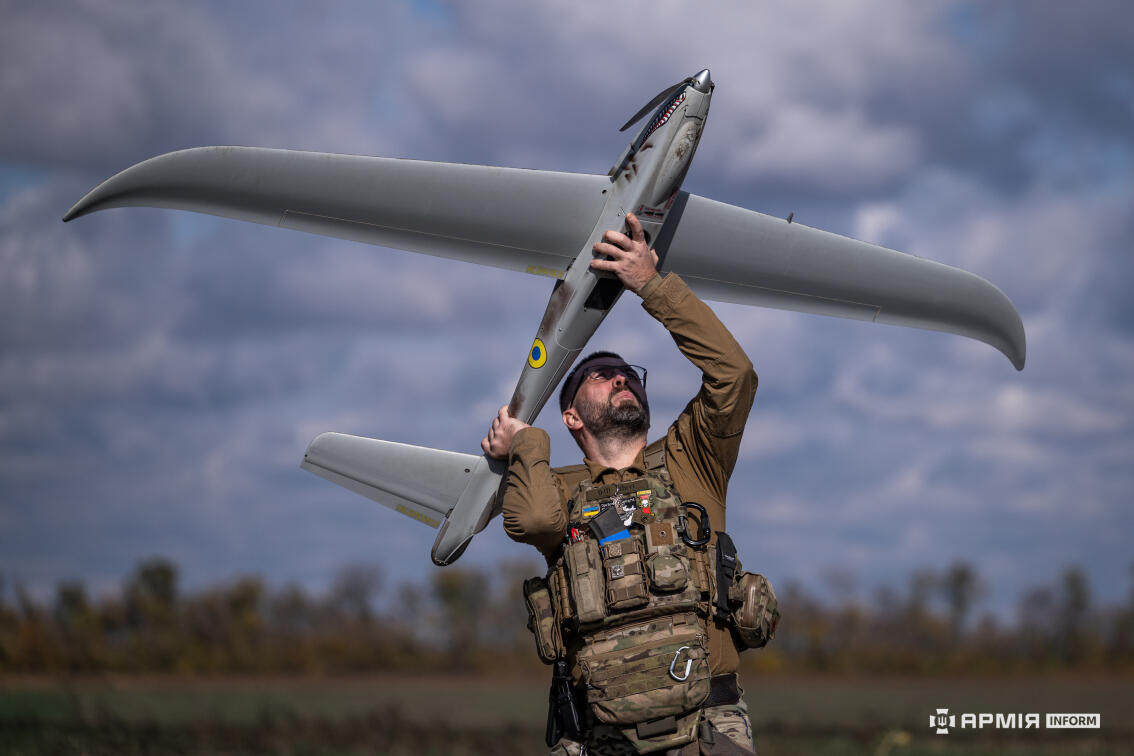
In July, the Unmanned Systems Forces Group struck or destroyed 53,755 enemy targets. Of these, 51,147, or approximately 95.11 per cent, were located within tactical depth, at an average distance of 3.73 kilometres from the line of contact. A further 2,415 targets were struck within the enemy’s operational depth, notably in Crimea and other temporarily occupied territories.
Briefly about the main points
- 51,147 of the 53,755 targets hit were within tactical range.
- The average range of tactical strikes was 3.73 kilometres from the launch site.
- A total of 2,415 targets were struck within the enemy’s operational depth.
- In July, the SBS Group carried out 230,843 combat missions.
- SBS drones struck 11,609 Russian servicemen.
Long-range strikes accounted for a minority of the July campaign
The proportion of work carried out at operational depth amounted to approximately 4.4%. Approximately 0.5% of the damage occurred at strategic depth.
To the publicly visible segment of deep damage SBS These include strikes on targets linked to manufacturing, logistics, energy, air defence and the use of Crimea as a military base. At the same time, July’s statistics show that the bulk of the missions carried out by the operators took place near the front line — targeting enemy personnel and equipment in order to halt their advance.
Over 7,400 missions every day
Over the course of a month, the SBS Group carried out 230,843 combat missions: 128,000 strike sorties and 102,000 reconnaissance sorties. On average, this amounts to around 7,450 missions per day.
The average number of targets hit or destroyed was 1,734 per day. Also, in July, unmanned aerial vehicles struck 11,609 Russian servicemen — an average of 374 per day.
The statistics relate specifically to the SBS Group. They cannot be directly compared with data for the Defence Forces as a whole, which also deploy unmanned aerial systems and operate on a different scale and under different reporting categories.
Frontline work is in line with the SBS deployment model
The Unmanned Systems Force was established as a separate branch of the Armed Forces of Ukraine in 2024. The official model provides for the use of unmanned systems at the tactical, operational and strategic levels — both directly on the battlefield and hundreds of kilometres away from it.
Former Commander-in-Chief of the Armed Forces of Ukraine Alexander Syrsky In July, he described unmanned systems as one of the key elements of modern warfare. The breakdown of strikes in July indicates that the media coverage of long-range attacks does not reflect their share of the daily workload: the greatest burden falls at the tactical level.