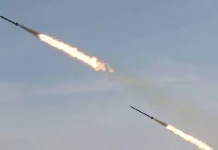
Russia is seeking to increase its capacity for simultaneous ballistic missile launches from around 77 to 200, said Robert «Madyar» Brovdi, commander of the Ukrainian Armed Forces’ Unmanned Systems Forces, in an interview with the Associated Press. He described ballistic missiles as particularly dangerous due to Ukraine’s lack of interceptor missiles for its Patriot systems; even a fraction of the planned capability could pose a significant threat.
Briefly about the main points
- Russia could launch around 77 ballistic missiles simultaneously, Mr Brovdi said.
- Moscow is seeking to increase this capacity to 200 missiles.
- In Crimea, Ukrainian forces are targeting Russian air defence systems, radars and support facilities.
- The Unmanned Systems Force has approximately 14% at its disposal for a full-scale campaign in Crimea.
- Russia is ramping up its production of Shahed drones and equipment to jam Starlink.
Ballistics poses a particular challenge for air defence
According to Brovdi, Russia is deploying ballistic and cruise missiles, attack drones and decoys as part of combined attacks, in an attempt to overwhelm Ukraine’s air defences. He believes that even if only half of the planned capability were to be realised, it would amount to an extremely large-scale simultaneous strike.
The commander cited a systematic approach as one way of reducing the scope for such attacks strikes on enterprises and other facilities involved in the production of Russian missiles.
The campaign in Crimea is intended to weaken Russia’s foothold
The Ukrainian strikes in occupied Crimea are the first phase of a long-term operation aimed at making it more difficult for Russia to use the peninsula as a base for its war against Ukraine. The campaign is also designed to diminish Crimea’s role as a naval base and logistics hub.
Among the targets for the drones, Brovdi named air defence systems, radars, electronic warfare systems, oil depots, and railway and energy infrastructure linked to the supply of the Russian force. According to him, in recent months, the units have put more than 300 Russian air defence systems, radar stations and electronic warfare systems out of action.
The commander also stated that during the last four major missile attacks, Russia had launched a total of five missiles from the peninsula. He attributed this to the systematic destruction of military infrastructure.
Brovdi cited funding as a constraint on operations
Units of the Unmanned Systems Forces are equipped to approximately 14% of the level required for a full-scale campaign in Crimea, said Brovdi. In his assessment, the timely receipt of funding already promised by partners would make it possible to increase the number of strikes on military targets on the peninsula by approximately seven times.
Ukrainian manufacturers are technically capable of producing the required number of drones, the commander asserts. He identified delays in funding – which is coming in more slowly than operational plans require – as the bottleneck.
Russia is adapting to developments in Ukrainian drones
The concentration of armed Shahed drones has increased by around 2.5 times in recent weeks, Mr Brovdi said. Due to their higher speed, such drones are more difficult to intercept.
According to him, Russia is also deploying electronic warfare systems designed to disrupt operations Starlink in certain areas, and is developing its own satellite communications system, which it could potentially use in military operations. The rivalry encompasses communications, navigation, electronic warfare, system autonomy and the capability to deliver long-range strikes.
Long-range strikes are also affecting Russia’s logistics
Brovdi confirmed that the campaign against Russian logistics infrastructure would continue. Among the targets, he named Wildberries — Russia’s largest online marketplace — explaining that the company has separate supply chains for military goods, and therefore Ukraine regards part of its logistics operations as contributing to the supply of the Russian armed forces.
According to the commander, long-range operations are intended not only to complicate military logistics, but also to extend the consequences of the war onto Russian territory. He described strikes against industrial facilities, logistics, air defence and launch infrastructure as a means of limiting Moscow’s future capacity to launch large-scale attacks.