Kyiv remains at risk of widespread disruptions to electricity, water and heating supplies due to ongoing Russian attacks on its energy infrastructure. Mayor Vitali Klitschko acknowledges that even the backup systems that have been put in place cannot guarantee the capital’s stable functioning in the event of further large-scale attacks. Damage to energy facilities in the Kyiv region, on which the city’s vital functions directly depend, poses a particular threat.
- Klitschko warned of a critical threat to Kyiv’s energy infrastructure due to Russian attacks.
- It is virtually impossible to fully protect large power stations from repeat attacks.
- Damage to the electricity grid could lead to widespread power and water cuts.
Klitschko warned of the danger of further attacks on energy infrastructure
According to the mayor, it is impossible to fully protect the capital’s critical infrastructure from heavy Russian shelling. Even with backup equipment in place, the continued operation of public utility systems will depend to a large extent on the effectiveness of the air defence system.
Klitschko explained that Russian troops are attacking not only energy infrastructure directly in Kyiv, but also facilities outside the capital through which the city receives its electricity supply.
He emphasised that preparations for the heating season cannot fully mitigate the consequences of any further strikes. In the event of serious damage to the electricity supply networks, the electricity supply may be cut off at the same time as other utility services.
The greatest danger comes from prolonged power cuts, when it takes a considerable amount of time to restore damaged infrastructure and backup power supplies are unable to make up for all the losses.
The Russian Federation’s large-scale attack highlighted the capital’s vulnerability
On the night of 3 November, Russia carried out one of the most extensive attacks on Ukraine’s energy infrastructure in recent times.
According to reports from the Ukrainian authorities, Russian forces deployed hundreds of drones and dozens of missiles of various types. Power stations, high-voltage substations and other power grid facilities were targeted.
Following damage to the Kyiv Regional Power Distribution Centre, emergency power cuts have been implemented in the capital and the surrounding region.
As previously reported by UkrMedia, due to damage to the power unit There were widespread disruptions to the water supply and to the operation of electric transport.
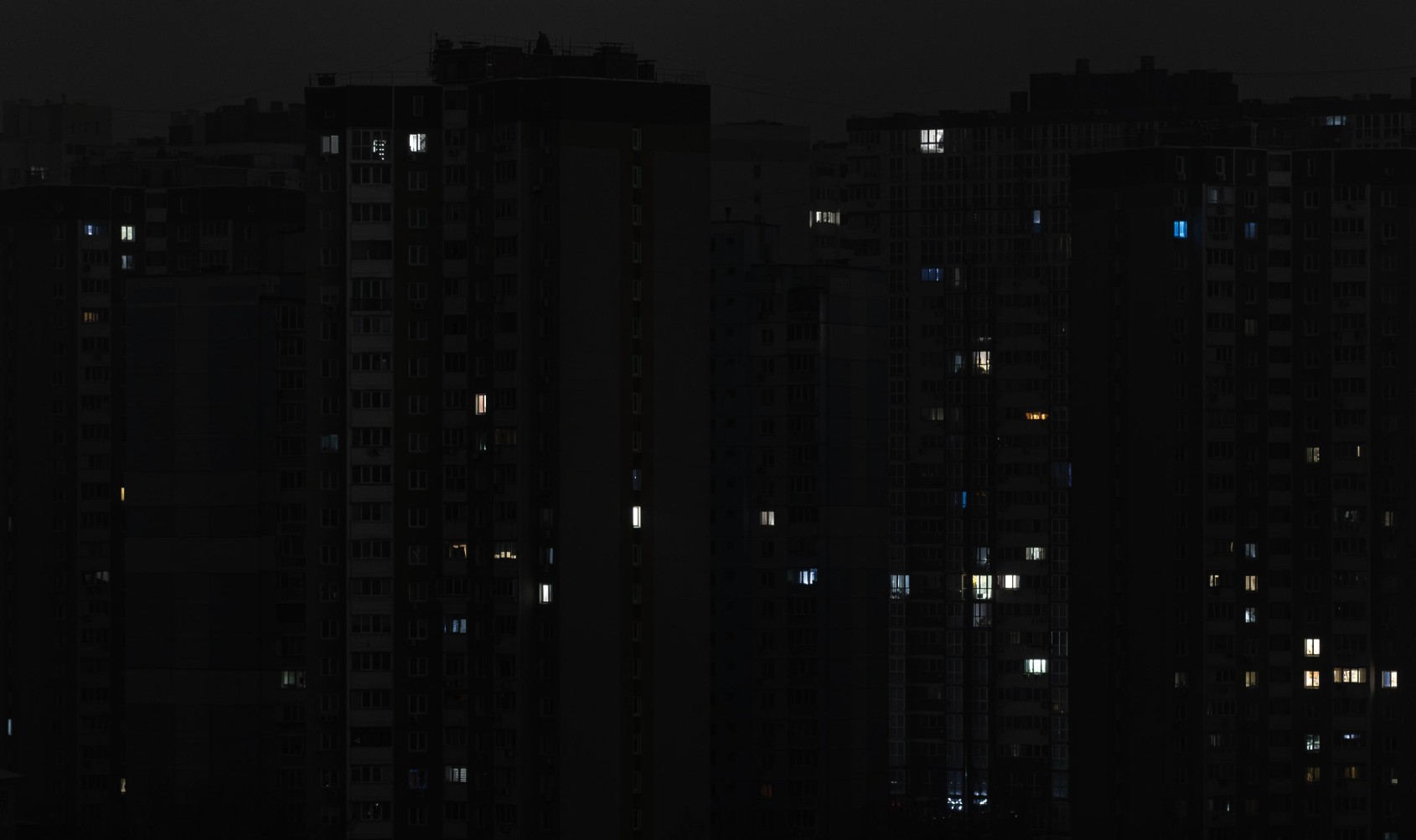
In some areas, the power was cut off for a long time. Residents reported being unable to use lifts, household appliances and other systems that rely on electricity.
The problems also affected public transport. Trams and trolleybuses were temporarily suspended due to an unstable power supply.
Why do power cuts leave Kyiv without water?
The capital’s water supply depends directly on the operation of electric pumps, treatment works and pressure-maintaining systems.
Damage to the energy infrastructure could lead to power cuts at pumping stations. In such cases, water stops flowing to some homes, even if the water mains themselves are undamaged.
The situation is particularly challenging in high-rise buildings, where supplying water to the upper floors requires additional pumping equipment.
Following the attack on 3 November, it was problems with the power supply to Kyivvodokanal’s facilities that caused disruptions to the water supply in the capital.
On Wednesday, 4 November, Klitschko announced that the centralised water supply had been fully restored and that the water pressure in the networks had stabilised. According to him, all water and sewage pumping stations were operating normally at that time.
However, recovery from a previous attack does not eliminate the risk of further incidents.
Is it possible to fully protect Kyiv’s power system?
The capital’s energy infrastructure comprises a large number of facilities, including power stations, transformer substations, main power transmission lines and distribution networks.
Some of the equipment is protected by special engineering structures. However, it is practically impossible to provide the same level of protection for all elements of the power system.
Large substations They cover vast areas, and power lines stretch for hundreds of kilometres. Damage to individual key nodes could restrict the transmission of electricity even if power stations are still operational.
The condition of the power system also depends on the ability to quickly replace damaged transformers, switchgear and other components of the network.
At the same time, physical security, air defence, backup power supplies and emergency repair work help to minimise the impact of attacks.
Kyiv is preparing backup power supplies and alternative heat sources
In October, Klitschko reported that the capital had prepared nearly 700 generators of various capacities to ensure the operation of heating and water supply facilities.
In addition, the city has 70 mobile boiler houses at its disposal, as well as additional backup power sources.
According to the mayor, the city is implementing a plan to create a backup heating supply system, which is intended to reduce the dependence of certain districts on large centralised facilities.
The preparations also include providing hospitals, educational establishments and critical utility services with an independent power supply.
However, backup systems have limited capacity. They are primarily designed to support critical infrastructure, rather than to fully supply all electricity consumers during a prolonged blackout.