The UK government is preparing a large-scale campaign to improve the public’s preparedness for emergencies. Britons will be advised to keep a stock of drinking water, tinned food and other long-life foodstuffs at home. The Financial Times links these measures, in particular, to the growing threats from Russia and other hostile states. At the same time, the government is updating its contingency plans for war and large-scale crises.
Briefly about the main points
- The British are being urged to stock up on water and food.
- The government is drawing up new guidelines for the public.
- The risks include Russia, cyber-attacks and infrastructure disruptions.
- The UK is updating its civil defence plans.
- Households are advised to be prepared for a few days without power.
The British public will be advised to stock up on water and food
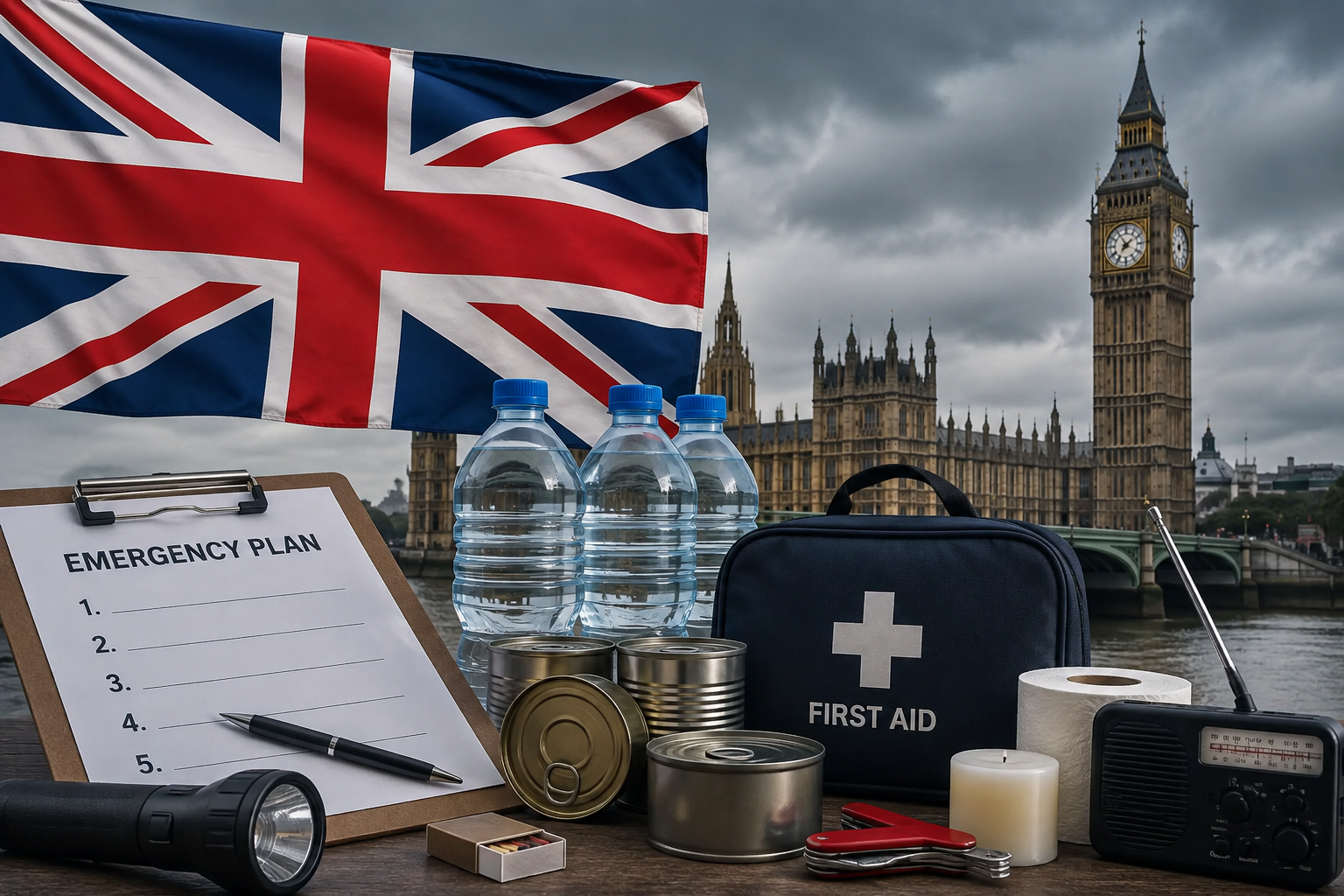
The UK Government plans to step up public preparedness for potential large-scale emergencies. According to Financial Times, citizens will be advised to keep a supply at home bottled water, tinned food and other long-life products.
The aim of the campaign is to make households more self-sufficient in the early days following a potential crisis, when the electricity grid, water supply, communications, transport or shops may be disrupted.
This is not just about a potential military conflict. The British authorities are also preparing for cyber-attacks, acts of sabotage, prolonged supply disruptions, extreme weather and other large-scale emergencies.
Official recommendations are already based on a household’s ability to cope without external assistance for approximately three days. A government survey states that the benchmark for drinking water reserves is at least 9 litres per person for three days.
Britain is reviving its national defence plans
At the same time, the government is carrying out a large-scale overhaul of the civil and national defence systems.
As part of the programme Home Defence Programme the authorities are reinstating and reviewing the so-called War Books — central government protocols setting out how ministries and government bodies are to act in the event of war or a direct threat to the territory of the United Kingdom.
It is not, therefore, simply a matter of a new guide for the public. Government contingency plans are being updated separately, and an information campaign is being prepared for the public, offering practical advice on how to behave during emergencies.
In 2027, the UK also plans to hold nationwide civil defence exercises, which are expected to involve hundreds of officials, local emergency services and government crisis teams.
Russia is described as one of the main threats
The preparations are taking place against a backdrop of significant deterioration in the security situation in Europe.
The UK’s National Security Strategy describes Russia as the most serious threat to national security. London specifically highlights Russian cyber-attacks, acts of sabotage, activities targeting critical infrastructure, and the risk of a direct threat to the country’s territory in the event of a large-scale conflict.
The document explicitly states that, for the first time in many years, the UK must actively prepare for a scenario in which its territory could come under direct threat in the event of war.
The Financial Times also notes that the British authorities’ concerns are exacerbated by threats from other states, in particular Iran, as well as the risk of large-scale cyber-attacks on energy and other critical infrastructure.
Not all Britons are prepared for emergencies
A study published by the Cabinet of Ministers has shown that a significant proportion of the population does not yet have sufficient supplies to sustain themselves for an extended period.
About. 60% respondents stated that they had a supply of ready-to-eat food lasting approximately three days. At the same time, only 37% respondents.
That is why the government plans to launch a wide-ranging information campaign to explain to the public what essential supplies they should keep at home and how to respond in the event of disruptions to water, electricity, communications or food supplies.
The British authorities are therefore moving towards a model in which preparing for a major crisis is seen not only as the responsibility of the armed forces and government departments, but also as the responsibility of society as a whole.