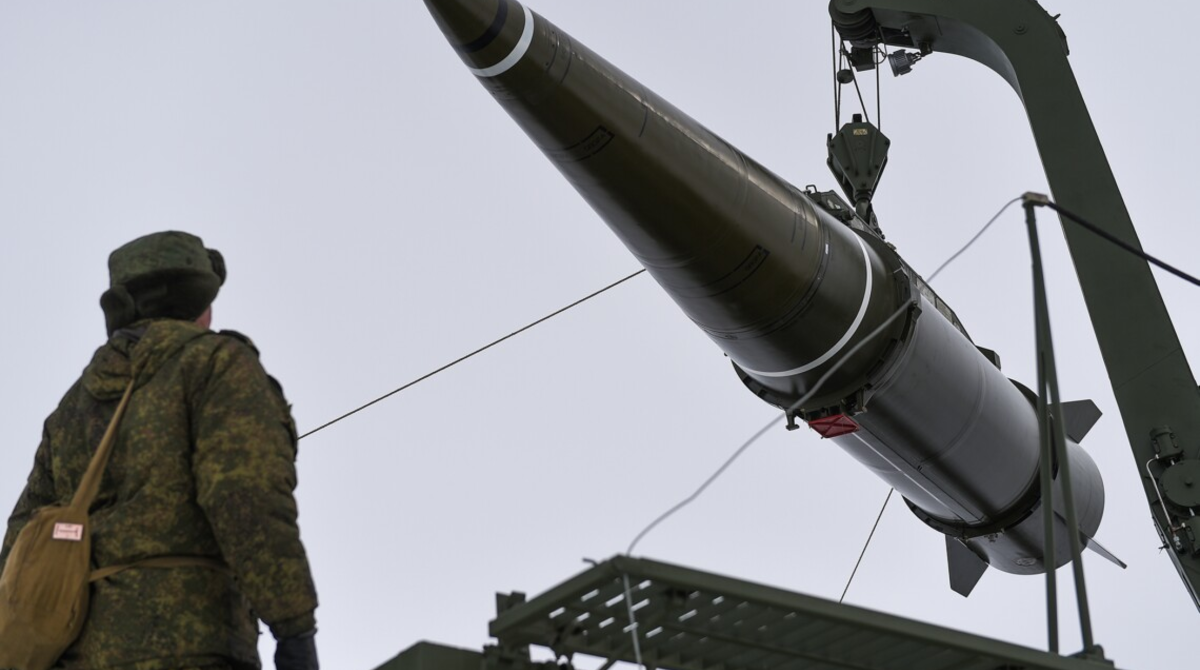
The Russian defence industry produces one ballistic missile approximately every five hours and continues to ramp up production. This was stated on 23 November by Ukraine’s Defence Minister Yevhen Khmara during a speech at the NATO Parliamentary Assembly in Berlin. According to him, Moscow is simultaneously stepping up the intensity of its missile strikes and deploying jet-powered drones on a massive scale. In October alone, Russian forces fired 153 ballistic missiles at Ukraine, whilst the number of jet-powered drones exceeded four thousand.
- Russia produces one ballistic missile approximately every five hours.
- In October, Russian forces fired 153 ballistic missiles at Ukraine.
- The number of unmanned aerial vehicles exceeded four thousand in a month.
- The Ukrainian military has struck 16 Iskander and S-400 launchers.
- Ukraine is calling on its allies to speed up the delivery of interceptor missiles for its air defence system.
Russia is ramping up its production of ballistic missiles
During a speech to representatives of NATO countries Yevhen Khmara drew attention to the rapid expansion of Russia’s manufacturing capabilities. Despite international sanctions, the Russian military-industrial complex continues to produce ballistic missiles and to step up their use against Ukraine.
According to the minister’s estimate, it takes approximately five hours to manufacture one new missile. At the same time, the Main Intelligence Directorate had previously estimated Russia’s production capacity at around 110 ballistic missiles per month. The discrepancy between the figures may reflect an acceleration in production, although the new production rates have not yet been independently confirmed.
The expansion of production is taking place in parallel with the modernisation of Russian ballistics, in particular the «Iskander» family of missiles. Moscow is seeking to increase not only the number of weapons, but also the range over which they can be deployed.
Russia launched 153 ballistic missiles in October
Khmara cited statistics showing an increase in the intensity of air strikes. Whilst Russia was deploying fewer than 300 jet-powered drones per month at the start of 2026, by October that figure had exceeded 4,000.
One of the largest recent attacks involved the deployment of 404 attack drones, 123 of which were jet-powered, and 111 missiles, including 27 ballistic missiles.
The increase in the number of high-speed drones and ballistic missiles is placing an additional strain on Ukraine’s air defence. Intercepting ballistic missiles poses a particular challenge due to their high speed and the short reaction time required.
Ukraine has struck 16 Russian launchers
The minister emphasised that Ukraine is seeking not only to intercept Russian missiles, but also to destroy their launch systems.
According to him, over the past few months, the Defence Forces have struck 16 launchers belonging to the Iskander and S-400 systems. Strikes on enterprises within the Russian defence-industrial complex that support arms production remain a separate focus.
Ukraine is asking NATO to speed up the delivery of air defence missiles
During a speech in Berlin, Khmara identified air defence as one of the three main areas of international military support, alongside aviation and unmanned systems.
Ukraine is proposing that its partners transfer interceptor missiles from their existing stocks, in return for future deliveries under contracts that have already been signed. Such a mechanism would make it possible to secure Ukrainian air defence the necessary ammunition.
In addition, Kyiv has stated that it requires a further 40 fighter jets, pilot training, armaments and technical maintenance.
The growth in Russian missile production makes strengthening anti-ballistic defence one of the key priorities for Ukraine and its allies in the near future.