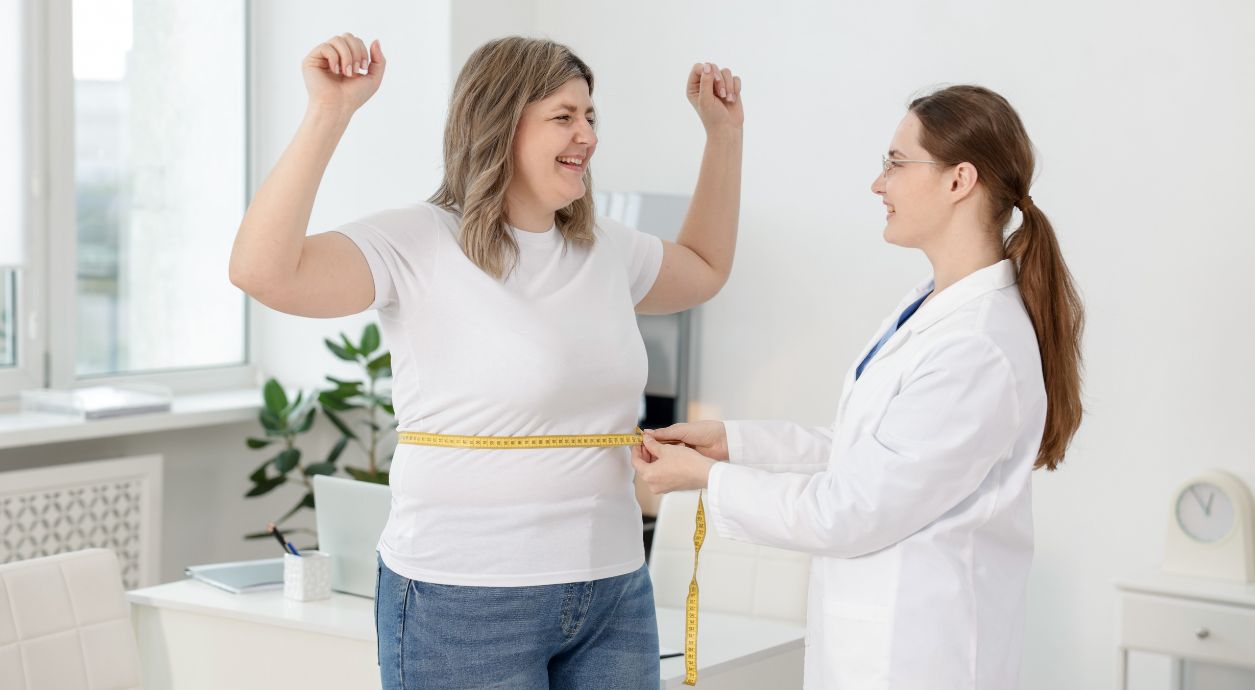
American retailers are reducing their range of plus-size women’s clothing. H&M has stopped including 3XL and 4XL sizes in new collections in the US, citing lower demand; Mango and Anthropologie have also scaled back their ranges. Analysts partly attribute this shift to the growing popularity of GLP-1 medications, although second-hand market data points to sustained demand for plus-size items.
Briefly about the main points
- H&M has removed sizes 3XL and 4XL from its new women’s range in the US.
- Mango and Anthropologie have also reduced the proportion of plus-size dresses in their ranges.
- 18% of American adults reported using GLP-1 in 2025.
- Analysts consider GLP-1 to be a factor, but not the sole cause of the changes.
- On ThredUp, demand for women’s plus-size items has grown faster than for smaller sizes.
H&M has scaled back the expansion of its size range
In 2023, H&M in the US expanded its women’s size range from XL to 4XL and enlisted a model and activist Tess Holliday as a consultant on size inclusivity. Three years later, these changes had disappeared from the new collections.
The research firm Edited compared new women’s dresses that appeared on the H&M website between January and May 2025 with those from the same period in 2026. Last year, 3XL and 4XL accounted for 2% of new items, whereas this year they did not appear at all. The proportion of XXL sizes fell by 3 percentage points, and XL by 2 points, whilst sizes from XS to L increased by an average of 3 points.
In a statement to The Guardian, H&M said it constantly monitors demand for fits and sizes and has decided to stop offering 3XL and 4XL due to lower demand.
The job cuts have also affected other retail chains
According to Edited, Mango has reduced the proportion of new dresses in sizes 16–20 from 6.6% in its Spring/Summer 2025 range to 0.5% in the 2026 season. At Anthropologie, an analysis of dresses sold in July revealed a year-on-year reduction in plus-size offerings from 10.5% to 9%.
The scaling back of plus-size ranges has happened before: Loft discontinued its plus-size range in 2021, whilst Old Navy reduced its range in 2022. Last year, Torrid, a chain specialising in plus-size clothing, closed 151 shops — almost a third of its locations.
GLP-1 is changing the size structure of demand
Head of Impact Analytics Prasant Agrawal lists the medicines GLP-1 the main factor causing concern amongst retailers regarding dosage. According to a Mintel study, as of June 2025, 18% of American adults reported using such products, whereas in 2024 the figure stood at 12%.
Gallup reported that the proportion of obese adults in the US fell from 39.9% in 2022 to 36.4% in 2026. Data from Impact Analytics, compiled from sales figures of major US clothing retailers, showed an increase in sales of size XS for two consecutive years and a slight decline in sales of sizes M, L and XL and above.
However, these figures do not prove that GLP-1 is the sole reason for the reduction in plus-size ranges. They may influence the market’s size structure, but brands’ commercial decisions also depend on their product range policies and demand forecasting.
The demand for large sizes remains
According to the head of Plunkett Research Jack Plunkett, 66% women in the US wear size 14 or above, which most brands classify as plus-size. Research also indicates that GLP-1 users typically lose between 10% and 20% of body weight, meaning they do not necessarily move into smaller sizes.
A representative from Mintel Brittany Steiger emphasises that medicines They alter the sizing curve, but do not eliminate the need for size inclusivity. According to the company’s data, 69% of shoppers believe that brands should offer more size and length options. It advises retailers to develop adjustable and flexible fits, rather than narrowing their size ranges.
Demand is shifting to the secondary market
The resale platform ThredUp reported that the number of listings for plus-size items in the first half of 2026 rose by 32% compared with the same period a year earlier and doubled compared with the first half of 2023. Purchases of women’s large, XL and plus-size garments have risen by 17.4% since the start of the year, whilst those of small and medium sizes have increased by 6.8%.
ThredUp does not have any data that directly links this trend to GLP-1. The company points out that reselling traditionally appeals to shoppers during periods of change in body size. The picture among retailers is also mixed: Walmart, by contrast, has increased its stock of plus-size clothing this season.