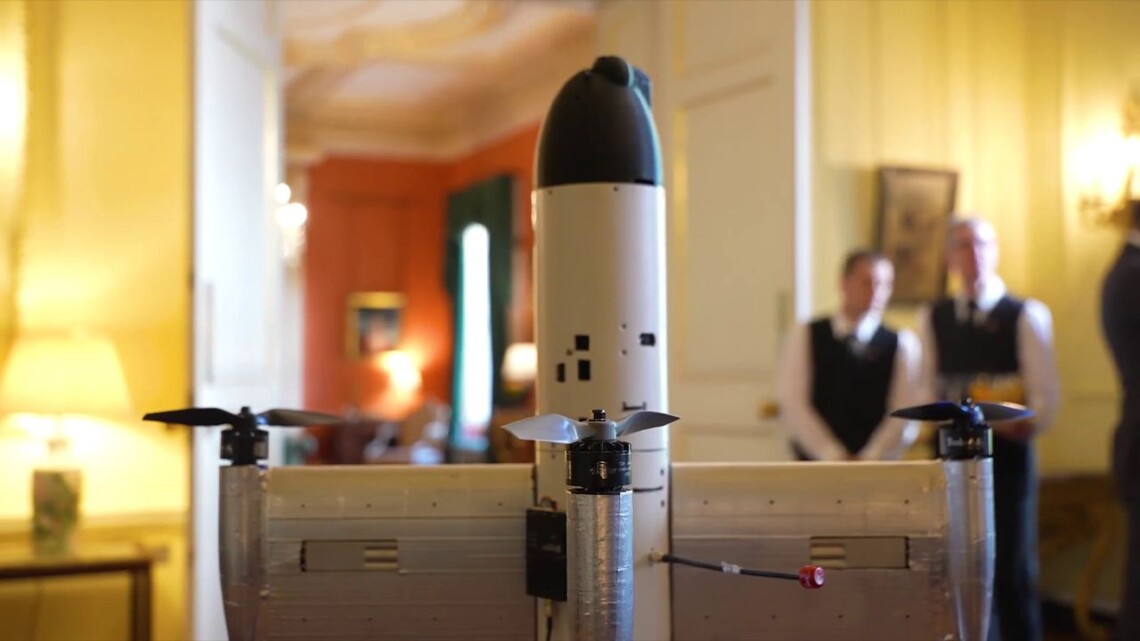
Germany will provide funding for Ukraine tens of thousands of interceptor drones, which Quantum Systems is rolling out in collaboration with its Ukrainian partner, WIY Drones. Specifically, this refers to a high-speed interceptor SPYS, designed to counter jet-powered strike UAVs — a new threat that Russia is increasingly deploying against Ukrainian cities. The first few thousand systems from the new package are due to be delivered to Ukraine as early as 2026.
- Germany is funding a package comprising tens of thousands of interceptor drones for Ukraine.
- These include the Ukrainian-German high-speed SPYS, designed to combat jet-powered UAVs.
- The first few thousand interceptors could be delivered to Ukraine as early as this year.
- They plan to scale up production to several thousand units a month.
- The SPYS’s maximum stated speed is 480 km/h.
The first few thousand SPYS are expected to be delivered this year
The vice-president of Quantum Systems announced the new package Matthias Lena during a press briefing in Berlin. According to him, the parties signed a letter of intent regarding the supply of tens of thousands of interceptors, capable of countering high-speed jet drones.
Quantum Systems has separately announced that the funding will be provided by Germany as part of a military aid package for Ukraine for the winter of 2026–2027. The systems themselves are to be manufactured in Ukraine, which should enable production to be ramped up more quickly and allow for a response to changes in Russian tactics.
The company is expecting production to commence several thousand interceptors every month. According to Lena, thousands of units from the new package are due to be ready for handover before the end of 2026.
SPYS was developed in collaboration with Ukrainians
SPYS is a joint project between Quantum Systems and a Ukrainian WIY Drones. The companies are operating through a joint venture, Quantum WIY Industries, set up to scale up air defence systems.
The developers have taken into account the combat experience gained with the previous STRILA interceptor, which is already in use by Ukrainian units. In March, Quantum Systems announced a contract for 15,000 STRILA for the Ukrainian defence forces.
On 4 October, Volodymyr Zelenskyy announced that the SPYS had passed its tests and described it as a joint Ukrainian-German high-speed interceptor designed to counter jet-powered drones.
Up to 480 km/h: what is known about the SPYS
According to WIY Drones’ specifications, SPYS intended primarily for fast and manoeuvrable aerial targets.
Its maximum stated speed is 480 km/h, cruising speed — 200–250 km/h. The tactical range is up to 15 km, the maximum distance travelled is 30 km, and the flight duration is up to 10 minutes. The maximum flight altitude is stated as 4 km.
The interceptor can be fitted with a daytime or thermal imaging camera. The system supports automatic take-off, flight to the interception area and automated guidance to the target using software and radar data.
Why does Ukraine need such interceptors?
The demand for high-speed interceptors rose sharply after Russia began to deploy them on a larger scale jet-powered strike drones.
According to the Air Force, since July their proportion in individual Russian attacks has risen to 60%, whilst overall they may account for around 40% of the UAVs deployed by the enemy. Ukraine is already using several types of interceptors, aircraft and other air defence systems against such targets.
During the attack on 4–5 October alone, Russia deployed 205 drones, including 49 were reactive.
Quantum Systems estimates that the effectiveness of countermeasures against reactive drones in Ukraine is gradually increasing: from very low figures at the outset to over 30%, and during some recent attacks — over 50%. The company emphasises that this is the result of the work of the entire air defence system, rather than just one type of interceptor.
A dedicated air defence unit to counter drones is being set up in Ukraine
SPYS will be just one component of the new system for countering jet-powered UAVs.
Ukraine is simultaneously testing several models of interceptors and small missiles. Zelenskyy has spoken about a Ukrainian missile «Nika», which is also being developed to counter high-speed drones.
Mass production of cheaper interceptors is intended to reduce the need to use expensive anti-aircraft missiles against relatively cheap drones. That is precisely why Germany and Ukraine are focusing not on individual systems, but on production tens of thousands of interceptors.