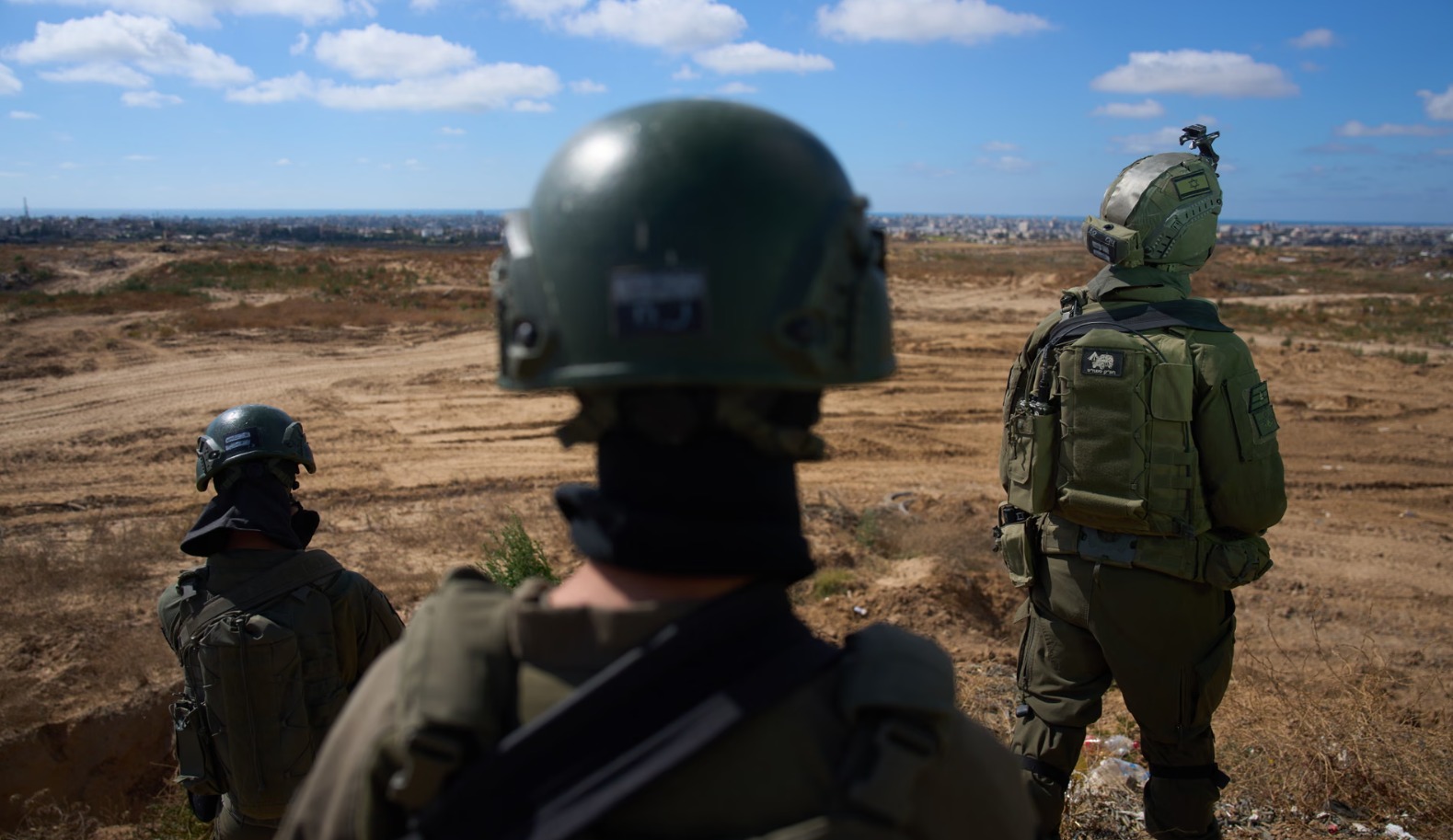
The documentary film *NAZA*, produced by *The Guardian*, presented the testimonies of 24 Israeli military personnel and intelligence officers at the Venice International Film Festival. The participants speak anonymously about surveillance, target acquisition and remote attack systems in Gaza, which, they say, have resulted in the deaths of Palestinian civilians.
Briefly about the main points
- NAZA was the only documentary film in the competition for the Golden Lion.
- Witnesses described how AI was used to identify potential Hamas targets.
- According to them, the military hacked into people’s phones to track their whereabouts.
- The interviews were filmed anonymously, with the participants’ voices and appearances altered.
- The directors say they are examining orders and practices, rather than individual incidents.
NAZA’s premiere in Venice
Directors’ List Yuval Abraham and Rachel Szor was screened on Thursday at the Venice International Film Festival. NAZA was the only documentary project in the competition programme in the running for the Golden Lion.
The film’s title derives from an Israeli military acronym used euphemistically to refer to civilians whose deaths are anticipated during an attack. Jonathan Glazer served as executive producer, whilst James Wilson served as co-producer.
What practices do the participants in the film describe?
The interviewees discuss artificial intelligence-based systems designed to identify a large number of potential lower-level targets associated with HAMAS. According to their accounts, these people were bombed at night in their own homes, in the knowledge that members of their families might also be killed during the attacks.
The film also deals with the hacking of mobile phones to pinpoint the whereabouts of targets and the covert eavesdropping on their conversations with their wives and children shortly before their deaths. Some testimonies refer to the destruction of neighbourhoods where, according to military estimates, up to a quarter of the residents might still have been in their homes, the systematic burning of civilian dwellings, and killings near a food distribution point.
How the evidence was gathered and what the authors say
The interviews were recorded at night on rooftops in Tel Aviv, on condition of anonymity. The participants’ appearances and voices were digitally altered, as they feared the risks involved in speaking publicly about Israel’s military operations. Some of the interviewees worked in a secret intelligence unit that reports directly to the Prime Minister’s Office Benjamin Netanyahu.
Abraham and Szor stated that they had focused not on «sporadic war crimes» committed by individual soldiers, but on the orders, policies, established practices, language and logic that make such actions possible. The film builds on material previously published by +972 Magazine, Local Call and The Guardian between 2023 and 2025.
The film’s military and creative context
The report states that Israeli attacks in Gaza since 2023 have killed over 73,000 Palestinians and injured more than 174,000. It also states that Israeli restrictions on food supplies caused man-made famine last summer, and that more than three-quarters of homes were destroyed or damaged.
Israel launched a war following the Hamas-led attack on 7 October 2023: more than 1,200 people were killed in Israel at that time, and militants took 251 people to Gaza. Abraham and Shor were also among the four co-directors of *No Other Land*, which won the Oscar for Best Documentary Feature in 2025.