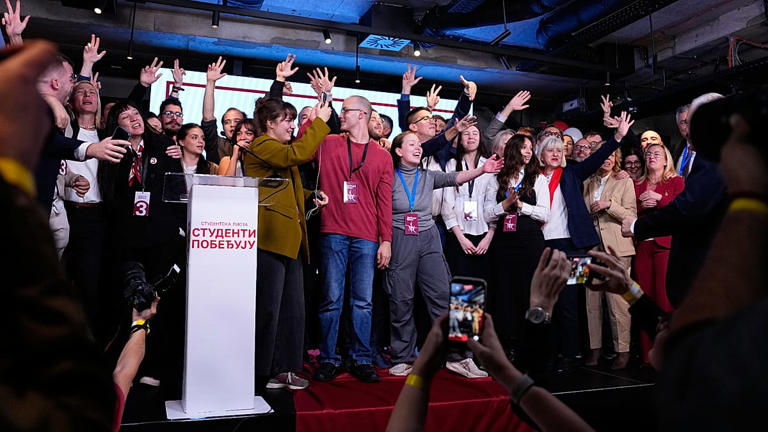
The «Student List» political movement, which won the parliamentary elections in Serbia on 25 October, plans to halt the export of arms to conflict zones, in particular via Western intermediaries who supply Serbian weapons to Ukraine. At the same time, representatives of the future parliamentary majority have no intention of imposing sanctions against Russia and are in favour of maintaining relations with Moscow.
Serbia may halt arms supplies to Ukraine via intermediaries
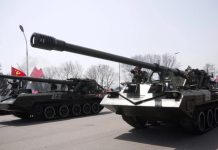
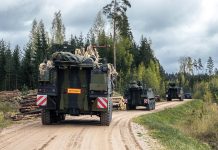
According to Reuters, leading candidates from the «Student List» have stated that the future government intends to halt all exports of Serbian arms to conflict zones. The restrictions are to apply not only to direct supplies but also to sales to Western intermediary companies through which ammunition and military equipment are channelled into Ukraine.
During the reign of Aleksandar Vučić Serbia maintained relations with both Moscow and Kyiv. Despite Belgrade’s refusal to join the European sanctions against Russia, Serbian ammunition was being supplied to Ukraine via third countries.
The new parliamentary majority is proposing to change this approach. However, representatives of the movement have not yet set out a specific mechanism for halting exports or a timetable for introducing any restrictions.
The decision will also require the formation of a new government. Therefore, at present, the discussion centres on the stated intentions of the election winners, rather than on a ban on arms exports that has already been introduced.
Election winners refuse to impose sanctions on Russia
A representative of the «Student List», a professor Jovo Bakic, said on RT Balkan that Serbia’s new government does not plan to join the European Union’s sanctions against Russia.
According to him, Moscow remains a historically important partner for Belgrade, and the introduction of restrictions will not have a significant impact on the Russian economy.
Bakich also emphasised that Serbia has its own experience of international sanctions and should not take foreign policy decisions that run counter to its national interests.
«We respect Russia as a major power and a historically important partner,» said a spokesperson for the movement.
His statement contradicts earlier predictions by Aleksandar Vučić, who, following his election defeat, claimed that the new government could impose sanctions against Moscow within the coming months.
Serbia is dependent on Russian gas
Energy remains one of the key factors in Belgrade’s relations with Moscow. Russia’s Gazprom supplies Serbia with approximately 2.2 billion cubic metres of natural gas every year at prices below market rates.
Representatives of the «Student List» acknowledge this dependence, but emphasise that it is primarily economic in nature and should not automatically determine the country’s foreign policy orientation.
A further problem remains the situation surrounding the Serbian oil company NIS, which is subject to US sanctions due to Russian ownership stakes in the company. The Serbian authorities are awaiting the completion of the sale of the Russian stake to the Hungarian company MOL in order to ensure a stable supply of oil.
The future government will have to negotiate sanctions exemptions with its Western partners whilst at the same time ensuring the continuity of energy supplies on which the country’s economy depends.
What will happen with Serbia’s accession to the European Union?
Despite its support for democratic reforms and European integration, the «Student List» is not yet promising Serbia’s swift accession to the EU.
Among the movement’s leading candidates is the former head of the National Bank of Serbia Deyan Šoškić and a cardiologist Ilija Srdanović. They advocate prioritising domestic reforms, finalising the negotiation chapters with the European Union, and subsequently putting the issue of membership to a national referendum.
Kosovo remains a separate obstacle. Representatives of the movement regard it as part of Serbia and propose seeking the peaceful reintegration of the region through diplomatic means. At the same time, the EU is calling on Belgrade to normalise relations with Pristina.
The President of the European Commission, Ursula von der Leyen, has already welcomed the election results and stated that the European Union stands ready to support reforms in the areas of the rule of law, media freedom and the fight against corruption.
«The »Student List’ won more than half the votes
In the snap parliamentary elections on 25 October, the «Student List» received 52,65% votes. Aleksandar Vučić’s coalition secured 39,22%. Voter turnout stood at 68.78%, according to Serbia’s Republican Electoral Commission.
The student movement’s victory was preceded by almost two years of mass protests, which began following the deaths of 16 people when a canopy at the railway station in Novi Sad collapsed in 2024.
The protesters called for an end to corruption, the independence of state institutions and accountability on the part of public officials. Following the victory of the student movement, Vučić conceded defeat for his political party.
At the same time, the change of government in Belgrade does not mean an automatic review of all aspects of foreign policy. Initial statements by the election winners indicate an intention to maintain relations with Russia, whilst supporting domestic democratic reforms and continuing negotiations with the EU.