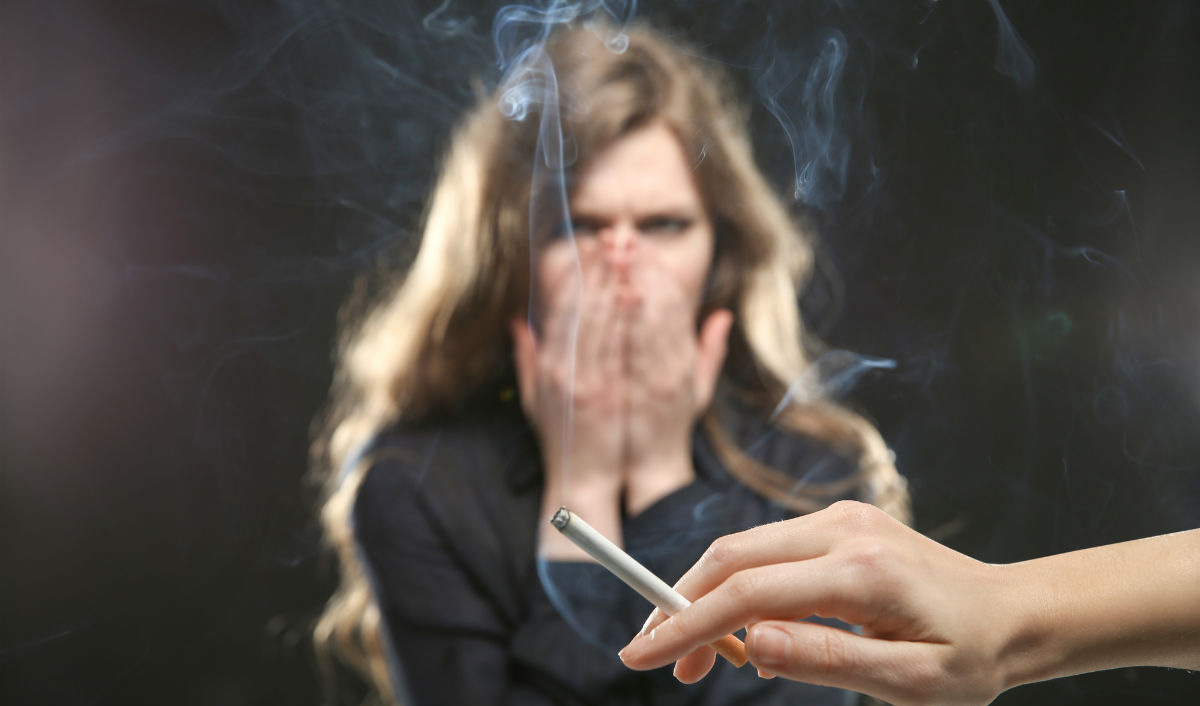
Second-hand smoke remains one of the most underestimated global health threats. A new analysis from the Global Burden of Disease 2023, published in The Lancet Public Health, has shown that in 2023, approximately 2.71 billion people – effectively one in three people on the planet – regularly breathed in second-hand smoke. Researchers attribute this exposure to 1.66 million premature deaths and the loss of nearly 45 million healthy life years. Women and children are the hardest hit.
- In 2023, around 2.71 billion people were exposed to second-hand smoke.
- Among them are approximately 767 million children under the age of 15.
- Researchers link passive smoking to 1.66 million deaths a year.
- Ischaemic heart disease accounts for the greatest burden amongst adults.
- In children, it is the lower respiratory tract that is most severely affected.
The scale is greater than it seems: a third of humanity is exposed to second-hand smoke
The study covered 204 countries and territories and tracked trends from 1990 to 2023. The researchers used data from population surveys, information on household composition and statistical modelling to estimate how many non-smokers are regularly exposed to second-hand smoke and the associated burden of disease.
In 2023, there were approximately 2.71 billion. Of these, approximately 767 million — children aged 0–14. According to the data presented in the publications reporting the study’s findings, among those exposed to second-hand smoke, there were also around 1.49 billion women.
The prevalence of passive smoking is particularly high smoking remains in South-East and East Asia and Oceania — around 48.41 TP3T of the population after adjusting for age. In some countries, women are affected almost 1.8 times more often than men.
This is an important point: second-hand smoke is often perceived as a minor inconvenience — a smell in the room, smoke on the balcony or a few minutes spent near a smoker. In reality, at a population level, it is a risk factor that results in millions of deaths and tens of millions of years of life lost to illness.
What do 1.66 million deaths mean?
In the study, passive smoking was attributed to approximately 1.66 million deaths in 2023, with a range of statistical uncertainty of approximately 1.33 to 2.07 million. Furthermore, it was associated with 44.8 million DALYs — years of healthy life lost due to premature death or disability.
It is important to understand that this does not mean that «passive smoking» is listed on all 1.66 million death certificates.
The GBD uses a risk assessment model. Researchers take the link established in the scientific literature between exposure to tobacco smoke and certain diseases, assess the level of exposure among the population, and then calculate what proportion of deaths could statistically be attributed to this factor specifically.
In other words, it is more correct to say «deaths associated with passive smoking» or «attributable to passive smoking», rather than claiming that every single death was unequivocally caused solely by someone else’s cigarette.
It is not just the lungs that bear the brunt of it
Intuitively, it might seem that the main danger of passive smoking is lung cancer. But global data paint a different picture.
The greatest overall burden of disease associated with second-hand smoke falls on coronary heart disease. That alone accounted for around 12 million years of healthy life lost in 2023.
A previous large-scale analysis, published in *Nature Medicine*, also demonstrated a link between second-hand smoke and coronary heart disease, stroke, lung cancer, COPD, asthma and other conditions. According to the authors’ conservative estimate, exposure to second-hand smoke increased the risk of coronary heart disease by at least approximately 8%, and the risk of stroke by 5%.
The reason is that the components of tobacco smoke do not just affect the lungs. They damage blood vessels, contribute to inflammation, and affect blood clotting and the cardiovascular system.
The WHO notes that tobacco smoke contains thousands of chemicals, dozens of which are carcinogens, and There is no such thing as a safe level of exposure.
A stranger’s cigarette is particularly dangerous for children
Children account for almost a third of all people exposed to second-hand smoke.
Their bodies are particularly vulnerable due to their smaller lung capacity, higher respiratory rate relative to body weight, and immature immune systems.
In the new work, it is precisely lower respiratory tract infections accounted for the greatest burden of disease among children — approximately 5.16 million DALYs.
There is an important clarification regarding reports widely circulated in the media. Some publications have reported «5.2 million cases of infection», but the original summary of the study in *The Lancet* states that 5.16 million DALYs — years of healthy life lost due to lower respiratory tract infections, rather than simply the number of cases.
The figure of «5.2 million cases» should therefore be treated with caution.
Why is second-hand smoke not «safer»?»
A passive smoker inhales a mixture of two types of smoke: that exhaled by the smoker, and what is known as side smoke, which comes directly from a smouldering cigarette.
It is this last component that is particularly important, as it does not pass through the cigarette filter. The authors of the new study emphasise that it may contain high concentrations of toxic and carcinogenic substances.
Therefore, the argument «I don’t smoke near my child, I just stand by the window» does not guarantee that there will be no exposure if the smoke drifts back into the room.
Similarly, an open window, an extractor fan or a passageway to another room do not make an enclosed space completely safe.
The proportion of passive smokers is falling, but the number of people is not decreasing
At first glance, the world seems to be moving in the right direction.
Since 1990, the age-standardised proportion of the population exposed to second-hand smoke has fallen by approximately 22,2%.
However, the absolute number of people has remained virtually unchanged.
The reason is global population growth and the deteriorating situation in certain regions. In sub-Saharan Africa, the number of people exposed to second-hand smoke has risen by almost 98,5%, whilst in North Africa and the Middle East — by approximately 72,1%.
This is the main paradox of the modern fight against tobacco: the percentage of people exposed to second-hand smoke is gradually falling, but due to demographic trends, the total number of people inhaling second-hand smoke remains enormous.
Why do women suffer the most?
In many countries, men smoke considerably more often than women. As a result, a woman may not smoke herself, but may live alongside a smoker for years.
This is particularly true of regions where smoking It is less common amongst women, whilst men smoking at home remains the norm.
The researchers state explicitly that passive smoking remains an underestimated risk factor for women’s health.
The problem is also that smoking bans work well in restaurants, offices and on public transport, but are far less effective at protecting people in their own homes.
Consequently, following the introduction of smoke-free legislation, the home is increasingly becoming one of the main sources of influence on children. The WHO has previously drawn attention to this issue.
What is the situation regarding passive smoking in Ukraine?
For Ukraine, the issue also remains a pressing one.
According to the 2023 Global Youth Tobacco Survey (GYTS), among Ukrainian teenagers Aged 13–15: 24.9% reported being exposed to tobacco smoke at home.
More 36,2% were subjected to it in enclosed public places, and 44.2% — in open public spaces.
In other words, even with smoking restrictions in place, a significant proportion of children in Ukraine continue to be regularly exposed to second-hand smoke.
And this clearly illustrates why the problem cannot be solved simply by putting up a «No smoking» sign in a restaurant.
The laws are in place, but that is not enough for the time being
According to a new analysis, approximately 70%: The world’s population is still not fully protected by comprehensive smoke-free environment legislation. As of 2024, 79 countries met the WHO’s highest standards.
At the same time, the proportion of the world’s population covered by comprehensive smoke-free legislation has risen from approximately 3% in 2007 to 33% in 2024.
In other words, there has been significant progress, but it is not enough.
The authors of the study believe that bans on smoking in public places alone are not enough. They call for these to be combined with higher tobacco taxes, marketing restrictions, plain packaging and support programmes for those wishing to give up smoking.
Conclusion.
A new study is changing the way we should view passive smoking.
This is not simply a case of someone finding it unpleasant to sit next to a smoker. According to GBD estimates, in 2023, people were exposed to second-hand smoke 2.71 billion people, and the associated burden amounted to 1.66 million deaths and nearly 45 million years of healthy life lost.
The greatest proportion of harm is caused not only by cancer, but also by cardiovascular and respiratory diseases. Children and women remain particularly vulnerable.
And the main conclusion here is as simple as it gets: For a person to be harmed by a cigarette, they do not necessarily have to smoke it themselves. The WHO explicitly states that there is no safe level of exposure to second-hand smoke