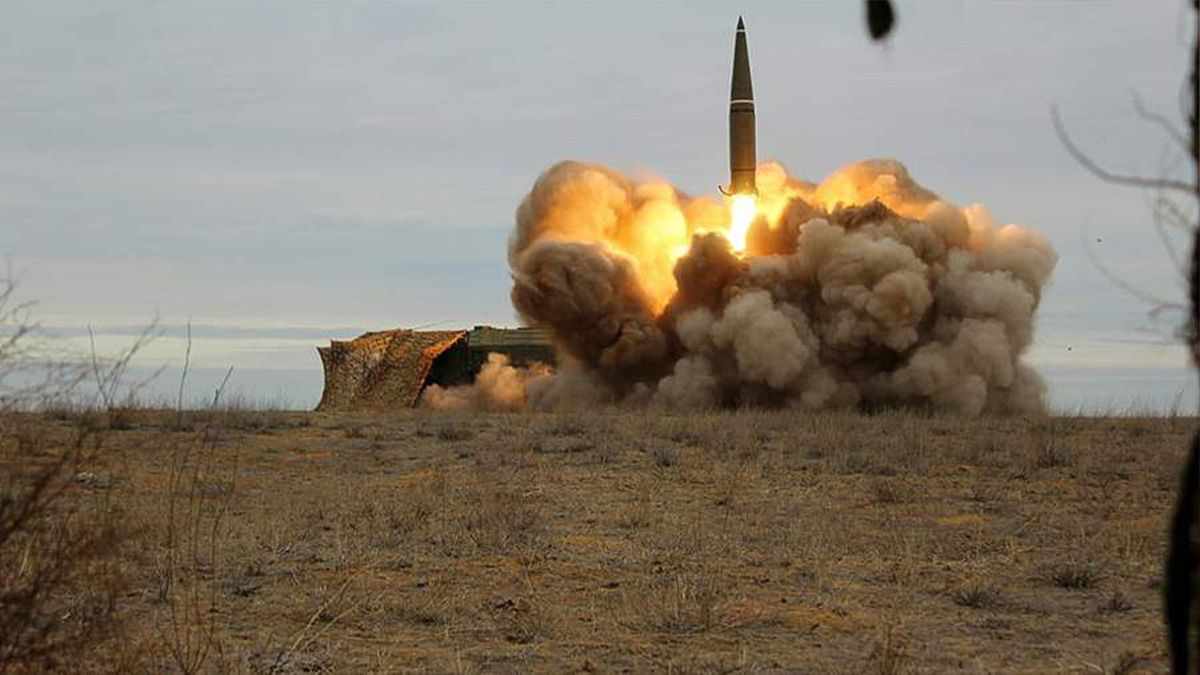
Monitoring sources are warning of an increased risk of a large-scale ballistic missile strike on Kyiv and the Kyiv region within the next 48 hours. According to their estimates, Russia may have stockpiled around 24–25 ballistic missiles for a potential salvo.
- Monitoring organisations are warning of an increased ballistic threat to Kyiv and the surrounding region over the next 48 hours.
- According to unofficial estimates, the Russian Federation may have amassed up to 24–25 ballistic missiles.
- The Air Force has not confirmed either a specific salvo or a forecast of an attack at a specific time.
- At the same time, Russia is sharply increasing its numbers of attack and jet-powered UAVs.
- Monitoring channels are reporting possible attacks on the energy sector this autumn and winter.
- Official warnings about a specific attack should be monitored via the Air Force and local authorities.
Kyiv is being warned of a possible ballistic missile strike
On 13 September, Ukrainian Telegram monitoring channels issued a warning about the high likelihood of ballistic missile strikes on the capital and the Kyiv region.
According to one estimate, Russia may have accumulated up to 25 missiles, which could potentially be used within the next 48 hours.
On social media, this warning is already circulating with the phrase «red alert for ballistic shelling».
However, an important clarification is needed here. There is no official «red ballistic threat for 48 hours» alert in Ukraine. The Kyiv City Military Administration activates the red alert level in the event of an actual threat of ballistic missile attack, after which it lifts the alert.
Therefore, the monitors’ assessment indicates an increased risk, rather than confirmation that Russia will definitely launch all the missiles it has stockpiled or that a strike will take place at a specific time.
The Air Force did not announce any specific strike
As at the time of publication, the Ukrainian Air Force there have been no reports of confirmed preparations for a salvo of 24 ballistic missiles targeting Kyiv.
Official military ballistic alerts are issued when an imminent threat of missile strikes from a specific direction is detected. Residents of Kyiv should therefore, first and foremost, respond to official air-raid sirens, even if monitoring services have previously forecast a period of danger.
Russia is rapidly increasing its number of drones
There are reasons for paying close attention to such forecasts.
On the night of 13 September Russia attacked Ukraine 164 strike UAVs of various types and one «Iskander-M»/KN-23 ballistic missile.
The Air Force reported that 137 drones had been shot down or neutralised. At the same time, it recorded a missile strike and 27 attack UAVs at nine locations.
The day before, the scale of the attack was even greater. Ukrmedia reported on almost 500 Russian drones, carried out against Ukraine over the past 24 hours, with economic, logistical and civilian infrastructure increasingly becoming targets.
The new jet-powered variants of the «Geranium» pose a particular problem. The Financial Times notes that they are faster, more difficult to intercept and are gradually approaching the capabilities of low-cost cruise missiles.
Where did the figure of 12,500 drones come from?
Separately, monitoring sources are reporting that Russia allegedly plans to launch an attack on Ukraine’s energy sector this autumn and winter, targeting approximately 12,500 conventional and jet-powered attack drones.
These same reports cite estimates of the potential monthly production or deployment of approximately 160 X-101 missiles, 50 «Kalibr» missiles and up to 175 ballistic missiles of various types.
However, these figures also is not an official forecast by the Air Force or the Main Intelligence Directorate. There has not yet been any confirmation in public official statements of the plan for 12,500 drones.
It is therefore correct to present them as an assessment by monitoring sources, rather than as a plan drawn up by the Russian command.
Energy could once again become the main priority this winter
At the same time, Ukrainian state bodies are openly preparing for the risk of further attacks on the energy system.
Even whilst preparing for the 2026–2027 season, the State Energy Regulatory Authority had identified the consequences of missile and drone attacks as one of the key risks for the coming winter and emphasised the need to increase the regions’ self-sufficiency.
Recent events confirm a shift in Russian tactics. Russia is attacking energy infrastructure and oil depots, PETROL STATION, railways, logistics centres and businesses far from the front line.
In the last few days alone, Russian drones have carried out strikes on petrol stations in Kyiv, the Zhytomyr and Rivne regions, and on 13 September — near the «Yagodyn–Dorohusk» border crossing on the border with Poland. The strike near Yagodyn temporarily disrupted operations at the crossing.
Western Ukraine has also become one of the main targets of attacks
Another notable change in recent weeks is the increasing number of drones flying into the western regions.
Russia is attacking Volyn, Zhytomyr, Rivne, Khmelnytskyi and Lviv regions, as well as border infrastructure.
During the attacks on 12–13 September, strikes and reports of hits were recorded from Odesa to the border with Poland. Russian forces also attacked railway and logistics infrastructure, as well as business premises.
This may indicate an attempt by the Russian Federation to overwhelm Ukraine’s air defence system with simultaneous flight paths and force Ukraine to deploy its air defence assets far from the capital and the front line.
Is a new large-scale missile strike being prepared?
Monitoring sources also report the redeployment and re-equipping of Russian strategic air forces.
Similar signs had already been observed previously: it was anticipated that Tu-95MS aircraft would be redeployed and that certain aircraft would be prepared for the possible use of cruise missiles. However, even in the presence of such movements, it is impossible to determine the exact date of the strike from open-source data.
Therefore, the prediction of an attack «at the weekend» should also be interpreted precisely as assessment, rather than a confirmed timetable for the Russian strike.
Russia may change the launch dates, the number of launch vehicles or the range of munitions, or may not carry out an attack at all within the predicted timeframe.
What does this warning mean for Kyiv?
The most important conclusion to be drawn from the current reports is not the specific figure of «24 missiles» nor the «48 hours» themselves.
The latest attacks show that Russia is capable of simultaneously using ballistics, hundreds of standard Shahed drones, rocket-powered UAVs and other airborne attack systems.
Ballistic missiles are particularly dangerous for Kyiv because of the very short time between the air-raid alert and a potential strike.
Therefore, when an official warning of a ballistic threat is issued, there may only be a few minutes to make a decision. In this case, a response is required immediately, regardless of whether the monitors’ current 48-hour forecast proves accurate or not.
As things stand, there has been no official confirmation of a salvo of 24 ballistic missiles. Monitoring sources have raised their risk assessment against the backdrop of a sharp increase in Russian drone attacks.