Poland is drawing up new rules for freight transport crossing the European Union’s external border. From 1 March 2027 Lorry drivers leaving Poland, particularly those heading for Ukraine, will be required to book a slot and time for border control in advance. It is planned that a fee will be charged for each booking 20 zlotys. The new system is set out in a draft amendment to Polish customs legislation prepared by the Polish Ministry of Finance.
- From 1 March 2027, there are plans to introduce compulsory booking for lorries.
- One booking will cost 20 zlotys.
- The rules will apply to departures from Poland via the EU’s external border.
- Bookings will be made via PUESC or the mobile app.
Lorries will have to book a time slot to cross the border
Under a proposal by the Polish Ministry of Finance, the system will cover freight transport leaving Poland via designated road border crossing points on the EU’s external border.
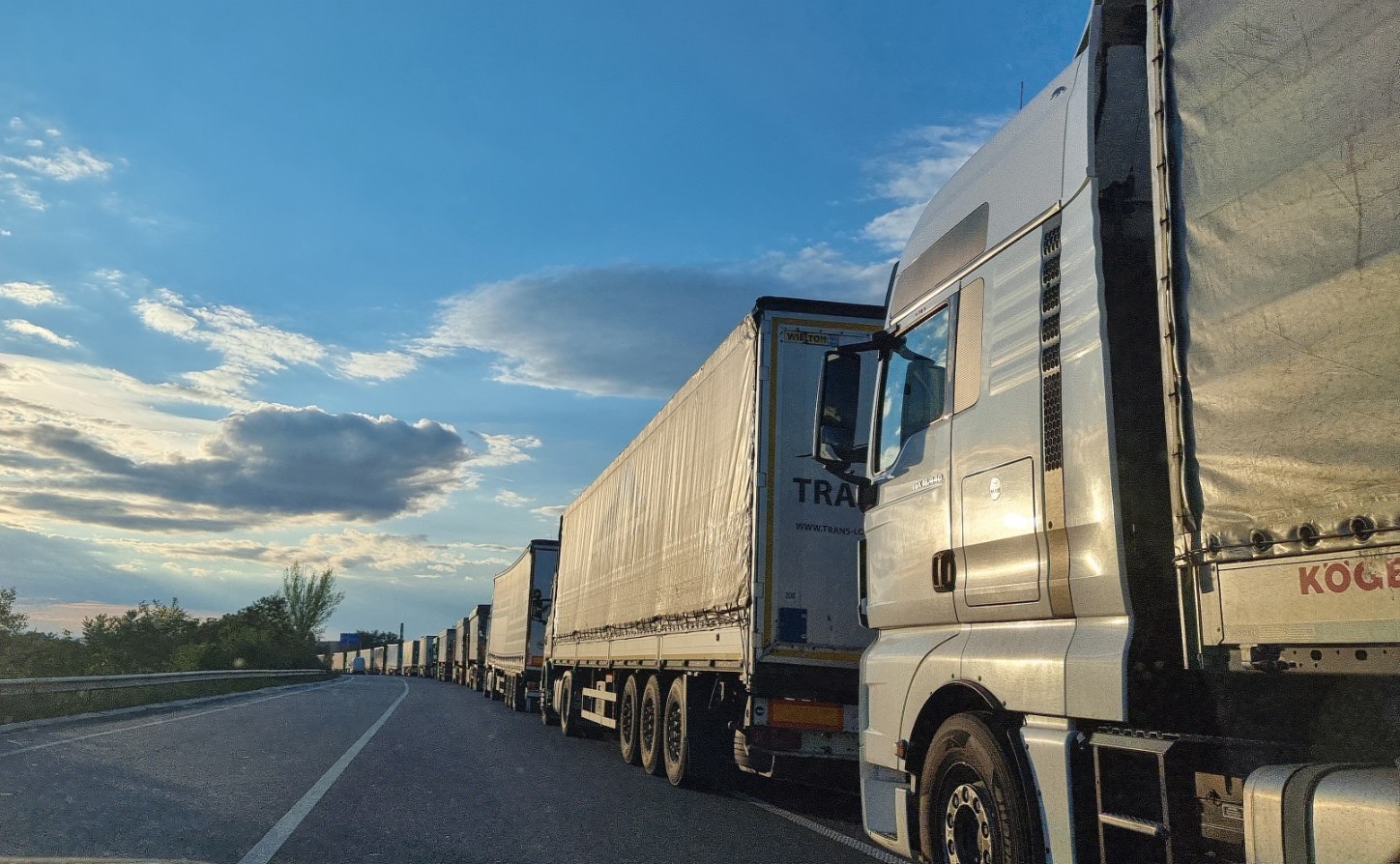
The aim of the new measure is to streamline queues and enable border and customs authorities to plan the workload at border crossing points in advance. Bookings are to become compulsory, regardless of the lorry’s tonnage category.
The booking can be made by the driver themselves or by a company registered in the system via the Polish Electronic Tax and Customs Services Platform — PUESC or a mobile app.
At present PUESC It is already possible to book a time slot for crossing certain Polish border crossings, although this service is currently free of charge and operates on a limited basis.
You’ll have to pay 20 zlotys for the booking
The cost of each booking will be 20 zlotys.
The Polish Ministry of Finance explains that the charge is primarily intended to encourage discipline amongst carriers and prevent them from making «just-in-case» reserve bookings. Similar mechanisms are already in place in the Baltic states.
They plan to accept payment electronically only. If a lorry will not arrive at the border crossing point at the booked time, the money will not be refunded.
The new rules are due to come into force on 1 February 2027, and the paid booking system itself is due to become operational from 1 March 2027.
There will be a standard queue and a priority queue
The project provides for three booking options.
Standard booking will be available for all consignments. The carrier will choose the border crossing point, date and time of arrival themselves.
Priority booking is intended, in particular, for the carriage of:
- live animals;
- perishable foodstuffs;
- dangerous goods;
- humanitarian aid;
- blood and certain other specialised cargoes.
If a haulier makes unjustified use of the priority procedure, the booking may be cancelled and the lorry may be turned back at the border crossing point.
There will also be additional booking for those who do not choose a time themselves. In this case, the system will automatically place the vehicle at the end of the queue and estimate the time of arrival.
Will imported goods become more expensive in Ukraine?
Additional costs carriers In theory, these costs could be factored into the logistics costs and, consequently, into the final price of the goods.
At the same time There is as yet no reason to speak of a sharp rise in the price of imported goods solely because of the 20-zloty charge. For a fully loaded lorry, this amount is small compared with the total cost of international transport.
What may prove far more important for businesses is the extent to which the new system will reduce – or, conversely, increase – waiting times at the border. If electronic booking does indeed cut down on queues lasting several hours, hauliers may be able to offset some of the additional costs through savings in time and fuel.
At present, the issue at hand is a project by the Polish Ministry of Finance, so some of the rules may still change before the system is fully launched.