Russian attacks on petrol stations have not caused a nationwide shortage of petrol or diesel in Ukraine, said Serhiy Kuyun, director of the «A-95» consultancy group. He believes that significant disruptions are possible in the event of systematic strikes on supply routes, storage facilities and other fuel logistics. At the same time, the government has expanded its business support programmes to help restore such infrastructure.
Briefly about the main points
- Since the start of the major war, Russia has attacked more than 300 petrol stations.
- According to Kuyun’s estimates, around 80% of the damaged petrol stations are resuming operations.
- Simultaneous strikes on supply routes and storage facilities could result in a worst-case scenario.
- An expert advises against creating a rush of demand for petrol and diesel.
- The government has expanded compensation, insurance and loans for the fuel infrastructure.
Damaged stations are returning to service
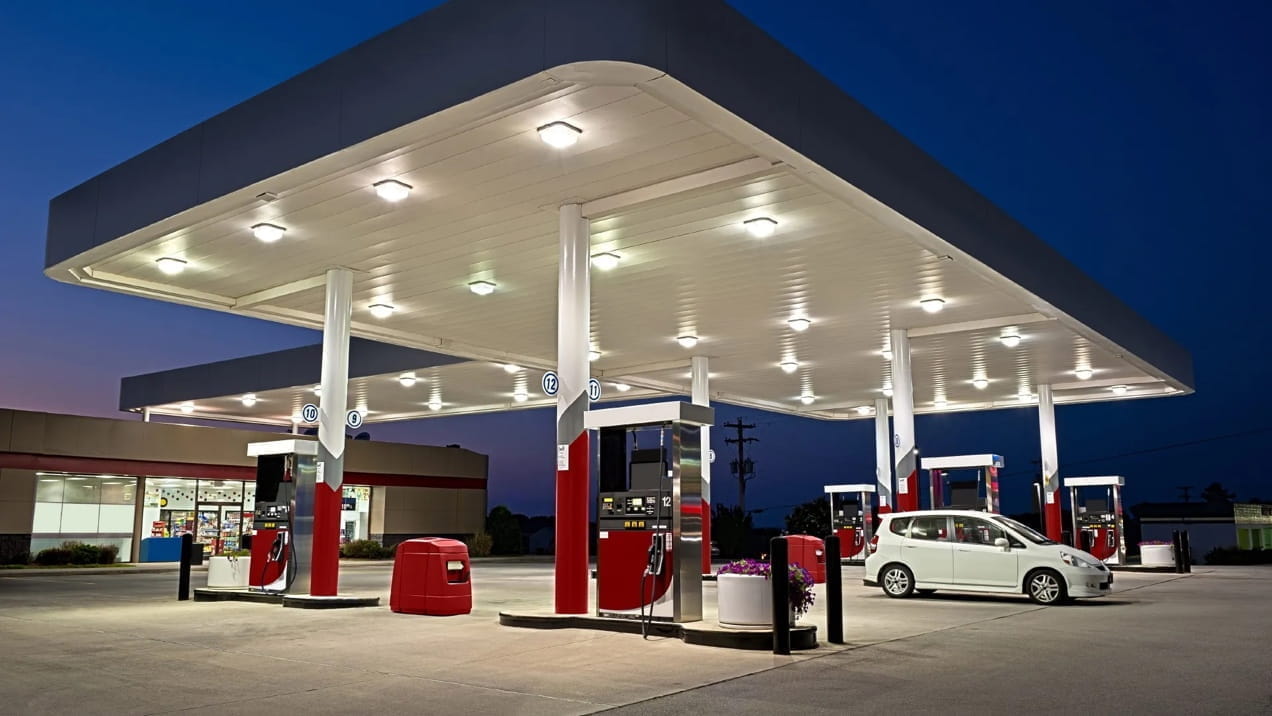
Since the start of the full-scale invasion, Russian troops More than 300 petrol stations were attacked in Ukraine, he said Kuyun. Most of the targets hit are located in frontline regions, although strikes have recently been recorded far from the front line as well.
According to an expert’s assessment, approximately 80% of the damaged stations eventually resume operations. Losses at individual outlets are offset by other petrol stations, which ensures that fuel remains available to consumers.
Disruptions may occur if supply routes are lost
More serious problems for the market could arise if attacks are systematically directed at key elements of fuel logistics. In such a scenario, certain supply routes may be temporarily suspended, and operators will have to reroute deliveries via alternative routes.
«I cannot rule out the possibility that some of the routes may be suspended. They may be reinstated quickly, or they may not,» said Kuyun. In his view, the transition period should be supported by accumulated stocks to prevent a rush of demand.
The expert advises against the public buying up petrol or diesel on a massive scale. Moderate reserves are needed first and foremost by local authorities, local communities, and state-owned and private enterprises, for which supply disruptions could have critical consequences.
The government has expanded its support for the restoration of the fuel infrastructure
On 17 September, the Cabinet of Ministers expanded the programmes providing business insurance against war risks and compensation for damaged or destroyed property. These programmes cover, in particular, enterprises, warehousing and logistics facilities; the list of property eligible for compensation has also been expanded to include fuel held by excise warehouse operators and vehicles used for its transport or storage.
Preferential lending is available for large-scale projects aimed at restoring fuel and warehousing logistics, the processing industry and retail chains. The maximum limit is up to 1 billion UAH per group of affiliated companies. In particular, the programme covers the construction or modernisation of underground storage tanks and the relocation of part of the storage systems underground.
Secured reserves require lengthy preparation
Kuyun cites the creation of secure fuel reserves, particularly in underground storage tanks, as one of the long-term solutions. Before a new storage facility can be built, project planning and approval are required, and the construction itself will also take several months.
It is not possible to establish a fully-fledged system of such reserves in a single winter. Until such a system is in place, the reliability of supply will depend on the existing infrastructure, accumulated stocks and the ability of operators to quickly replace delivery routes that have been lost.