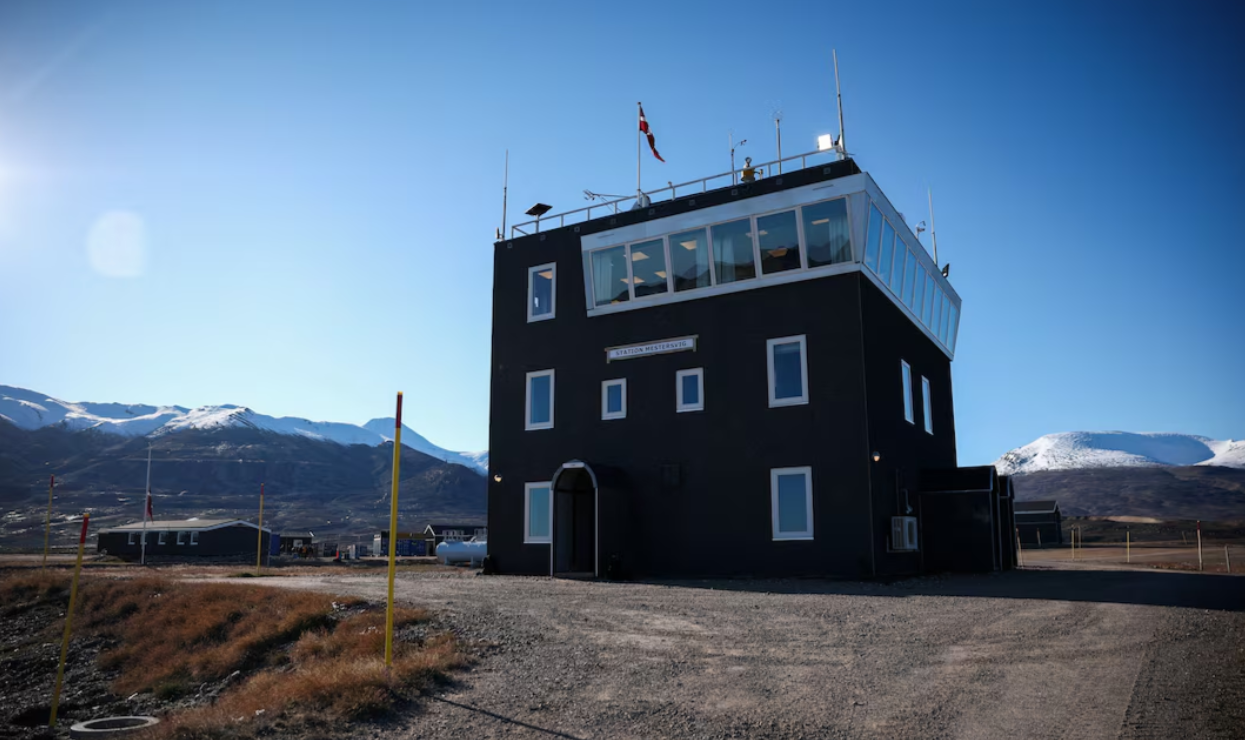
The US may establish defence zones in Mestersvig in eastern Greenland and Narsarsuaq in the south of the island under a new trilateral agreement. The document was signed on 22 September, but it has not yet come into force: Denmark and Greenland must complete parliamentary procedures and notify Washington through diplomatic channels. The parameters of a possible US presence will be agreed upon separately by the parties.
Briefly about the main points
- The agreement designates Mesterswig and Narsarsuaq as sites for US defence zones.
- The document is subject to parliamentary procedures in Denmark and Greenland before it comes into force.
- Mesterswig is situated near the GIUK Gap on the route to the North Atlantic.
- The station is manned by three Danish military personnel, and its runway accommodates transport aircraft.
- The agreement provides for the possible involvement of Greenlandic contractors in defence contracts.
The agreement sets out a legal framework, rather than a ready-made plan for the deployment of US forces
In the text the Masterswig and Narsarsuaq agreements specifically designated as sites for additional US defence zones. This term refers to an area where the US may establish or operate a military facility, but the format, scale of operations and technical parameters must be the subject of separate agreements between the parties.
The US has not publicly disclosed what troop numbers, equipment or deployment arrangements it plans for Mesterswig. The agreement also allows for the modernisation and expansion of operations at the Pituffick space base and establishes a procedure for the creation of other defence zones in the future.
The agreement complements previous US-Danish agreements on the defence of Greenland. It provides for the access and movement of US forces, ships, aircraft and equipment between defence areas, whilst the exercise of these rights must take the traditional hunting and fishing practices of the Greenlandic people into account as far as possible.
Mesterswig combines logistics infrastructure with proximity to the GIUK Gap
Mestersvig is situated near the maritime corridor between Greenland, Iceland and Britain, known as the GIUK Gap. It is through this route that Russia’s Northern Fleet is supposed to reach the Atlantic; for NATO, this route is important for controlling maritime routes.
The station, built in the 1960s, is permanently manned by three Danish soldiers. Its barracks can accommodate up to 150 people, and the 1.8-kilometre-long unpaved runway is suitable for military transport aircraft. The facility serves as a staging post for personnel, cargo and the «Sirius» patrol.
Working conditions here are harsh: in winter, the area is plunged into darkness, the average temperature is around minus 10 degrees Celsius, and up to five metres of snow can accumulate here over the course of a year. Mesterswig lies 240 kilometres from the nearest settlement, which has a population of 330, on the edge of a deserted national park.
Local expectations relate to contracts and environmental procedures
Member of the local parliament Justus Hansen He supported the possible expansion, stating that East Greenland needs new funding. The agreement requires that Greenlandic resources be utilised to the fullest extent possible for contracts relating to the establishment, maintenance, servicing and dismantling of defence areas — provided that the capacity and practical feasibility exist.
At the same time, questions have already been raised in the Danish parliament as to whether Greenland’s environmental requirements – including impact assessments, public participation and permits – will apply in full to the new US facilities. As of 25 September, the government’s response had not been made public.
The practical implementation of the agreement will depend on the completion of the procedures for its entry into force and on individual decisions concerning specific defence zones.