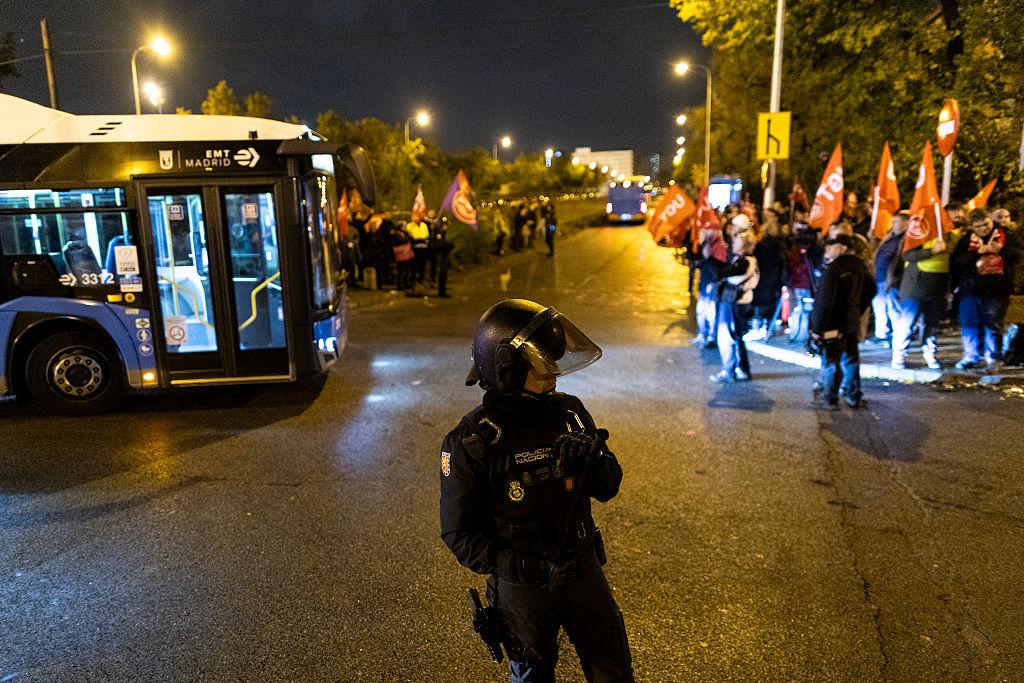
On 11 November 2026, a large-scale nationwide strike took place in Spain, affecting Madrid, Barcelona and dozens of other cities. The protests were accompanied by motorway blockades, public transport disruptions and clashes with the police. According to preliminary data from the Ministry of the Interior and regional police forces, around 40 people were arrested, and by 11:00 local time, the National Police and the Civil Guard had recorded 476 incidents. The organisers described the strike as a success, but employers reported low levels of participation by workers in many sectors. This was reported by EFE, the Associated Press and the Spanish media.
- On 11 November, Spain saw its first nationwide strike in 14 years.
- According to preliminary figures, around 40 people have been detained and 476 incidents have been recorded.
- The protests led to road blockades and disruption to transport and business operations.
- The police used pepper spray against protesters in Madrid.
- The strikers are demanding affordable housing, higher wages and the protection of their social rights.
Where did the largest protests take place?
The largest demonstrations took place in Madrid, Barcelona, Valencia and towns in the Basque Country. From early in the morning protesters blocked access roads to industrial sites, logistics centres and transport hubs.
In Madrid, strikers blocked the central Gran Vía. The police pushed the demonstrators back from the carriageway and used pepper spray during the clashes. Tensions also flared near the Mercamadrid wholesale market, where police attempted to restore traffic flow.
In Barcelona, the metro and bus services were temporarily suspended, whilst traffic jams formed on some motorways due to roadblocks. Disruptions also affected rail and air services: according to the airport operator AENA, around 5 per cent of flights scheduled for Wednesday were cancelled.
How many people have been arrested, and are there any casualties?
According to the Ministry of the Interior Spain, The National Police and the Civil Guard detained 26 people during the first few hours of the protests. The Basque Country police confirmed a further 13 arrests, whilst the Catalan police confirmed one.
According to preliminary reports, the total number of people detained stood at 40. The reasons for the detentions included breaches of public order, the setting alight of rubbish bins, road blockades and alleged attacks on law enforcement officers.
In Madrid, 13 people required medical attention following clashes near Mercamadrid. Some of those affected complained of eye irritation following the use of pepper spray.
In the Basque Country, the regional police force, the Ertzaintza, reported that seven police officers had been injured. By 13:30, the police had also identified 155 people whose involvement in the incidents was being investigated.
Why did the Spanish take to the streets?
The main reason for the strike was the sharp rise in the cost of housing. According to the Associated Press, the average rent in Spain has almost doubled over the last ten years. For many workers, particularly young people, renting a flat of their own has become too expensive.
The protests were organised by the largest trade unions, the UGT and CCOO, together with tenants’ organisations. They are calling for higher wages, greater protection for tenants, restrictions on speculation in the property market and improvements to public services.
Trade unions have reported significant support for the strike in the automotive industry, ports and the utilities sector. According to their estimates, up to 90 per cent of workers at some workplaces have stopped work.
At the same time, employers’ organisations have reported significantly lower levels of participation in many other sectors. There is currently no single, independently verified estimate of the total number of strikers.
What are the consequences of the strike, and what will happen next?
Mass protests took place in the run-up to the snap general election in Spain, scheduled for 29 November. The housing crisis and the rising cost of living were among the key issues of the election campaign.
Trade unions are calling for a review of social and housing policies and have criticised the police’s actions during the dispersal of certain protests. Business representatives, for their part, point to the economic losses caused by the shutdown of businesses and disruptions to logistics.
As of the evening of 11 November, the strike was still ongoing, so the figures released are not final. Once the protest has ended, more precise figures on those detained, those injured and the scale of participation are expected. No specific agreements between the government and the protest organisers have yet been announced.