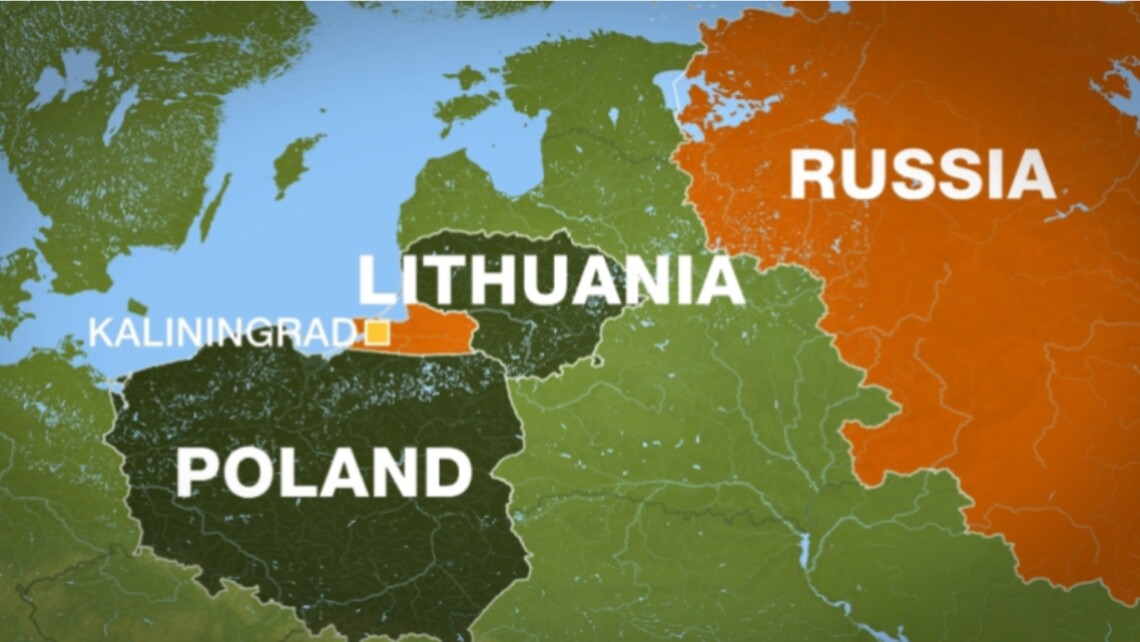
The Kaliningrad Oblast — a small Russian exclave situated between Poland and Lithuania — has for decades remained one of the most unusual remnants of the post-war map of Europe. Today, its significance has long extended beyond geography. Several lines of tension converge here: NATO’s eastern flank, the Russian Baltic Fleet, missile and air defence systems, the Suwałki Corridor, transport routes between Russia and the exclave, critical infrastructure in the Baltic Sea, and increasingly active electronic warfare.
At the end of September 2026, the issue of Kaliningrad once again took centre stage in European security. Reuters reported that Russia had warned NATO of the possible consequences of any attempt to isolate or attack the region. In response, NATO Secretary-General Mark Rutte emphasised the Alliance’s defensive nature, called on Moscow to cease its nuclear threats and, at the same time, stated that NATO currently sees no immediate threat of a Russian attack on the territory of its allies.
It is precisely the combination of Kaliningrad’s great military importance to Moscow and its obvious geographical vulnerability that makes the region a potential flashpoint for escalation between Russia and NATO.
Briefly about the main points
- Kaliningrad is a Russian exclave situated between Poland and Lithuania, surrounded by NATO countries and the Baltic Sea.
- Russia uses the region as a key military hub, housing its missile, naval and air defence forces.
- The Suwałki Corridor is located nearby — a key land route between the Baltic states and the rest of NATO.
- Finland and Sweden’s accession to NATO has significantly altered the strategic geography of the Baltic Sea.
- Russia retains the capability to carry out missile strikes, electronic warfare, naval operations, sabotage and other means of exerting pressure in the region.
- The greatest risk lies not only in the deliberate outbreak of war, but also in a mistake, a misinterpretation of an incident or an uncontrolled escalation.
Russian territory cut off from Russia
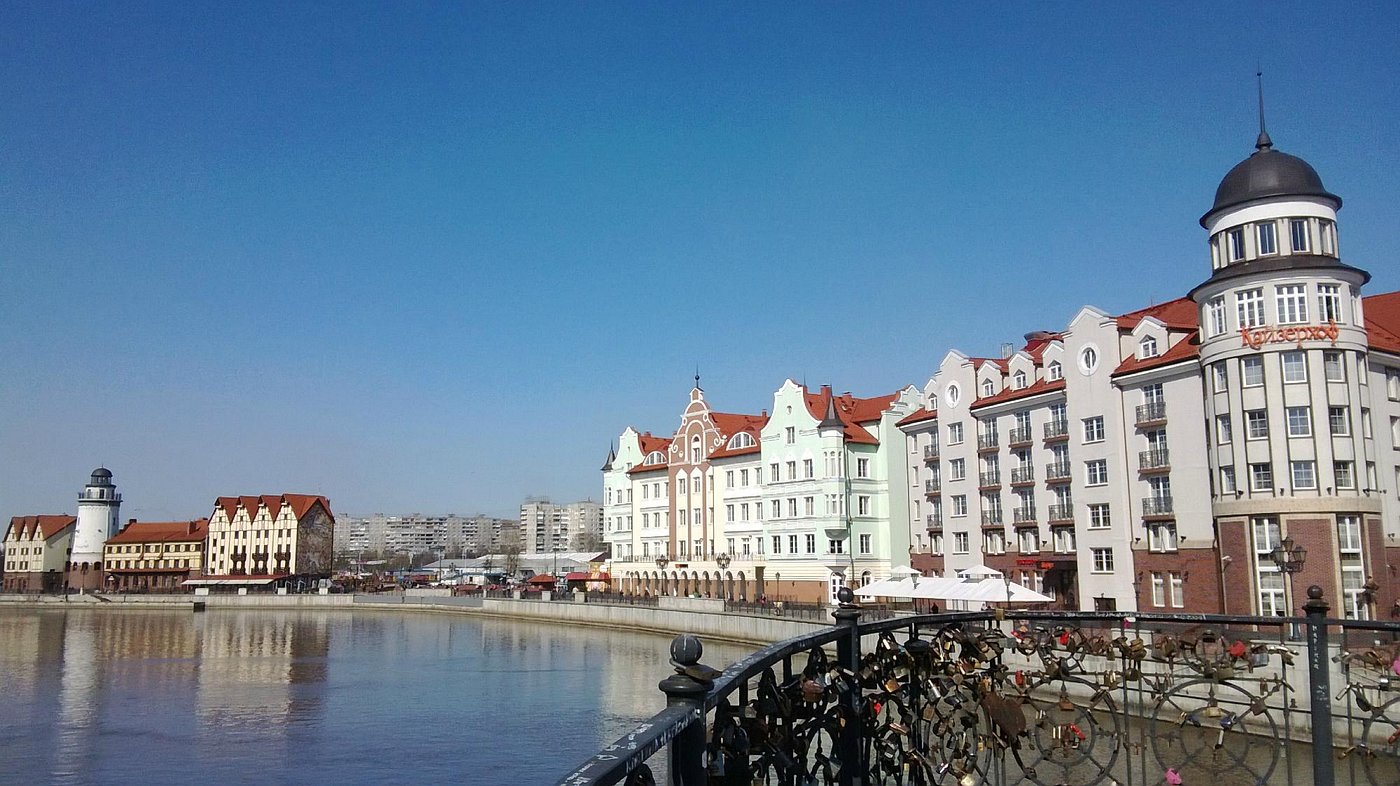
The Kaliningrad Oblast has no land border with the mainland of the Russian Federation. To the north and east, it borders Lithuania; to the south, Poland; and to the west, it faces the Baltic Sea. Both Poland and Lithuania are members of NATO and the European Union. The region is home to around one million people, and its administrative centre is the former German city of Königsberg, which, along with the northern part of East Prussia, came under the control of the Soviet Union after the Second World War.
In peacetime, this geographical situation is primarily a logistical inconvenience. In the event of a large-scale military crisis, it becomes a strategic problem: it is more difficult for Russia to supply, reinforce and defend a region that is physically separated from its main territory. At the same time, Kaliningrad’s location enables Moscow to maintain military forces right at the heart of the Baltic region, close to NATO territory.
This is precisely the main paradox of the region. The very thing that makes Kaliningrad an extremely valuable military asset for Russia also makes it one of its most vulnerable territories in the event of a potential conflict with the Alliance.
Russia’s military base in the heart of the Baltic region
The military significance of the Kaliningrad region far exceeds its geographical size. Reuters describes it as a heavily militarised exclave where Russia has concentrated its air, missile and naval capabilities. This presence enables Moscow not only to defend the region itself, but also to influence NATO’s military calculations in Poland, Lithuania and the wider Baltic region.
Kaliningrad It also remains one of the main bases of the Russian Baltic Fleet and forms part of a multi-layered air and missile defence system. In a broader sense, the region is an element of Russia’s strategy to restrict the enemy’s freedom of action — something often described in military terminology as A2/AD, anti-access/area denial.
However, modern warfare is considerably more complex than the classical model, in which it is sufficient to deploy powerful air defence systems and coastal missile systems and create a notional «bubble» around them. The IISS notes that Russia’s capabilities in the Baltic region include long-range missiles, mines, submarine forces, unmanned systems, electronic warfare and sabotage capabilities. These need not necessarily be used to gain complete control over the region, but rather to disrupt NATO’s sea and land routes at a critical moment.
The Suwałki Corridor — a narrow stretch of land of great importance
There is another strategic location near Kaliningrad — The Suwałki Corridor. This is a strip of Polish-Lithuanian territory between the Russian exclave to the west and Belarus to the east. It is through this strip that the main land link between Lithuania, Latvia and Estonia and the other NATO member states runs.
NATO explicitly describes this territory as strategically important. A US-led multinational battlegroup is deployed in Poland near the corridor; its tasks include, amongst other things, preparing for the rapid reinforcement of allies in the event of a crisis.
The IISS estimates the width of the key section to be approximately 65 km and points out that, in modern warfare, the threat to it may not be limited to large ground forces. Long-range drones, missile strikes, mining, sabotage and attacks on road and rail infrastructure are capable of drastically reducing the corridor’s capacity. The peculiarity of the situation lies in the fact that the Suwalki Corridor and the Baltic Sea are interdependent: problems on land increase the importance of maritime reinforcement, whilst problems at sea make the land route even more crucial.
That is precisely why Kaliningrad cannot be analysed in isolation from Belarus. On the strategic map, a relatively narrow strip of NATO territory lies between Russian territory and a state allied to Moscow, a fact that has attracted the attention of military planners for decades.
Since 2022, the map of the Baltic region has changed fundamentally
Russia’s full-scale invasion of Ukraine set in motion changes that have had a direct impact on the situation in Kaliningrad. One of the most significant of these was the accession of Finland to NATO in 2023 and Sweden in 2024. As a result, almost the entire Baltic Sea coastline, with the exception of Russian territories, now belongs to NATO member states.
This has significantly improved NATO’s strategic geography, but has not turned the Baltic Sea into an area where Russia is no longer capable of causing serious problems. The IISS notes that Moscow still has access to the Baltic via Kaliningrad and the surrounding region Kronstadt and may use missiles, mines, unmanned systems, cyber-attacks, sabotage and civilian platforms of ambiguous purpose.
In other words, the accession of Finland and Sweden has not made Kaliningrad any less important. On the contrary, the exclave now finds itself in an even more unique situation. It remains a Russian military stronghold, but is now geographically even more deeply surrounded by the territories of NATO member states.
A fortress that is, at the same time, a weak spot
Kaliningrad is often described as Russia’s «fortress» in the Baltic, but this image only tells half the story. The significant concentration of military forces makes the region a threat to a potential adversary, but its isolated location creates obvious logistical risks.
In peacetime, the region can obtain the necessary goods by sea and via transit routes. In the event of a direct conflict between Russia and NATO, the situation would be fundamentally different. Maritime routes could come under military pressure, whilst land transit passes through the territories of NATO member states.
This is not merely a theoretical issue. Following the introduction of EU sanctions against Russia in 2022, the issue of the transit of goods to Kaliningrad had already caused serious political tension between Moscow, Vilnius and Brussels. At the time, the dispute was kept within the legal and diplomatic sphere. However, the episode itself demonstrated just how quickly a routine logistical problem concerning the region can turn into a matter of international security.
The Baltic Sea has become a separate theatre of conflict
The importance of Kaliningrad cannot be explained by a map of the mainland alone. The Baltic Sea is home to ports, energy infrastructure, undersea telecommunications cables, pipelines and transport routes that are of critical importance to Northern Europe.
The IISS highlights the lessons from the Black Sea and other contemporary conflicts: to exert effective pressure on an adversary, it is not necessary to achieve absolute dominance at sea. It is sufficient to make the use of sea lanes dangerous, costly and unpredictable. To this end, mines, missiles, unmanned platforms, electronic warfare, sabotage and attacks on critical infrastructure may be employed.
In this respect, Kaliningrad is of particular value to Moscow. It enables Russia to maintain a naval presence far from its main territory and creates an additional avenue for exerting pressure on NATO countries’ lines of communication.
At the same time, Russia finds itself in a more difficult position than it was before the Alliance’s expansion. The Swedish island of Gotland, the Polish coast, the Baltic states and Finnish territory form a completely different military configuration to that which existed ten years ago.
A conflict zone already exists — even without an open war
One of the greatest dangers facing the Baltic region is that confrontation may take place below the threshold of open armed conflict. This does not require tanks to cross borders.
Radio-electronic interference, navigation issues, suspicious drone flights, damage to undersea cables, cyber-attacks, and the activities of military aircraft and ships create a constant climate of uncertainty. It is precisely this situation that is particularly dangerous, as one side may regard its actions as defensive or limited, whilst the other will perceive them as preparations for a larger-scale operation.
This risk is well illustrated by an incident that may seem insignificant at first glance. In September 2026, following a report of a possible drone, Lithuania temporarily closed Vilnius Airport, whilst NATO scrambled at least one fighter jet. It later transpired that the object in question was a flock of birds. There was no escalation, but the incident demonstrates just how quickly, given the current level of tension, an ambiguous signal can trigger military response procedures.
Kaliningrad is increasingly featuring in harsh rhetoric
In 2026, Kaliningrad once again began to feature regularly in statements by both the Russian and Western sides. At the end of September, Reuters reported on a Russian warning to NATO regarding the possible consequences of any attempt to attack or isolate the region. Moscow also employed nuclear rhetoric in this context.
NATO Secretary-General Mark Rutte replied, … that the Alliance is defensive in nature and poses no threat to Russia. He also called on Moscow to cease its nuclear threats. Importantly, Rutte stated at the same time that NATO’s assessment does not indicate an imminent threat of a Russian attack on Alliance territory, and that, in his view, any potential preparations for a major operation would show clear signs.
This is an important clarification. It is incorrect to describe the current situation as an inevitable slide towards outright war over Kaliningrad. Rather, it is a matter of escalating tensions, a demonstration of military capabilities, and attempts by both sides to establish the limits of what they consider acceptable.
NATO is also strengthening its position
Since 2022, the Alliance has significantly strengthened its eastern flank, including Poland and the Baltic states. The Suwałki Corridor has become one of the areas where NATO regularly practises the rapid reinforcement of allied forces in the event of a crisis.
This creates a classic dilemma in international security. NATO justifies the deployment of its forces on the grounds of the need to deter threats and defend its own territory. Russia may view this very same build-up as a potential threat to Kaliningrad. In response, Moscow is bolstering its own military capabilities — whilst NATO gains further grounds for strengthening its eastern flank.
This creates a cycle in which actions that one side describes as defensive are perceived by the other as confirmation of its worst fears.
Why a random incident can be more dangerous than a planned attack
A direct Russian offensive against a NATO member state or an attack by the Alliance on Kaliningrad would be extremely serious political decisions, requiring careful preparation and a full understanding of the consequences. A much less predictable scenario is one in which a conflict begins with an event whose scale is initially unclear.
Reuters cites drone incidents, acts of sabotage against critical infrastructure, military build-up and actions that Moscow might perceive as an attempt to isolate the region as potential factors in an escalation around Kaliningrad.
Let us imagine a situation in which an unidentified drone crosses the border, an undersea cable is damaged, or a military aircraft briefly enters another country’s airspace. The first few hours following such an incident may pass without a clear understanding of who caused it or whether it was deliberate. However, military decisions sometimes have to be made before the investigation is complete.
Therefore, the main danger lies not necessarily in the initial incident, but in the chain of subsequent reactions. One party responds to what it perceives as a provocation. The other side perceives the response as an escalation and takes the next step. After several such cycles, the original cause of the conflict may become secondary.
Article 5 sets the rates significantly higher
The countries surrounding Kaliningrad are not neutral states, but NATO members. Poland and Lithuania are covered by the Alliance’s collective defence guarantees. That is precisely why even a local military incident here has the potential to take on a much broader scale.
Article 5 The North Atlantic Treaty establishes the principle that an armed attack against one ally is regarded as an attack against all. At the same time, this is not a mechanism for automatically declaring war: NATO member states themselves determine the form of assistance they deem necessary.
However, politically speaking, the very existence of this guarantee means that Moscow must take into account the possibility of a response not only from Poland or Lithuania, but from the Alliance as a whole. It is precisely this that raises the stakes and serves as one of the main mechanisms of deterrence.
Nuclear rhetoric is not the same as a decision to use nuclear weapons
The nuclear aspect of Russia’s statements regarding Kaliningrad sounds the most dangerous. However, it is important to distinguish political rhetoric from actual signs of preparations for the use of nuclear weapons.
As at 30 September 2026, NATO leadership had publicly stated that it did not see any immediate threat of a Russian attack on Alliance territory. Rutte also emphasised that NATO was not changing its current threat assessment in response to Russian warnings.
In a strategic standoff, nuclear weapons are not only a potential means of waging war, but also a tool of deterrence and a political signal. Moscow is seeking to maximise the perceived cost of any action against Kaliningrad. NATO, for its part, is seeking to demonstrate that it will not abandon the defence of its own members under pressure from nuclear threats.
It is between these two positions that the most dangerous gap lies — the possibility that one of the signals will be misinterpreted.
Kaliningrad has become a symbol of a new European security order
Until 2022, Kaliningrad could be regarded as a complex but relatively stable legacy of the end of the Cold War. Following Russia’s invasion of Ukraine, this model has changed. Finland and Sweden have joined NATO, the Alliance has strengthened its eastern flank, the Baltic states have accelerated their defence programmes, and the Baltic Sea is increasingly being viewed not merely as a transport route, but as a potential theatre of military conflict.
That said, Kaliningrad is not a place where a war between Russia and NATO is bound to break out. This conclusion is not supported by the Alliance’s current assessments. The region’s significance lies elsewhere: military forces, critical infrastructure, strategic routes and the political red lines of both sides are situated extremely close together here, one of which is Russia and the other an alliance of nuclear-armed states comprising the US, the UK and France.
For this reason, the most dangerous scenario may not be a pre-planned offensive, but rather the gradual drawing of the parties into a crisis. A local incident, a misjudgement of the opponent’s intentions, a demonstrative response, a new military move — and each subsequent action is justified by the need to respond to the previous one.
That is why Kaliningrad today should be viewed not as a prediction of where a future war might take place, but as one of the key indicators of just how dangerously the European security system has changed since 2022. The Russian exclave remains at once a military advantage for Moscow, a source of logistical vulnerability, and a territory where even a minor incident is capable of taking on far greater political significance.