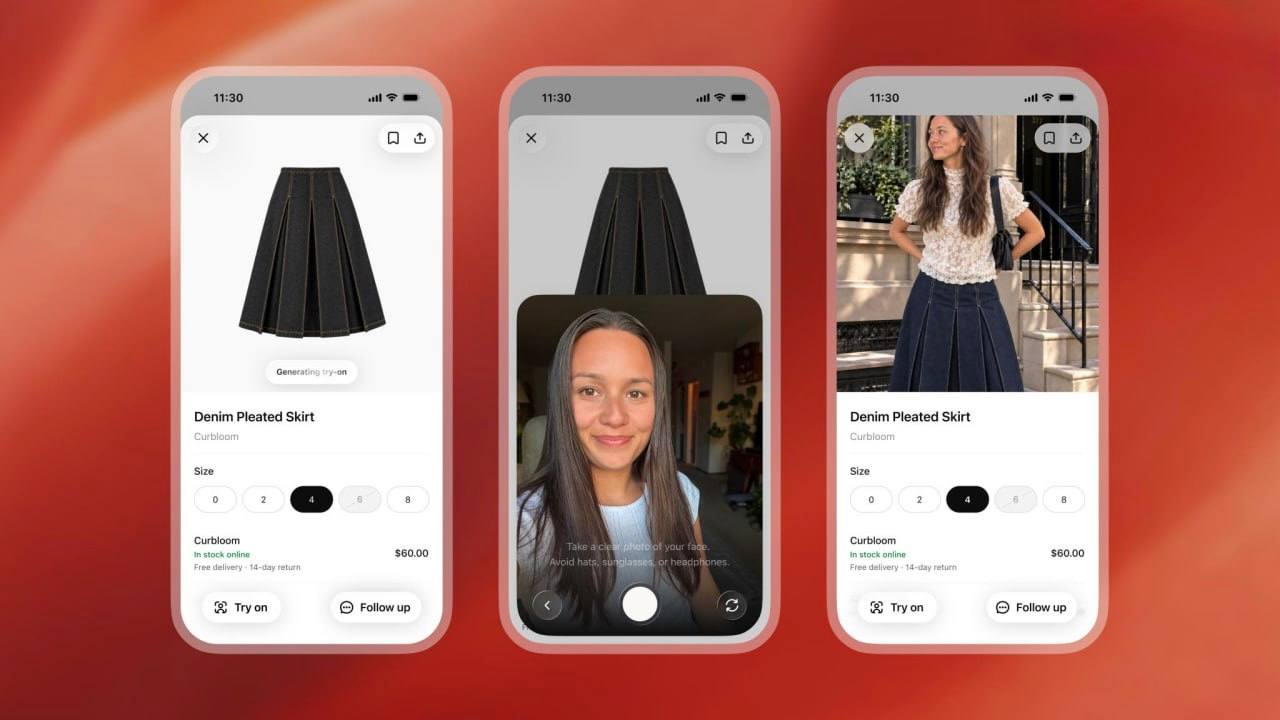
ChatGPT now features a virtual try-on function for clothes and accessories. Users can find the item they want in the search results, click «Try on», upload a selfie and receive a generated image showing them ‘wearing’ the selected item. OpenAI officially added the feature on 1 October; it works in ChatGPT on mobile devices and in the web version.
- ChatGPT has introduced a new ‘Try On’ virtual fitting feature.
- She works with clothing and accessories in the product search results.
- To try it on, simply take or upload a selfie.
- The image featuring the selected item is generated by ChatGPT Images.
How Try On works in ChatGPT
When looking for clothes or accessories in ChatGPT A button appears next to compatible products Try on. Once you click on it, the service asks you to take a new photo or upload one you’ve already taken. ChatGPT Images then creates a new image of the user wearing the selected item. This allows you to get a rough idea of how a particular skirt, jacket, dress or accessory will complement your appearance and overall look.
The process does not require you to visit a separate website or use a third-party app — you can try items on directly within ChatGPT.
You can also upload the clothes yourself
The feature is not limited to the products that ChatGPT itself displayed in the search results. OpenAI notes that the user can also upload a photo of an item of clothing or an accessory directly into the chat and ask ChatGPT to show what this item might look like on him.
This broadens the range of possible uses. For example, you can take a photo of an item from an online shop, a screenshot from social media, or your own photo of an item of clothing, and use it for a virtual fitting.
A single photo can be reused
Another handy feature is that ChatGPT can save reference photo, i.e. a photo of the user, which will be used for subsequent fittings. This means you don’t have to take a new selfie every time you want to try on a different item.
You can edit or delete a saved photo via:
Settings → Personalisation → Reference photos.
There, the user can replace the photo with another one or remove it altogether.
ChatGPT is gradually becoming a personal shopping assistant
Virtual try-on marked the next step in the development of ChatGPT’s shopping features.
Previously. OpenAI has significantly expanded the product search function: ChatGPT can display photographs, specifications, prices and offers from various sellers, compare several models and help users choose a product that suits their budget and requirements.
Now, on top of that, there is the option to to try the item on.
As well as Try On, OpenAI has also introduced the ability to save items you’ve found to your Favourites and create separate folders for future purchases in the ChatGPT library.
Can you trust a virtual fitting?
ChatGPT generates generative visualisation, rather than an exact digital simulation of how the garment actually fits. The image may give a fairly realistic impression of the overall style, colour and how the item looks as part of an outfit, but it does not guarantee the correct size or an exact fit.
OpenAI explicitly warns that the result may not fully correspond to either the user’s appearance or the actual product. Therefore, before making a purchase, it is still worth checking the size chart, the item’s specifications and the seller’s return policy. Centre
For online shops, this could significantly change the shopping experience
The main advantage of Try On is that it provides users with an answer to a question that a standard product card does not address: «But how will this item look on me?»
Previously, to do this, shoppers had to switch between the shop, photos of the products, reviews and social media. Now, part of this process can be carried out within a single interface.
This feature could prove particularly useful for product categories where purchasing decisions are heavily influenced by visual appeal: outerwear, dresses, skirts, glasses, bags and other accessories.
In fact, ChatGPT is moving away from searching for and comparing products to personalised visual shopping, where artificial intelligence helps not only to find an item, but also to estimate how it would look on a particular person.