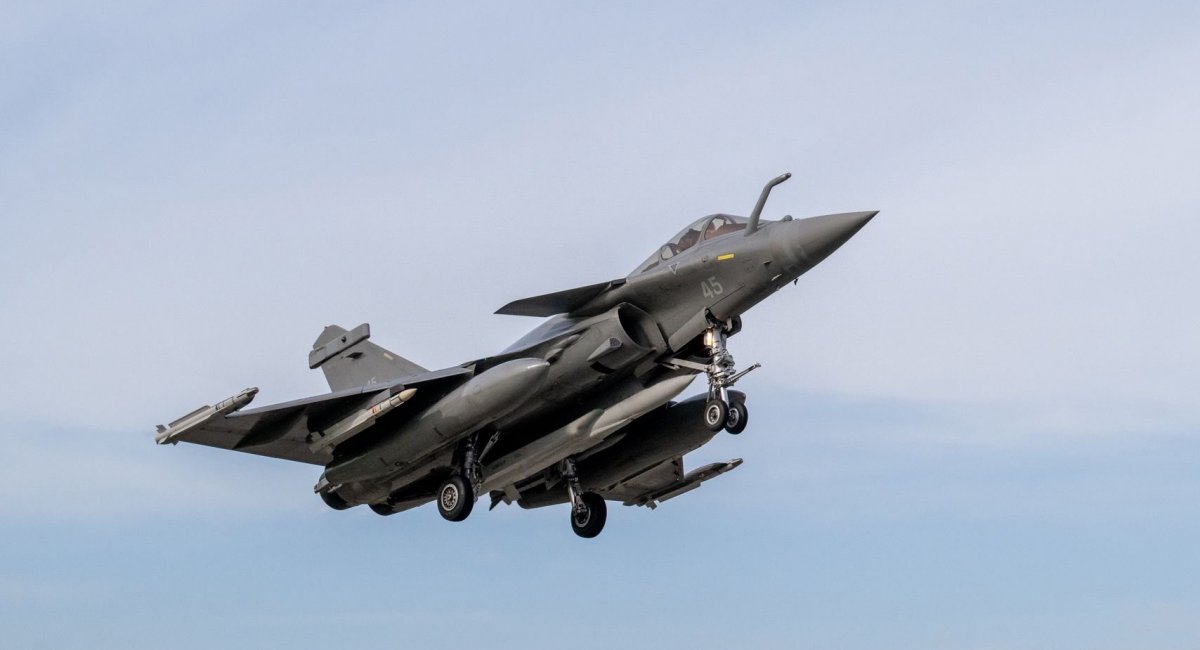
France is drawing up a plan to expand nuclear deterrence in Europe, which provides for the possible deployment of Rafale fighter jets, capable of carrying missiles with nuclear warheads, on the territory of partner states. Ten European countries have joined President Emmanuel Macron’s initiative. According to The Wall Street Journal on 26 October, Paris is seeking to strengthen deterrence against Russia amid doubts about the reliability of US security guarantees. However, the specific locations and timing of the aircraft’s deployment have not yet been determined.
- France is expanding its nuclear cooperation with ten European countries.
- The plan provides for the possible deployment of Rafale fighter jets capable of carrying nuclear missiles.
- Germany, Poland, the United Kingdom and seven other countries have joined the initiative.
- All decisions regarding the use of French nuclear weapons will remain with Paris.
In which countries could France deploy its fighter jets?
According to The Wall Street Journal, the French nuclear deterrence initiatives The United Kingdom, Germany, the Netherlands, Belgium, Poland, Greece, Finland, Norway, Sweden and Denmark have joined.
Each country’s involvement will vary. Paris is holding separate consultations with its partners to discuss the possible use of military airfields, the establishment of infrastructure, secure communication channels, early warning systems and the exchange of intelligence.
One of the key elements of the plan is the ability to deploy French combat aircraft outside the country during crises. This will enable forces to be dispersed and create additional uncertainty for a potential adversary regarding their location.
At the same time, the fact that ten countries are participating in the programme does not mean that they have all agreed to station nuclear-armed aircraft on their territory. This involves various forms of cooperation, the details of which are yet to be agreed.
Why is Macron expanding Europe’s nuclear deterrent?
The President of France presented a concept for advanced nuclear deterrence in March 2026. It provides for greater involvement of European allies in French strategic planning, joint exercises and preparations for potential crises.
The new approach is linked to Russian nuclear threats and debates regarding Europe’s dependence on the US nuclear umbrella. France remains the only European Union member state to possess its own nuclear weapons.
Macron’s adviser on strategic issues Xavier Chatel explained that the dispersal of French forces could broaden the range of options available in the event of a nuclear escalation.
In addition to the air component, France’s deterrent forces include nuclear-powered submarines armed with ballistic missiles. At the start of 2026, France’s arsenal was estimated at approximately 290 nuclear warheads. In March Macron announced his intention to increase their number and to stop publishing precise figures.
Rafale nuclear-capable fighter jets have already been deployed to Germany
Practical steps under the new defence concept have already begun. In July, France deployed Rafale fighter jets from its strategic air force to the Nerfenich airbase in Germany. Paris and Berlin described this as the first operational phase of enhanced cooperation in the field of strategic deterrence.
On 20–21 October, France and the United Kingdom held their first joint air force exercises to practise a nuclear strike scenario. The French Rafale They were carrying out a simulated combat mission, whilst British Typhoon fighter jets provided escort. No actual nuclear weapons were used during the exercises.
Meanwhile, Finland has stated that it has no plans to station nuclear weapons on its territory in peacetime. Its participation in the programme primarily involves consultations and the exchange of information.
Will European countries receive French nuclear weapons?
The new initiative does not provide for the transfer of French nuclear warheads to the control of other states. The right to decide on their use will remain exclusively with the President of France.
Unlike the US nuclear deterrence programme within NATO, the French model does not provide for the joint management of the nuclear arsenal. Nor does Paris undertake an automatic obligation to use nuclear weapons in response to an attack on any partner.
According to the WSJ, negotiations between France and European countries are at various stages. It may take several years to implement the entire programme.