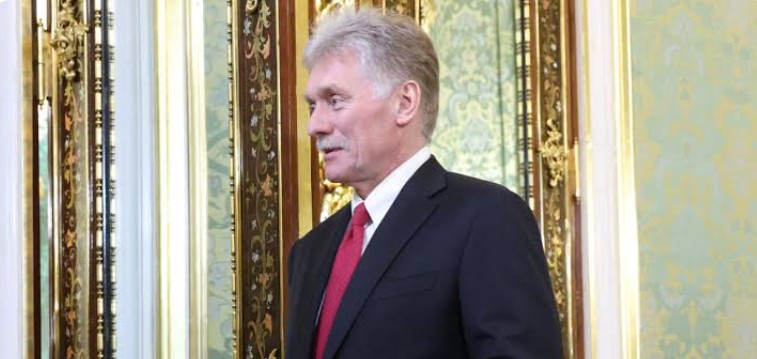
The Kremlin has stated that a local ceasefire could be introduced in other areas of the front line, following the example of the agreements reached regarding the temporarily occupied town of Oleshky in the Kherson region. On 26 October, the Russian President’s spokesperson, Dmitry Peskov, noted that such humanitarian initiatives could be implemented with the involvement of US negotiators and the US First Lady, Melania Trump. At the same time, Moscow has not indicated any readiness for a general cessation of hostilities.
- The Kremlin has left open the possibility of localised humanitarian ceasefires in other areas along the front line.
- Peskov described the agreement on Oleshky as a potential model for similar initiatives.
- The Russian side welcomed the mediation efforts of Melania Trump and the American negotiators.
- In the Oleshky area, the ceasefire is due to come into effect on 27 October at 03:00 Kyiv time.
What Peskov said about extending the humanitarian ceasefire
Whilst speaking to journalists on 26 October Dmitry Peskov they asked whether the agreements on ceasefire in Oleshky to serve as an example for other regions where the civilian population is in need of humanitarian aid.
A Kremlin spokesperson replied that Moscow considers such a scenario a possibility, particularly if American mediators are involved. He specifically highlighted the role of the US First Lady Melania Trump, which helped organise a humanitarian operation in the Kherson region.
«For humanitarian purposes — certainly, it is possible,» said Peskov, commenting on the possibility of similar agreements being repeated in other areas of the conflict.
According to him, the Russian side highly values the participation of the American negotiators and hopes that Ukraine will fulfil the agreed terms of the humanitarian operation.
At the same time, Peskov did not name any specific areas to which such agreements might be extended, nor did he announce the start of new talks on local ceasefires.
What does the ceasefire in Oleshky entail?
On 23 October, the White House announced an agreement between Ukraine and Russia on a temporary ceasefire in the occupied town of Oleshky in the Kherson region. The talks were mediated by Melania Trump and her representatives.
The aim of the agreements is to deliver humanitarian aid, ensure the safe movement of the civilian population and organise the evacuation of residents who wish to leave the city.
The Ukrainian Parliament’s Commissioner for Human Rights Dmytro Lubinets confirmed that an agreement had been reached and explained that the humanitarian mission would be carried out in stages. It involves establishing a ceasefire, carrying out the necessary demining operations, delivering food and medicines, and evacuating people.
According to the revised agreements, the ceasefire in the area of operations is to come into effect at 03:00 on 27 October, Kyiv time. The immediate phase of humanitarian aid is scheduled for 29 October.
Why the humanitarian operation in Oleshky is of particular importance
Oleshky has been under Russian occupation since the start of the full-scale invasion in 2022. Due to ongoing hostilities, the destruction of infrastructure and the consequences of the bombing of the Kakhovka hydroelectric power station, the humanitarian situation in the town remains dire.
According to estimates released by the White House, there are still approximately 1,700–2,000 residents in the city, mainly elderly people. Among them are also around 50 children. The population is suffering from a shortage of food, medicines, drinking water and electricity.
Dmytro Lubinets emphasised that implementing the agreements requires complex coordination between the parties. Individual stages of the humanitarian operation may last from one to several days.
Despite Peskov’s statement regarding the possibility of further local ceasefires, Russia has not yet announced its willingness to cease hostilities across the entire front line. The discussion relates solely to potential temporary humanitarian agreements in specific areas.