The Russian army continues to suffer heavy losses in the war against Ukraine, whilst the pace of its territorial advance has slowed significantly. According to various independent estimates, the number of Russian military personnel killed is already in the hundreds of thousands, whilst total losses exceed one million. An analysis by UkrMedia shows that, against the backdrop of gruelling fighting, Moscow is increasingly resorting to long-range strikes on Ukrainian infrastructure in an attempt to intensify pressure far beyond the front line.
Briefly about the main points
- The Russian army’s casualties in October exceeded 52,000.
- Independent researchers have confirmed that more than 285,000 Russian military personnel have been killed.
- The pace of the Russian advance slowed considerably in 2026.
- Russia is stepping up its attacks on Ukraine’s energy and industrial sectors.
- Despite heavy losses, the Russian Federation retains the capacity to continue the war.
Russian army casualties: what independent studies reveal
It is difficult to determine the exact number of Russian military personnel killed due to the lack of reliable official statistics. The Kremlin does not publish up-to-date figures on casualties, whilst independent researchers use various methods to estimate the numbers.
According to updated information from the BBC’s Russian Service and the publication «Mediazona», published on 30 October, journalists were able to confirm, by name, the deaths of 285,023 Russian servicemen.
The figures are compiled on the basis of reports from relatives, obituaries, information on burials, regional publications and other open sources. However, these figures reflect only cases that have been documented.
Given the incompleteness of the publicly available data, the actual death toll may exceed 660,000.
The US-based Centre for Strategic and International Studies (CSIS) provides a different estimate. According to its calculations, as of June 2026, Russia had suffered between 400,000 and 450,000 military fatalities, and Total casualties, including the wounded and those missing in action, amounted to approximately 1.4 million.
The updated statistical model, presented at the end of October, allows for an even wider range — from 374,000 to 773,000 deaths and from 1.42 to 2.06 million total casualties.
These estimates do not automatically contradict one another. They cover different periods and draw on different sources and methodologies.
At the same time, the upper limit of the estimate cannot be regarded as the established death toll. It is one of the possible outcomes of statistical modelling.
October saw a record number of casualties for the Russian Federation
Pros. data According to the General Staff of the Armed Forces of Ukraine, as at 31 October, the total combat losses among Russian personnel since the start of the full-scale invasion stand at approximately 1,588,170.
In October alone, this figure rose by 52,300 service personnel. This is the largest monthly increase since the start of the full-scale war.
By way of comparison, in February 2026 the Ukrainian command estimated the enemy’s losses at 26,090 personnel, and in September at 46,230.
The General Staff’s statistics reflect an estimate of total combat losses among personnel, rather than the number of fatalities.
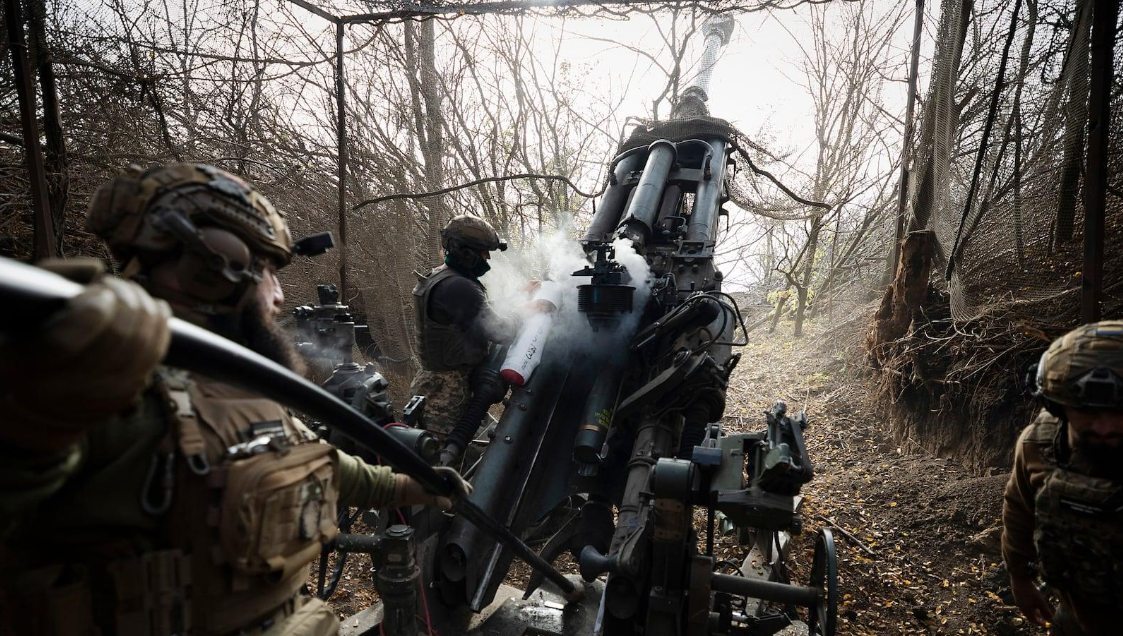
The rise in casualties is taking place against a backdrop of intense assault operations, the widespread use of drones and an ever-increasing concentration of weapons near the line of contact.
The ratio of casualties to new recruits is becoming a particular problem for the Russian army.
According to CSIS estimates, in the first half of 2026 Russia was losing around 30,000–34,000 troops every month, whilst recruiting around 27,000 new contract soldiers.
If this rate continues over a prolonged period, the command is forced to compensate for the shortage of personnel with increasing frequency by redeploying reserves, carrying out new recruitments or reducing the strength of individual units.
In return for its heavy losses, Russia is gaining less and less territory
One of the key features of the hostilities in 2026 was the discrepancy between the Russian army’s expenditure and the speed of its advance.
According to an analysis of the DeepState map, the average rate of increase in territory controlled by Russia in 2025 was approximately 12 square kilometres per day. In the first nine months of 2026, this figure fell to 3.4 square kilometres. This represents a slowdown of approximately 72%.
At the same time, the situation on certain sections of the front line differs significantly. Russian troops are continuing their offensive operations, particularly in the Donetsk region, whilst Ukrainian forces are carrying out counter-attacks and are trying to regain the ground they have lost.
Estimates of territorial changes vary depending on the source. Some researchers highlight Ukraine’s local successes, whilst other maps show a slight overall increase in the occupied territory.
The reason for the discrepancies lies in differing approaches to defining control over settlements, grey zones and territories that change hands.
Drones play a key role in slowing down offensives. Constant aerial reconnaissance makes it possible to detect the movements of units, equipment and logistical transport. Combined with FPV drones and artillery, this makes it more difficult to build up forces covertly prior to an attack.
Under such conditions, even a limited advance may result in significant losses of personnel, equipment and ammunition.
Russia is putting increasing pressure on the Ukrainian rear
Alongside the gruelling fighting, Moscow is stepping up its use of long-range weapons.
According to ACLED monitoring data, the number of Russian strikes carried out more than 100 kilometres from the front line rose from 130 in June to 453 in September. This represents an increase of almost 3.5 times in just three months.
Energy infrastructure remains the main target of attacks, industrial enterprises, railway junctions, residential areas and other targets in the Ukrainian rear.
The scale of the air campaign is also confirmed by statistics from the Ukrainian Air Force. Since the start of 2026, Russia has deployed over 56,000 drones and 1,766 missiles of various types.
The increase in the number of attacks has several consequences.
Firstly, it forces Ukraine to constantly spend resources on air defence, particularly expensive interceptor missiles.
Secondly, attacks on power stations and substations disrupt the operation of industry, transport and public utility systems.
Thirdly, damage to energy infrastructure places an additional burden on the state budget, as the equipment needs to be repaired or replaced.
These consequences become particularly acute in the run-up to winter, when a stable electricity supply is critical for heating, water supply and the operation of businesses.
The number of civilian casualties is rising as the intensity of the strikes increases
The consequences of the air campaign are reflected not only in the scale of the destruction, but also in the statistics on civilian deaths and injuries.
According to the UN Human Rights Monitoring Mission in Ukraine, In September 2026, at least 328 civilians were killed, a further 2,105 were injured.
The total number of civilian casualties was 85% higher than in September of the previous year. Casualties were recorded in 22 regions of Ukraine and in Kyiv.
In the capital, civilian deaths and injuries were recorded on 22 out of the 30 days in September — more frequently than at any time since the start of the full-scale invasion.
The situation remained difficult in October as well.
According to ACLED, only Between 17 and 23 October, 376 Russian attacks were recorded on civilian infrastructure. This is a third more than in the previous week.
Repeated strikes on sites where rescue workers, power company staff or repair crews are already at work pose a particular danger.
Large-scale attacks also pose a risk of prolonged disruptions to the supply of electricity and heating.
In particular, following the strikes on 13–14 October against energy infrastructure in Kyiv, around 600,000 people were temporarily left without electricity.
Why economic sanctions have become a key part of the war
According to UkrMedia’s assessment, the intensification of attacks on industrial and transport infrastructure demonstrates Russia’s determination to inflict economic damage on Ukraine even without making significant gains on the front line.
The destruction of energy infrastructure affects the operations of businesses, whilst damage to railway lines hinders the transport of goods, raw materials and equipment.
Forced production stoppages reduce companies’ revenues, lower tax revenues and entail additional costs for recovery.
However, some of the consequences may not become apparent straight away. Damaged equipment, a shortage of spare parts or power cuts can restrict business operations for a considerable period of time.
Consequently, even with a relatively stable front line, the economic burden on the country may increase.
For Ukraine, this highlights the importance of protecting energy infrastructure, transport routes and industrial facilities essential to both the defence and civilian economies.
Ukrainian strikes on Russia: to what extent do they affect Russia’s ability to wage war?
Ukraine has also expanded the use of long-range drones against targets on Russian territory.
Throughout 2026, the following were regularly targeted oil refineries, fuel depots, military enterprises, logistics hubs and other facilities involved in supplying the Russian army. Such attacks are aimed at disrupting the production and supply chains that underpin the Russian Federation’s military operations.
The oil refining sector has been particularly hard hit.
Damage to the refineries led to disruptions in fuel production, following which the Russian authorities imposed restrictions on the export of certain petroleum products.
However, the impact of these attacks depends on how long businesses remain out of action.
For example, at the end of October, following a pause in strikes on Russian oil refineries, their crude oil processing volumes, according to industry sources, rose by approximately 25% compared with the start of the month.
This demonstrates the ability of some Russian enterprises to resume production fairly quickly following damage.
At the same time, repeated attacks, the need for repairs and export restrictions are creating additional costs for the industry.
Thus, the effectiveness of a long-range campaign is determined not only by the number of hits, but above all by the duration of the production stoppage and the impact on military supplies.
Why record losses have not yet halted the Russian army
Despite mounting casualties, Russia continues to fund military operations, recruit new troops and maintain arms production.
Heavy casualties do not in themselves imply an immediate loss of combat effectiveness. To assess the state of the army, it is necessary to take into account the size of available reserves, the capacity to replenish units, the availability of equipment and the quality of the troops’ training.
It is also important to distinguish between irreplaceable losses and injuries. Some wounded service personnel return to duty after treatment, whilst the loss of trained specialists and commanders creates far more complex problems for the restoration of units.
Data from 2026 point to a significant depletion of the Russian army, but do not provide grounds for claiming that it has already exhausted its resources for continuing the war.
Russia’s ability to sustain its military operations in the future will depend on the balance between the rate of losses and reinforcements, the state of its defence industry, and the effectiveness of Ukrainian strikes against its logistics and defence facilities.
This report was compiled by cross-referencing data from the General Staff of the Armed Forces of Ukraine as at 31 October, the BBC and Mediazona’s lists of names dated 30 October, CSIS assessments, DeepState cartographic data, reports from ACLED, the UN Monitoring Mission and reports from Reuters. Edited by: Briy Butusov and Maksym Krus.