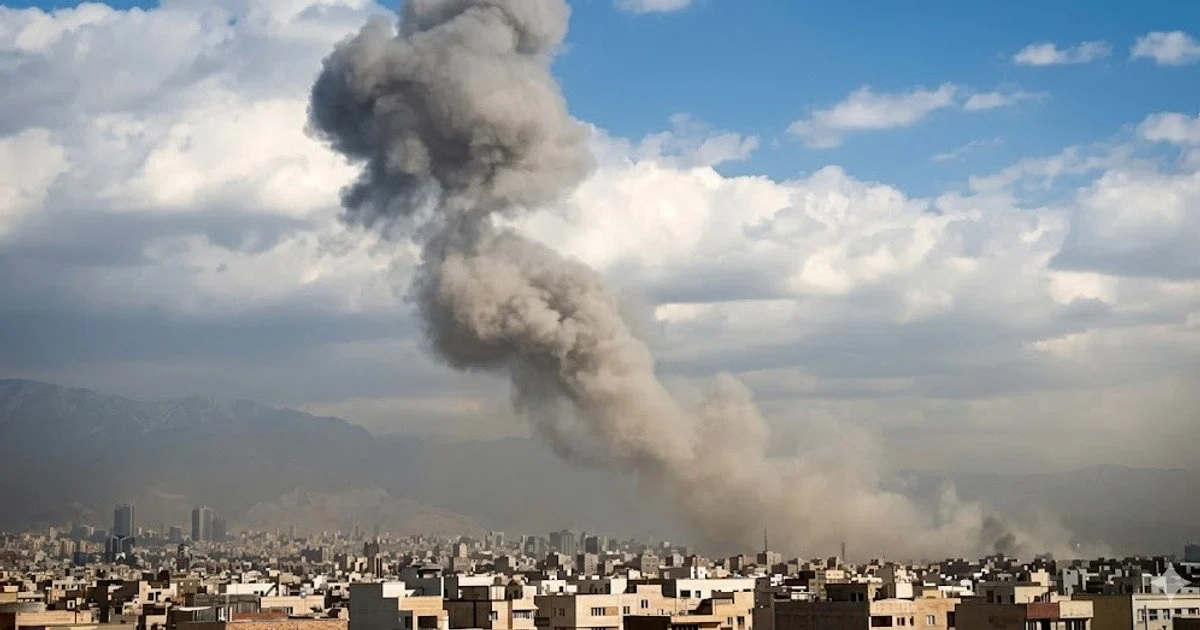
In the Middle East, fears are mounting of a new round of war between the US and Iran following the US mid-term elections, which are due to take place on 3 November 2026. US President Donald Trump has promised not to attack Iran before the vote, but has not ruled out a resumption of hostilities afterwards. Residents of the Gulf states are preparing for possible air strikes, disruption to transport services and the closure of educational institutions. This was reported by CNN on 31 October.
- Countries in the Persian Gulf are concerned that war between the US and Iran may resume following the 3 November election.
- Donald Trump has promised not to launch any strikes before the election, but has not ruled out a military operation at a later date.
- According to CNN, the families of some US diplomats have begun to leave the region.
- Iran is threatening a large-scale response, including strikes on critical infrastructure.
- Qatar continues to mediate between Washington and Tehran in an attempt to prevent a further escalation.
Why are further strikes against Iran expected following the US elections?
Tensions escalated following the statements Donald Trump that the US military will not attack Iran ahead of the mid-term elections on 3 November. At the same time, the US President did not explain whether he plans to resume the strikes after the vote.
According to CNN, the uncertainty in Washington is forcing residents of countries Persian Gulf prepare for the worst-case scenario.
An expert at the International Institute for Strategic Studies (IISS) Hasan al-Hasan He noted that the US administration’s signals are fuelling anxiety in the region. At the same time, it is becoming increasingly difficult to tell whether this is a matter of diplomatic pressure or actual preparations for new strikes.
According to The Wall Street Journal, the US has warned a number of Gulf states of a possible short but intense military operation against Iran following the elections.
Iranian nuclear facilities, energy infrastructure and military installations are cited as potential targets. However, Washington has not announced a final decision on a new operation.
American diplomats are leaving the region, whilst residents are preparing for shelling
According to CNN, in October, the families of some US diplomats began to leave the Gulf states discreetly.
News of their departure emerged, in particular, after the diplomats’ children began saying goodbye to their classmates. Some of these families had only recently returned to the region following their evacuation in the spring.
In Saudi Arabia, due to the intensification of attacks by the Yemeni Houthis, some events have already been cancelled, whilst some companies have switched their staff to remote working.
Residents of the United Arab Emirates also fear a repeat of missile and drone attacks, which had previously disrupted normal life, airport operations and business.
In Bahrain, which suffered heavy damage during the war, people speak of the lasting psychological effects of the shelling.
According to CNN, some foreign nationals are considering leaving the region temporarily to avoid ending up in countries where airspace has been closed.
Iran has threatened large-scale retaliatory strikes
Tehran He also stepped up his public warnings directed at the US and its allies.
A senior representative of the Iranian security forces told CNN that, should war break out again, Iran could attack not only oil facilities but also other infrastructure, particularly that related to artificial intelligence.
Iran's Supreme Leader Mojtaba Khamenei On 31 October, he called on the military command to respond to new threats without geographical restrictions.
Iranian officials also claim that the country has increased its stockpiles of weapons and is prepared for a protracted conflict. It is not possible to verify these claims independently.
A new wave of attacks could affect countries hosting US military bases. This is precisely what the Gulf states, which have already been targeted by Iranian strikes throughout 2026, fear most.
Can the US and Iran reach an agreement before a further escalation?
Despite the threat of renewed hostilities, diplomatic contacts between Washington and Tehran are continuing.
Qatar remains the key mediator, seeking to broker agreements on the Strait of Hormuz and the resumption of broader negotiations.
According to a report by the Associated Press on 2 November, the Iranian delegation left Qatar after several days of consultations, but the exchange of messages with the US via intermediaries is continuing.
Tehran is proposing to resume full shipping services via Strait of Hormuz within two days, provided that Washington meets a number of conditions, in particular regarding sanctions and frozen Iranian assets.
US Secretary of State Marco Rubio stated that Washington remains open to a diplomatic settlement, but did not specify a timeframe for reaching an agreement.
An American diplomat Tom Barrack He also expressed hope for a possible breakthrough in the negotiations over the next two weeks.
As of 2 November, no decision has been announced regarding new US strikes against Iran. Negotiations are ongoing, but the parties have yet to agree on the key terms for ending the conflict. How the situation develops will depend on diplomatic contacts and decisions taken by Washington following the 3 November election.