The World Health Organisation has recommended that two new experimental vaccines be included in a large-scale clinical trial in the Democratic Republic of the Congo. The vaccines, developed by the University of Oxford in collaboration with the Serum Institute of India and the US-based Moderna, are designed to protect against the Bundibugyo virus — a strain of the Ebola virus for which there is still no approved vaccine. The decision was taken against the backdrop of one of the most severe outbreaks of the disease: in the Congo alone, over 10,500 cases of infection and more than 5,100 deaths have been confirmed.
- The WHO has recommended that two new vaccines be included in the Ebola trial in the Congo.
- The Oxford and Moderna vaccines have been developed specifically to combat the dangerous Bundibugyo virus.
- More than 10,500 cases and 5,100 deaths have been confirmed in the Congo.
- The new vaccines will be trialled on people who have been in contact with infected individuals.
- The first results of the study into the vaccines’ effectiveness are expected in early 2027.
The WHO has approved the inclusion of two vaccines in a trial in the Congo
An independent technical expert group from the World Health Organisation has recommended adding two vaccines to the Tumaini clinical trial: ChAdOx1 BDBV, developed by the University of Oxford in collaboration with the Serum Institute of India, and Moderna’s mRNA-1469.
The recommendation was adopted following an assessment of the results of pre-clinical and early-stage clinical trials. The developers have already been informed of the decision; however, the use of the vaccines within the Tumaini programme will only commence once the necessary authorisations have been granted by national regulatory authorities.
Both drugs have been developed specifically to combat the Bundibugyo virus. This is a fundamental difference from the vaccines previously used to combat another strain of Ebola.
WHO Director-General Tedros Adhanom Ghebreyesus described the readiness of new drugs for clinical trials as the result of international scientific collaboration. At the same time, he emphasised that even effective vaccines would not be able to stop the epidemic on their own without the timely detection of cases, treatment and contact tracing.
The epidemic has spread to eight provinces and has spread beyond the Congo’s borders
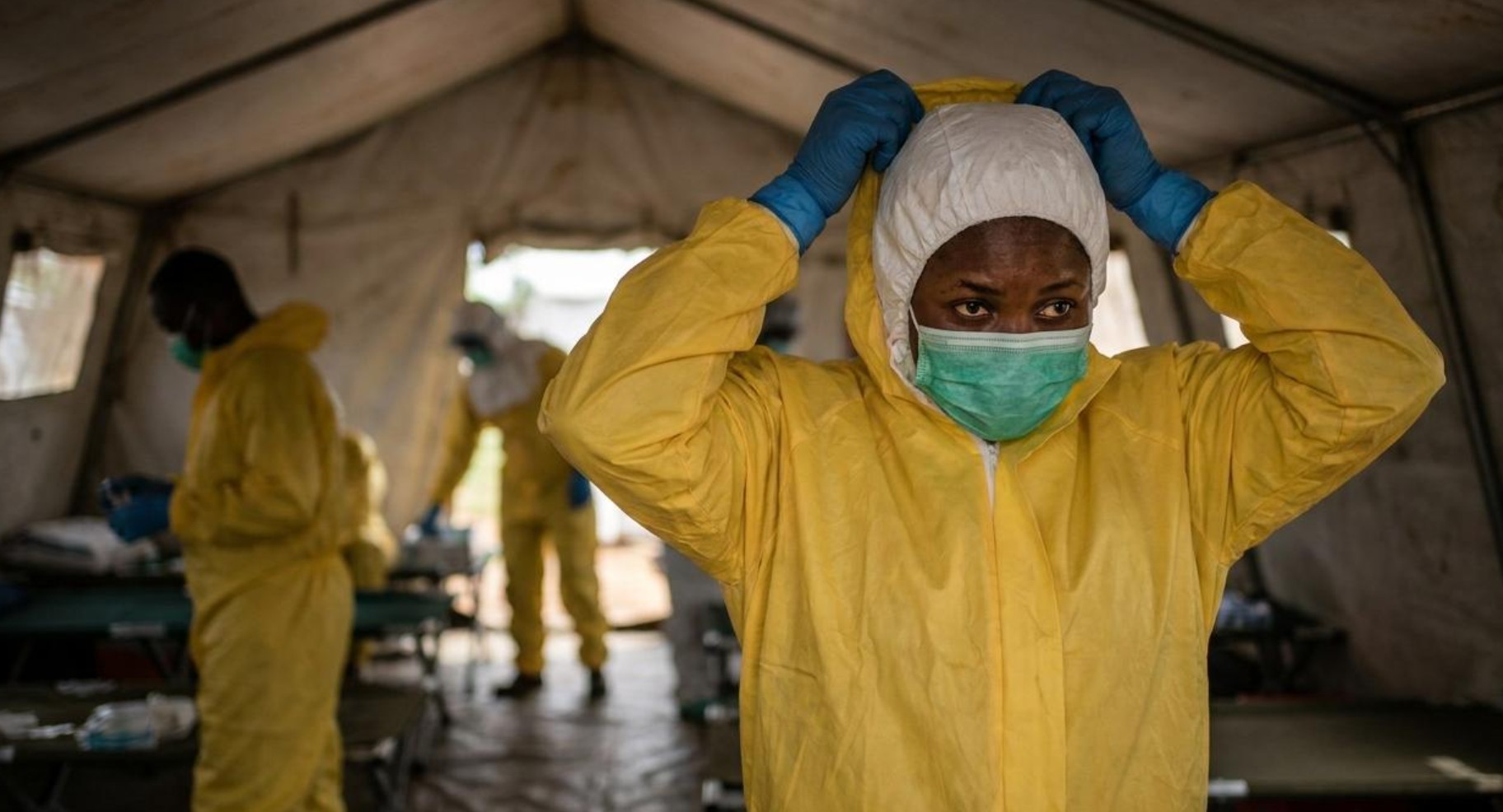
An outbreak of the disease caused by the Bundibugyo virus began in May 2026. The first reports of the Ebola outbreak in the Congolese province of Ituri first appeared in mid-May, when local and international health services began implementing anti-epidemic measures. Since then, the infection has spread across a significant part of the Democratic Republic of the Congo.
According to the European Centre for Disease Prevention and Control (ECDC), as of 2 November, 10,532 confirmed cases had been recorded in the country, including 5,126 deaths. This corresponds to a case fatality rate of almost 49 per cent among the recorded cases.
The situation remains most serious in Ituri Province, where 7,431 cases and 3,492 deaths have been recorded. North Kivu also accounts for a significant number of infections.
In total, the epidemic has spread to eight provinces in the Congo. Cases have also been detected outside the country, notably in Uganda, Kenya and Nigeria.
In October The WHO has confirmed a case of Ebola in Nigeria. The infection was detected in a woman who had arrived in the country’s capital, Abuja, after travelling through East Africa. Medical staff identified dozens of people who may have come into contact with the infected woman and organised epidemiological surveillance.
The spread of the virus is exacerbated by population movements, armed conflicts, inadequate access to medical care and difficulties in tracing people who have been in contact with infected individuals.
According to the Associated Press, the current outbreak is the second deadliest in the history of Ebola epidemics.
How the new vaccines will work and who will be vaccinated
The Tumaini trial is being conducted using a ring vaccination approach. Initially, the study involves people who have been in contact with patients with confirmed infections, as well as specific groups of their contacts.
This approach makes it possible to test the effectiveness of vaccines directly in situations where the infection is actively spreading. The aim is to determine whether the vaccines can prevent the disease and how safe they are for trial participants.
At the time of the WHO’s announcement, four vaccination rings had already been established within Tumaini. Preparations for further groups are ongoing.
The study is being led by the National Institute for Biomedical Research of the Democratic Republic of the Congo, with support from the WHO, Belgian research institutions, Médecins Sans Frontières and the African Centres for Disease Control and Prevention.
The development of experimental vaccines is also supported by the international Coalition for Epidemic Preparedness Innovations (CEPI).
Why the existing Ebola vaccines do not solve the problem
Ebola — it is not a single virus, but a group of related pathogens capable of causing serious illnesses in humans.
The Ervebo vaccine is currently approved for protection against the Ebola virus, formerly known as the Zaire Ebola virus. However, the efficacy of this vaccine against the Bundibugyo strain in humans has not yet been proven.
That is why the WHO recommends that Ervebo be used during the current outbreak only within the framework of research protocols.
The new vaccines utilise different technological platforms. The Oxford University vaccine is based on the modified adenoviral vector ChAdOx1, whilst Moderna’s vaccine is based on messenger RNA technology.
Moderna is also applying this technology in other areas of medicine. In particular, the company, together with Merck is investigating personalised mRNA therapy for melanoma, which is designed to help the immune system recognise tumour cells. At the same time, cancer therapy and the Ebola vaccine are separate developments with different mechanisms for eliciting an immune response.
Back in July 2026, researchers at Oxford launched the first clinical trial of ChAdOx1 BDBV involving healthy volunteers. The new programme in the Congo is intended to help determine whether the vaccine provides protection in real-world epidemic conditions.
Scientists are also searching for an effective treatment for Ebola
Alongside the development of vaccines, research is continuing into treatments for people who have already contracted the Bundibugyo virus.
In July 2026, the WHO launched the PARTNERS clinical trial. The trial is designed to assess the efficacy of the experimental monoclonal antibody-based drug MBP134, the antiviral drug remdesivir, and their combined use.
There are also plans to add the drug maftivimab to the programme. A separate study is focusing on obeldesivir, which is being assessed as a potential means of post-exposure prophylaxis.
At present, there is no approved specific treatment for the disease caused by Bundibugyo. Medical care focuses on supporting vital bodily functions, restoring fluid and electrolyte balance, and treating complications.
The WHO expects the first results from trials of therapeutic drugs within the next few months. Data on the effectiveness of vaccines within the Tumaini programme are due to be released in early 2027.