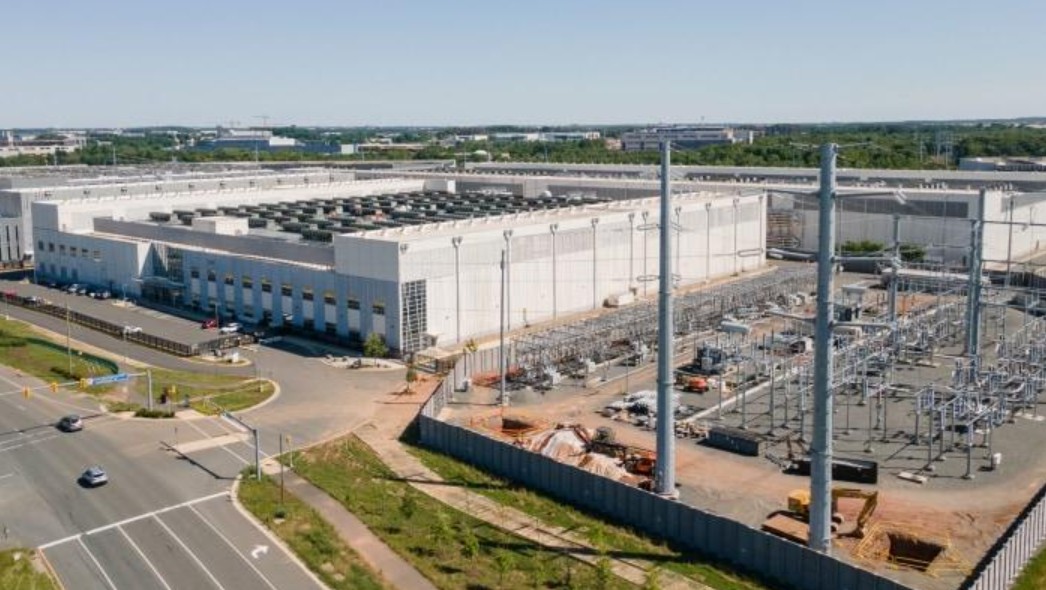
American companies that build data centres and provide artificial intelligence infrastructure have seen their share prices plummet following the Democrats’ victory in the US mid-term congressional elections. Investors fear that the new political majority will tighten controls on large-scale data centre construction, whilst state authorities may restrict the implementation of new projects. The greatest concern centres on Texas and Georgia — key hubs of the US AI industry — where voters backed candidates who advocated for a review of the regulations governing the development of data centres.
- Following the US elections, shares in data centre operators and equipment suppliers fell sharply.
- Core Scientific fell by 11.6 per cent and IREN by 12.5 per cent during trading.
- Democratic governors in Texas and Georgia support restrictions on the construction of new data centres.
- Investors are concerned about rising electricity costs and delays to major AI projects.
- Large technology corporations proved to be more resilient to the sell-off of shares in infrastructure companies.
Shares in data centre operators have plummeted
On Wednesday, 4 November, investors began actively selling shares in companies whose business is directly dependent on the construction of new data centres and the expansion of computing capacity.
Core Scientific shares fell by 11.6 per cent, whilst IREN shares fell by 12.5 per cent. Applied Digital, CoreWeave, Hut 8 and Cipher Digital also came under pressure.
The sales have also extended to companies that supply data centres with electricity and industrial equipment. These include GE Vernova, Constellation Energy and Vistra.
The fall came against a backdrop of an overall rise in the US stock market. At the close of trading, the S&P 500 index rose by 1.6 per cent, whilst the Dow Jones gained more than 3 per cent.
This points to a selective response from investors: market participants did not abandon US shares as a whole, but reduced their investments in companies most dependent on large-scale artificial intelligence infrastructure development.
Texas and Georgia may restrict the construction of data centres
One of the reasons for the decline was the results governor elections in Texas and Georgia.
In these states, candidates from the Democratic Party, who had advocated restrictions on the expansion of large data centres during their election campaigns, were elected.
Texas is of particular importance, as it is home to a significant proportion of US projects aimed at creating new computing capacity. The state has attracted technology companies with its availability of land, opportunities in the energy sector and relatively favourable investment conditions.
However, the industry’s rapid growth has led to discontent amongst local communities. Residents complain about the increased strain on the electricity grid, the use of water to cool servers, and the lack of economic returns from large industrial facilities.
In Georgia, too, there have been stricter requirements to scrutinise new projects more closely, particularly with regard to their impact on utility tariffs and the availability of energy resources.
The victory of the candidates who supported such restrictions has created the risk that some investment projects may be delayed.
Investors are concerned about rising electricity and water prices
In recent years, data centres have become one of the biggest sources of new demand for electricity in the US.
High-performance servers used to train and run artificial intelligence models require significantly more energy than traditional digital infrastructure.
As well as electricity, data centres use water to cool their equipment. The scale of consumption depends on the design of the cooling systems, the local climate and the technologies chosen.
In a number of American communities, there is growing concern that the costs of expanding the electricity grid will be partly passed on to the public through higher tariffs.
At the same time, large data centres do not always create a number of permanent jobs commensurate with the scale of the investment. During construction, they require thousands of workers; however, once they are up and running, a significant proportion of the processes are automated.
It is precisely these issues that have become a key theme in election campaigns in the states where the largest data centres are located.
Previously. UkrMedia has already analysed the environmental cost of AI and the impact of large-scale data centre construction on the consumption of electricity, water and land resources.
A significant proportion of the new capacity could be at risk
According to Goldman Sachs’ estimates, a temporary suspension of data centre construction in key US states could, in theory, affect around 45 per cent of the planned increase in computing capacity in the US.
However, this assessment does not mean that almost half of the projects have already been cancelled.
Some companies may relocate their construction projects to other states where regulatory conditions remain more favourable. Other operators may revise their investment schedules or increase spending on their own energy infrastructure.
Consequently, the key issue for the financial markets is not only the level of demand for artificial intelligence, but also the ability to build the necessary capacity in good time.
Major technology companies continue to invest hundreds of billions of dollars in servers, processors and new data centres. However, their contractors, infrastructure operators and equipment suppliers may face delays in fulfilling orders.
Large technology companies are growing, whilst infrastructure operators are losing value
It is telling that the fall in data centre shares was not met with the same reaction from all technology companies.
On 4 November, Amazon and Microsoft shares rose by more than 6 per cent, whilst some semiconductor and data centre equipment manufacturers saw their share prices fall.
Investors believe that large companies with their own financial resources can adapt more easily to restrictions than smaller operators, who rely on external funding and the rapid launch of new facilities.
This gap is particularly noticeable against the backdrop of record growth in the technology sector’s debt.
Meta recently raised $15 billion through a dollar-denominated bond issue, marking its first foray into the European debt market. Microsoft, Oracle, Alphabet and Meta have raised nearly $57 billion over a short period to fund large-scale investments in artificial intelligence.
As previously reported by UkrMedia, Meta is increasing its borrowing against the backdrop of investors paying ever-closer attention to the return on investment in data centre construction.
Changing political conditions in the US are adding regulatory risks to the financial ones. Companies that had planned to bring new capacity online quickly must now take into account possible delays in obtaining permits and connecting to the electricity grid.
The downturn has also affected Asian chip manufacturers
The reaction to the US election has spread far beyond the borders of the United States.
On Thursday, 5 November, South Korea’s KOSPI index fell by around 3.5 per cent, having lost more than 4 per cent during the trading session.
Shares in Samsung Electronics fell by 5.7 per cent, whilst those in SK Hynix fell by 7.4 per cent. Both companies play a key role in the global supply chain for semiconductors and memory chips used in artificial intelligence systems.
A downward trend was also observed in the technology markets in Japan and Taiwan.
Investors fear that a possible slowdown in the construction of US data centres will reduce the growth rate of orders for processors, memory and other equipment.
At the same time, demand for AI computing power remains high. Consequently, some analysts view the fall in share prices not as the end of the technology cycle, but as a reassessment of risks following a prolonged period of rapid growth.
The Democrats will tighten controls on the artificial intelligence industry
Following the Democrats’ victory in the mid-term elections, the US Congress will see a new political balance.
Representatives of the Democratic Party will be able to hold more active parliamentary hearings on the construction of data centres, the use of energy resources, state subsidies and the impact of large technology companies on the economy.
At the same time, experts doubt that the new federal restrictions will be able to bring the industry’s growth to a complete halt.
Investment in artificial intelligence has already become a key component of the US economy, driving demand for industrial equipment, electricity, construction work and semiconductors.
A sharp decline in such investment could have an impact on economic growth, employment and the financial markets.
The situation will therefore depend on specific legislative initiatives, decisions taken by governors and local authorities, and the willingness of technology companies to comply with the new requirements.
For the time being, investors are reacting primarily to potential changes to the regulations. The actual implications for data centre construction will become clearer once the new state administrations have been formed and the newly elected Congress begins its work in January 2027.