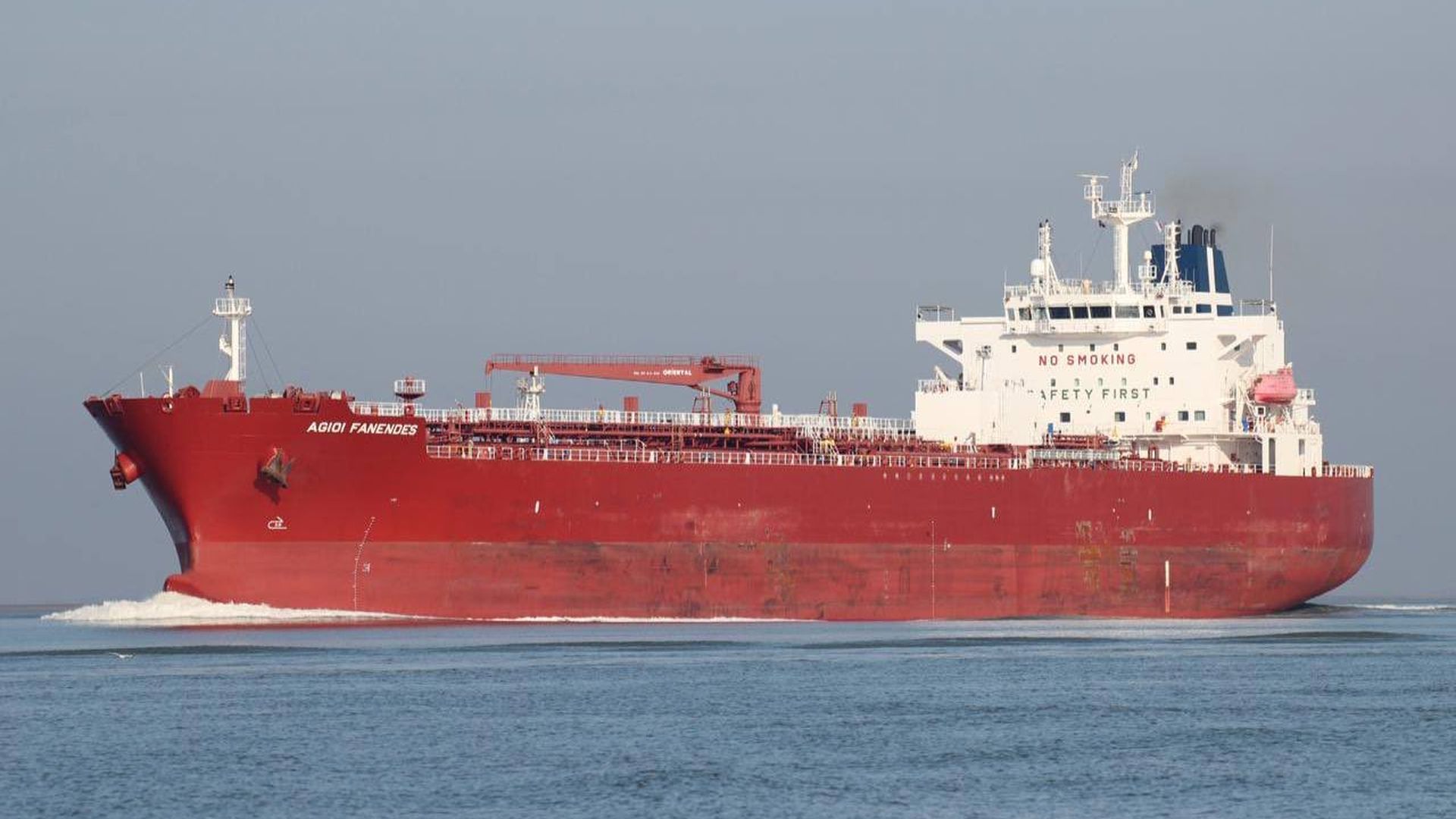
The tanker Agioi Fanendes, which is carrying 40,000 tonnes of Russian diesel fuel to the US, changed course off the American coast. The vessel was due to arrive in New York on 7 November, but never entered the port. According to shipping tracking systems, the tanker initially slowed down sharply and then turned around in the Atlantic Ocean. Its operator confirmed that the unloading point has not yet been determined. This is now the third vessel from the first group of tankers that set sail for the US carrying Russian diesel following the agreement between Donald Trump and Vladimir Putin, but which failed to complete the planned delivery.
- The tanker Agioi Fanendes, carrying 40,000 tonnes of Russian diesel, did not arrive in the US.
- The vessel has changed course off the US coast and is awaiting further instructions.
- Two other tankers carrying Russian fuel had also changed their routes earlier.
- US officials are warning of the legal risks involved in importing Russian diesel fuel.
A tanker carrying 40,000 tonnes of diesel has come to a halt near the US
Agioi Fanendes Flying the Maltese flag, the vessel loaded low-sulphur diesel fuel on 22 October at the Russian port of Primorsk on the Baltic Sea. The vessel then set sail across the Atlantic Ocean towards the US coast.
According to the original schedule, it was due to arrive in New York on 7 November. However, as it approached the US, the tanker began to slow down. As of 9 November, its speed had fallen by about half compared with the end of October.
Subsequently, tracking services recorded a change in the vessel’s course several hundred kilometres from New York. At the same time, the status in the shipping systems changed from an American port to For Orders — awaiting further instructions.
The Greek company Eastmed has confirmed that the port of unloading has not been determined. This means that the tanker’s onward route remains unknown.
Other tankers carrying Russian fuel have also deviated from their original routes
The Agioi Fanendes was one of the first three vessels to set sail for the US with a Russian-made diesel engine on board following the announcement of a new energy agreement between Washington and Moscow.
Previously. The Talisman and Leruo tankers have changed their routes. The first set sail for the Mediterranean, whilst the second changed its destination to Brazil.
Unlike the other two vessels, the Agioi Fanendes is not subject to international sanctions. However, even this was not enough to ensure its arrival at a US port.
Analysts doubt that Russian diesel has any confirmed buyers in the US. Companies may also be wary of the legal consequences of such transactions.
Controversy has arisen in the US over Trump’s deal with Russia
9 October Donald Trump announced an agreement with Moscow on the supply of Russian diesel fuel to the US and global markets. The US President hoped that this would reduce fuel prices, which have risen sharply against the backdrop of the energy crisis.
The plan provided for the supply of 300,000 tonnes of diesel in the first phase, a further 500,000 tonnes in November, and a subsequent increase in volumes.
The Trump administration has temporarily authorised certain transactions involving Russian diesel, but this decision has drawn criticism from US lawmakers.
Governor of New Jersey Miki Sherrill She has warned port operators of the potential legal risks involved in accepting Russian fuel. She insists that the presidential administration cannot, on its own, lift the legislative ban on the import of Russian energy resources, which was introduced in 2022.
The US Department of the Treasury, for its part, considers the temporary authorisation to be lawful. There is currently no court ruling on this dispute.
As of 10 November, there had been no confirmed deliveries of Russian diesel to US ports under the new agreement. Agioi Fanendes is still awaiting instructions regarding the onward route.