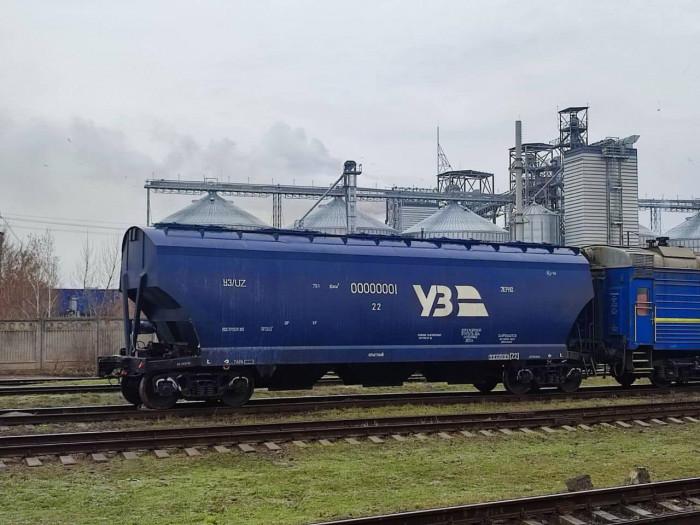
Ukrainian industrialists have spoken out against Ukrzaliznytsia’s planned 15 per cent increase in freight tariffs from 1 January 2027. Business representatives are calling on the company to attract international funding, cut internal costs and stop covering passenger transport losses at the expense of freight shippers. This was discussed during a debate organised by the Centre for Transport Strategies on 10 November. According to a forecast by the Centre for Transport Strategies (CTS), the volume of rail freight transport in Ukraine could fall from 161 million tonnes in 2025 to 127 million tonnes in 2026 — a decline of more than 21 per cent. Industrialists fear that further tariff increases will exacerbate the financial pressure on companies that are already scaling back or halting production.
- Ukrainian Railways plans to increase freight rates by a further 15 per cent from 1 January 2027.
- By August 2026, tariffs had already risen by 30 per cent.
- Freight volumes could fall from 161 to 127 million tonnes a year.
- For some extractive industries, logistics account for 40–60 per cent of production costs.
- The business community is proposing to attract international funding and introduce a moratorium on tariff increases.
Why are industrialists opposed to tariff increases?
During the discussion, representatives from the steel and mining sectors stated that the rising cost of rail freight is making Ukrainian products less competitive.
Executive Director of the National Association of the Extractive Industries of Ukraine Ksenia Orynchak She reported that logistics costs for some companies exceed 40 per cent of production costs, and in some cases reach 60 per cent.
According to her, of the 100 quarries covered by the association’s statistics, only 35 are currently operational. She also reported that more than 20 large enterprises across various sectors have ceased operations. These figures were provided by the industry association, not by official statistics.
The President of the association «Ukrmetallurgprom» Oleksandr Kalenkov stated that the latest increase in tariffs lacks a sound economic justification. In his view, it could trigger a new wave of declines in industrial production.
The limited operation of seaports remains a further problem. A spokesperson for Metinvest« Bogdan Ivanyuk He reported that, due to these restrictions, the group’s mining and processing plants had lost around 1.5 million tonnes of seaborne exports each month.
Previously, these cargoes were transported to the ports by «Ukrzaliznytsia», deriving revenue from freight transport. Consequently, the decline in exports affects not only industrial enterprises but also the railway’s freight base.
Ukrzaliznytsia warns of potential losses of up to 50 billion hryvnias
Ukrzaliznytsia attributes the need to increase fares to rising costs for electricity, fuel, repairs and infrastructure maintenance.
Deputy Director of the Commercial Operations Department at Ukrainian Railways Valery Tkachov stated that the company expects to receive around 12 billion hryvnias as a result of the additional 15 per cent indexation.
According to his estimate, if the second phase of the increase does not go ahead, the company’s total losses in 2027 could reach 50 billion hryvnias. This is a forecast by UZ, not a confirmed financial result.
Railway officials also point out that they have kept fares unchanged for a long time. The company has announced a cost-optimisation programme expected to yield savings of 10.2 billion hryvnias, as well as the introduction of state funding for socially important passenger services.
International funding instead of new tariffs: what the business community is proposing
Industry representatives believe that the railway’s financial problems should not be resolved at the expense of shippers alone. The proposed measures include raising funds from international partners, optimising costs and reviewing the system for financing passenger transport.
In particular, the business community is proposing to cooperate more actively with the World Bank, the European Bank for Reconstruction and Development (EBRD) and other financial institutions.
International support for the rail sector is already in place. The EBRD and the European Union, in particular, are supporting the Ukrainian Railways’ energy sustainability project, which involves a loan of 180 million euros and an EU investment grant of 44 million euros. However, these funds are earmarked for specific purposes and cannot automatically replace revenue from freight tariffs.
World Bank It is also working on programmes to modernise the Ukrainian railways, in particular by reforming the fare system, corporate governance and the funding mechanisms for socially important passenger transport services.
Will freight rates rise in 2027?
Industrial associations are calling on the government to impose a moratorium on further increases in rail freight tariffs until the end of the state of emergency.
At the same time, representatives of Ukrainian Railways insist that, without additional revenue, the company will find it difficult to ensure uninterrupted transport services and to repair the infrastructure damaged by Russian attacks.
According to the Central Transport Service’s forecast, freight transport could recover to 149 million tonnes by 2027. However, this figure remains a forecast and will depend on the state of industry, exports and transport infrastructure.
As at 11 November 2026, a further 15 per cent increase in freight tariffs is scheduled for 1 January 2027. The business community is insisting on a review of this, whilst Ukrainian Railways warns of the risks of rising losses. A final decision on the second stage of indexation and possible alternative sources of funding requires further consultation.